
Hybrid Work Policies in 2026: Accessibility Wins and New Exclusions
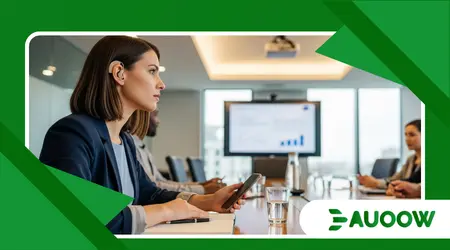
The current landscape of Hybrid Work Policies in 2026 often feels like a bridge built halfway across a canyon, promising a connection that remains unstable for many.
Take Julian, a brilliant architectural drafter in Chicago. Julian has a severe hearing impairment and thrives on text-based communication and the controlled acoustic environment of his home.
For three years, his productivity was exceptional because his environment finally matched his needs.
Last week, his firm implemented a “Presence First” directive, requiring him to attend brainstorming sessions in a glass-walled conference room.
The acoustic reflections in that space turn every voice into a distorted mumble, rendering his high-end hearing aids nearly useless.
Julian now spends these meetings nodding politely while missing over half of the strategic conversation. His home office was a sanctuary of clarity; the corporate office has become a space of forced silence and exclusion.
Why the physical return is creating a quiet crisis
The debate often frames “flexibility” as a corporate perk rather than a fundamental right. We are seeing a collision between progressive digital tools and regressive management habits.
While the software of 2026 allows for seamless collaboration, the cultural mindset of many leadership teams is stuck in a pre-2020 loop.
The traditional office was designed for a narrow demographic: the able-bodied, neurotypical worker with a frictionless commute.
When companies mandate a return to that specific environment, they aren’t just asking for presence.
They are inadvertently asking employees with disabilities to pay a “participation tax” in the form of sensory overload and physical exhaustion.
++ Why the Post-Remote Work Backlash Is Hitting Disabled Workers First
From radical opening to a subtle closing
In the early 2020s, the world underwent the largest accessibility experiment in history. When the commute was eliminated, employment rates for people with disabilities spiked.
It became clear that the primary barrier wasn’t the impairment itself, but an outdated work environment.
There is a recurring pattern where society opens up during a crisis out of necessity, only to narrow the gates once things feel “normal.”
This normalization is risky. It treats the accessibility gains of the last few years as temporary favors rather than permanent, essential infrastructure for a diverse workforce.

The true cost of proximity bias
Proximity bias remains a silent hurdle in the hybrid era. In 2026, many managers still find it easier to trust those they see at the coffee machine.
This risks creating a two-tier system: those who navigate the physical world with ease stay on the fast track, while those who work through a screen to manage chronic illness or mobility challenges become invisible.
If promotion tracks depend on physical presence, we effectively re-segregate the workplace. It signals to a significant segment of the population that they can have a job, but their career growth will always have a ceiling.
Also read: Boardroom Diversity: How Disability Inclusion Impacts Corporate Decisions
Sensory barriers and neurodiversity
Standard office designs open floor plans, harsh lighting, and constant noise are sensory minefields. For a worker with autism, the “collaboration” promised by these spaces often triggers a fight-or-flight response.
Hybrid Work Policies in 2026 frequently overlook the cognitive energy required just to function in a loud cubicle. A truly inclusive culture recognizes that deep work often happens in controlled environments.
When companies equate “culture” solely with extroversion and physical stamina, they create an ethical blind spot that ignores how different minds process information.
Read more: Why We Need More Disabled Leaders in the C-Suite
Infrastructure as a barrier
Corporate policies cannot be separated from urban infrastructure. A “mandatory Tuesday” is a gamble for a wheelchair user.
If a train station elevator is out of service a common occurrence in aging cities that employee is effectively barred from their workplace.
While legislation mandates physical access, it cannot mandate reliability. The hybrid model offered the first real workaround for inaccessible cities. Rolling back remote options forces people back into a system that wasn’t built for them.
Shifting Dynamics: 2021 vs. 2026
To understand the current friction, we have to look at how the power dynamic between worker and space has shifted.
| Feature of Work | The 2021 Peak (Remote) | The 2026 Reality (Hybrid) | The Accessibility Gap |
| The Commute | Non-existent; energy saved for work. | Mandatory 2-3 days; high energy drain. | PWDs report significantly higher fatigue on office days. |
| Meeting Format | Screen-based; native captions. | Mixed-mode; captions often secondary. | Remote participants risk becoming “second-class” observers. |
| Office Design | Personalized home setups. | “Hot-desking” with low personalization. | Specialized gear is difficult to transport daily. |
| Promotion Track | Output-based evaluation. | Visibility-based (Proximity Bias). | Remote-reliant workers face lower promotion rates. |
The struggle with hot-desking
The trend of unassigned seating or hot-desking might look efficient on a balance sheet, but it fails on a human level.
For employees who need specific ergonomic setups, screen readers, or a predictable environment to manage anxiety, losing a permanent “home base” is a major setback.
It forces individuals to advocate for their basic needs every single morning. Reconfiguring a workstation daily just to sit without pain or see a monitor clearly is an exhausting requirement that lacks empathy.
Addressing the participation tax
There are valid reasons to challenge the current direction of Hybrid Work Policies in 2026. True inclusion means the “office” is wherever a worker is most effective.
Moving toward a “Results-Only Work Environment” (ROWE) shifts the focus to the quality of the output rather than the physical chair an employee occupies.
Companies that provide technology stipends for home offices are often the ones winning the talent war. By investing in a worker’s environment wherever that may be they remove barriers to entry and focus on human potential.
Technology as a bridge, not a barrier
The technology exists. We have AI-driven sensors that adjust lighting and sound for neurodivergent needs and telepresence tools that allow for a meaningful office presence from home.
The bottleneck isn’t the tech; it’s the corporate imagination. We are often using 21st-century tools to maintain 20th-century hierarchies.
Accessibility shouldn’t be a series of special “requests” it should be the baseline for how every organization operates.
Avoiding digital warehousing
Remote work should never become a way to “warehouse” workers with disabilities, keeping them out of sight. While the home office provides essential accessibility, it shouldn’t be the only option.
Inclusion means having the choice to be in the room, provided the room is designed to receive everyone.
When reviewing Hybrid Work Policies in 2026, we must ask who was involved in the drafting process.
If a policy doesn’t include the perspectives of the disabled and neurodivergent, it functions as a barrier. We need to ensure the professional “table” is set at a height everyone can reach.
Frequently Asked Questions
Are companies required to provide accessibility tools at home?
In many regions, if you are required to work from home, the employer has a responsibility to ensure that environment is accessible.
However, specific requirements vary by local labor laws and individual accommodation agreements.
How should I handle a return-to-office mandate if the commute is a barrier?
This is a common ground for an accommodation request. It is helpful to document specific obstacles such as unreliable transit or physical pain from travel and present them as direct barriers to performing your job duties.
How can I combat proximity bias while working remotely?
Maintaining visibility through regular one-on-ones, active participation in digital channels, and clear communication of your achievements helps ensure your work is recognized based on impact rather than physical presence.
Is hot-desking legal for those who need specialized equipment?
While the policy is generally legal, you have the right to a permanent or reserved “Accommodation Station” if a specific setup is required for you to work effectively.
What is the future of hybrid work for the disability community?
The goal is “Flexibility by Default.” Advocacy is moving toward a world where work is an activity you perform, not just a place you go, allowing every individual to contribute to their full potential.
How has your perspective on the “ideal office” changed recently? Have you found a balance that works for your specific needs? Share your experience in the comments!
