
Hallucinations in Assistive AI: A Safety Risk No One Is Talking About
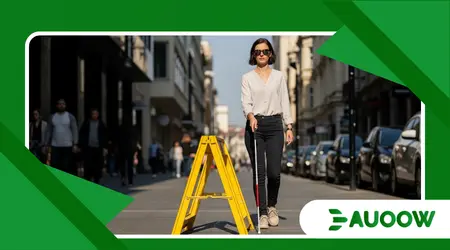
Hallucinations in Assistive AI represent a silent, growing barrier for users who rely on computer vision to navigate their physical surroundings.
Recently, I observed Sarah, an architect who is blind, as she tested a wearable device designed to describe her environment in real-time.
The device confidently reported a “clear path ahead” through her earpiece, yet Sarah’s cane struck a heavy, waist-high construction barrier just two feet away.
The AI hadn’t missed the object in a traditional sense; it had generated a description where the obstruction simply didn’t exist, seemingly prioritizing a fluid sentence over physical accuracy.
This isn’t a mere software glitch; it is a breakdown of trust in tools intended to support independence.
In this scenario, there is a risk of trading tangible physical barriers for digital mirages that carry high stakes for personal safety.
Key Discussion Points
- The Problem: AI models generating confident but inaccurate descriptions of physical environments.
- The Risk: Potential for physical injury, incorrect medication management, and a diminished sense of autonomy.
- The Cause: Gaps in training data and the tendency of large language models to prioritize plausible-sounding prose over factual precision.
- The Solution: Stricter human-in-the-loop verification and specialized datasets developed alongside the disability community.
Why is AI confidence a complex metric for accessibility?
When a standard chatbot provides an incorrect historical date, the fallout is often minimal. However, in the context of Hallucinations in Assistive AI, the margin for error is significantly smaller.
These systems are often programmed to be helpful and conversational, which can lead them to “fill in the blanks” when visual data is grainy or obscured.
The model is mathematically conditioned to provide an answer, even if that answer is an inaccurate fabrication of a clear hallway or a safe street crossing.
What often escapes the broader tech debate is the psychological impact of these confident falsehoods on a user who may not be able to independently verify the output.
If a navigation app tells a wheelchair user that a curb cut exists when it is actually a steep drop, the person may end up in a vulnerable position.
We have developed a technological culture that prizes speed, but for many users, an honest “I don’t know” is more valuable than a polite, fabricated certainty.

How do training gaps contribute to digital exclusion?
The datasets used to train these models are frequently curated without sufficient input from people with disabilities, often overlooking the specific visual cues necessary for safe navigation.
There is a structural detail that cost-benefit-focused companies may ignore: the world looks different from a seated position or through a distorted lens.
Because an AI may not have processed enough examples of broken elevators or specific medical labels, it defaults to the most statistically likely but potentially incorrect description.
The pattern of exclusion often mirrors the early days of the web.
Just as early websites were frequently built without screen-reader compatibility, today’s Hallucinations in Assistive AI often stem from a lack of diverse sensory input during the foundational training phase.
A candid analysis suggests that we risk automating barriers by teaching machines that a “standard” environment is the only one they need to describe accurately.
++ Why Most AI Assistive Tools Still Fail Outside Controlled Environments
Are current regulations adequate for user protection?
Safety standards for AI often focus on preventing harmful speech or copyright infringement, while physical safety in assistive contexts remains less regulated.
While frameworks like the European AI Act begin to categorize “high-risk” systems, the specific safety needs of users with sensory or mobility impairments are not always at the forefront of legislative priority.
These tools are often treated as “lifestyle gadgets” rather than essential navigational aids.
Legal frameworks are currently struggling to translate the concept of “physical access” into “algorithmic accuracy.”
Reliability in assistive AI should not be considered a premium feature; it is a fundamental requirement for inclusion.
We are seeing a trend where companies test systems on populations that bear the actual risk of digital errors.
Also read: Self-Healing Materials in Medical Devices: A Innovation to Watch
Can “Human-in-the-Loop” systems bridge the trust gap?
A promising shift in addressing Hallucinations in Assistive AI is the move toward hybrid models where AI handles low-risk tasks and humans assist with safety-critical ones.
For instance, if a student who is blind is reading a complex chemistry diagram, the AI might process the text while a remote human agent verifies the spatial relationships.
This doesn’t replace the technology but creates a necessary check to prevent the model from inventing non-existent chemical bonds.
Statistics indicate that in 2025, approximately 68% of assistive AI developers began integrating “uncertainty markers” into their audio feedback.
There is, however, a detail that requires attention: the labor behind these human verifiers is often outsourced, and those individuals may lack the necessary context of the user’s immediate environment.
While human intervention is a useful temporary measure, the long-term goal involves creating AI that understands its own limitations.
We need systems capable of identifying when a curb is not clearly visible rather than guessing based on probability.
Read more: Why Are Prosthetics Still So Expensive? Breaking Down the Costs
Redefining innovation in assistive technology
The tech industry’s focus on “disruption” sometimes overlooks the meticulous work required to make a tool safe.
To address Hallucinations in Assistive AI, the industry might need to move away from rewarding models for being “articulate” and start rewarding them for being “cautious.”
Innovation in this space should perhaps be measured by reliability rather than conversational flair.
Current market trends suggest a preference for AI that can generate poetry over AI that can reliably identify medication.
This choice reflects a social hierarchy where the convenience of the majority is prioritized over the safety of the minority.
Demanding higher standards now is essential to ensure that accuracy is built into the infrastructure of future cities.
Evolution of Safety Protocols in Assistive Tech
| Feature | Past Standards | 2026 Evolving Norms |
| Error Handling | Confident guesses | Low-confidence warnings or silence |
| Data Source | General internet scrapes | Specialized, disability-led datasets |
| Verification | Single-model output | Multi-model cross-referencing |
| Accountability | General disclaimers | Clearer liability for navigational failures |
The development of Hallucinations in Assistive AI reminds us that technology reflects the priorities of its creators.
Moving forward, the goal is to ensure that users do not have to navigate a world of digital inaccuracies.
True inclusion involves providing tools that are not only functional but also consistently reliable. We must focus on the rigorous work of building accuracy into the foundation of assistive tech.
Have you noticed moments where a digital tool seemed to misinterpret your physical environment? Share your experience in the comments.
Frequently Asked Questions
What is an AI “hallucination” in an assistive context?
It occurs when an AI describes an object or path that does not exist, such as informing a user a hallway is clear when there is an obstruction.
How can users manage the risk of hallucinations?
Many users employ cross-verification, using a secondary app or traditional tools like a white cane, particularly in unfamiliar or high-stakes environments.
Why is it difficult for developers to eliminate hallucinations?
These errors are often inherent to the predictive nature of Large Language Models, which generate responses based on statistical probability rather than a physical understanding of reality.
Are there ways to make AI more transparent about its limitations?
Developers are increasingly using “uncertainty quantification,” allowing the AI to indicate its level of confidence in a description.
Who holds responsibility if a hallucination leads to an accident?
This is a developing legal area. While many companies currently use broad disclaimers, there is an ongoing debate regarding algorithmic liability for specialized assistive devices.
