
Repairability and Right-to-Fix in Assistive Devices
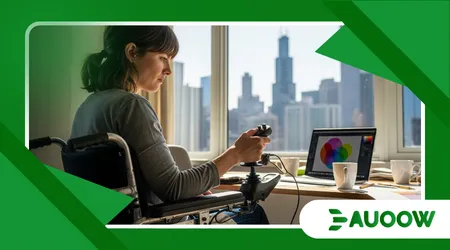
The scratched aluminum casing of Sarah’s electric wheelchair tells a story of five years of hard-won independence, but today, a faulty joystick controller has turned her mobility into a stationary prison.
Sarah, a graphic designer in Chicago, knows exactly what is wrong a simple sensor alignment but the manufacturer’s warranty explicitly forbids third-party repairs, and the proprietary screws require a tool that doesn’t exist in a standard hardware store.
To get back to work, she is told she must ship the entire 115-kilogram chair to a regional center at her own expense, a process that could take three weeks.
This friction point is where the global movement for Repairability and Right-to-Fix in Assistive Devices moves from a niche policy debate into a fundamental struggle for civil rights.
- The Monopoly on Maintenance: Why proprietary software is the new physical barrier.
- The Cost of Waiting: Analyzing the human toll of manufacturer-only repair cycles.
- Legislative Horizons: How new “Right to Repair” laws are carving out space for wheelchairs and hearing aids.
- Sustainability vs. Obsolescence: The environmental case for keeping assistive tech in the field longer.
Why does “smart” technology often mean less freedom?
There is a recurring irony in modern medical engineering. We are told that the integration of Bluetooth, AI-driven sensors, and proprietary software makes assistive devices more “intelligent.”
However, for many users, this intelligence comes with a hidden tether. The shift from mechanical reliability to digital exclusivity has quietly eroded the user’s sense of agency.
When a piece of equipment is “smart” enough to lock itself down after a minor malfunction, the user ceases to be an owner and becomes a permanent leaser of their own mobility.
What rarely enters this debate is the concept of technological infantilization.
By preventing users or independent local shops from accessing repair manuals or diagnostic software, manufacturers suggest that people with disabilities are incapable of managing their own equipment.
This isn’t just about a broken motor; it is about the power dynamic between a multi-billion dollar corporation and an individual trying to get to the grocery store.
The push for Repairability and Right-to-Fix in Assistive Devices is essentially a demand to be treated as a competent adult with the right to choose how and where essential tools are maintained.
++ Human Augmentation vs Assistive Technology: Where Do We Draw the Line?
From repairable to disposable: A deliberate shift
There was a time when a broken prosthetic or a faulty hearing aid could be adjusted by a local technician in the community.
As we entered the 2020s, that culture of local resilience was systematically replaced by a “walled garden” model.
This wasn’t an accident of progress; it was a business decision to secure long-term service revenue.
Safety concerns often valid in a vacuum have sometimes been used to justify the exclusion of independent repairers.
An honest analysis suggests that this “safety” argument can be a facade for market protection.
While a high-end power chair is a complex machine, so is a modern automobile, yet car owners generally have the right to take their vehicle to a mechanic of their choice.
In the realm of disability, however, the “medical” label on a device often strips away the consumer protections that other tech users take for granted.
This creates a two-tier system of ownership where vulnerable users have the least control over the objects they rely on for daily life.
Evolution of the Repair Landscape: 2024 to 2026
| Feature | Pre-2024 Reality | Post-2026 Implementation |
| Diagnostic Access | Hidden behind paywalls or dealer-only portals. | Manufacturers mandated to provide public software keys. |
| Parts Availability | Month-long waits for proprietary components. | “Fair price” requirements for third-party part sales. |
| Repair Manuals | Treated as “Trade Secrets” and withheld. | Digital manuals must be accessible at the point of sale. |
| Warranty Terms | Repairs by owners voided the entire warranty. | Federal protection for “reasonable” self-maintenance. |
Is the “Right to Fix” a matter of public policy or personal ethics?
The debate over Repairability and Right-to-Fix in Assistive Devices often gets bogged down in technicalities, but it is fundamentally a question of the social contract.
If a city invests in accessible transit, but citizens cannot use it because their wheelchairs are sitting in a repair depot for a month, the public investment is neutralized.
The reliability of the “last mile” is entirely dependent on the uptime of the individual’s device.
The pattern repeats: the more specialized the device, the more aggressive the manufacturer tends to be about controlling the repair ecosystem.
This is particularly evident in high-end hearing aids and complex communication boards for non-verbal users.
If the software that allows a person to speak is proprietary and the tablet breaks, that individual loses their voice until a corporate representative becomes available.
This isn’t just a supply chain issue; it is an ethical failure that treats a human’s voice as a corporate asset.
Also read: Self-Healing Materials in Medical Devices: A Innovation to Watch
Why “Repair Poverty” is the new frontier of exclusion

Imagine a university student in a rural area whose specialized braille note-taker stops functioning during finals week. Because of the lack of local repair options, they must ship the device across the country.
They cannot afford the expedited shipping, and they don’t have a backup. This is “repair poverty” a state where the lack of accessible, affordable maintenance creates a secondary barrier to participation.
It doesn’t appear in building codes, yet it is effective at preventing a person from completing their education or maintaining a job.
The move toward Repairability and Right-to-Fix in Assistive Devices aims to decentralize this expertise. By empowering local community colleges and independent labs to handle these repairs, we create a more resilient society.
The current model is brittle; it relies on a handful of global hubs to keep millions of people moving.
A more inclusive approach recognizes that the “right to the city” is limited if you are stuck at home waiting for a proprietary battery to arrive from overseas.
Read more: Predictive Health Alerts in Assistive Devices: A Life-Saving Trend?
Can open-source design solve the repairability crisis?
A significant shift is occurring through the “Maker” community within the disability space.
Frustrated by high costs and slow speeds, engineers with disabilities are increasingly designing their own open-source components.
From 3D-printed wheelchair tires to open-source software for eye-tracking devices, the grassroots are pushing back.
These innovations are proof of concept for a world where repairability is the default, not the exception.
However, there is a balance to be struck between absolute corporate control and total lack of oversight.
The most effective middle ground is “Qualified Right to Repair,” where manufacturers provide the same tools and information to independent, certified technicians that they provide to their own dealers.
This maintains safety standards while dismantling the monopoly that keeps prices high and repair times long.
The environmental impact of the “Right to Fix”
Beyond the human rights argument lies a stark environmental reality. The assistive technology industry generates a staggering amount of e-waste.
When expensive equipment is discarded because a small part cannot be replaced, it represents a failure of sustainability.
The push for Repairability and Right-to-Fix in Assistive Devices is a crucial component of the “Circular Economy.”
A chair that lasts fifteen years because it can be easily serviced is better for the planet than three chairs that last five years each.
We are currently at a crossroads. As more jurisdictions pass comprehensive “Right to Repair” legislation, the assistive tech sector is gradually moving toward a more transparent era.
The goal is to move away from the “planned obsolescence” that has plagued consumer electronics.
For the disability community, this is about ensuring that the tools of their independence are as durable and resilient as the people who use them.
The road to autonomy
There is something deeply unsettling about the idea that our most intimate tools are not truly ours.
As we look toward 2030, the movement for Repairability and Right-to-Fix in Assistive Devices will likely define the next decade of disability advocacy.
It is a transition from fighting for the “right to be in the room” to fighting for the “right to stay in the room” without needing a corporate pass.
True accessibility is not just a ramp at the door; it is the peace of mind that comes from knowing your mobility is in your own hands.
FAQ: Understanding Your Repair Rights
1. Does the “Right to Fix” mean I have to repair my own equipment?
No. It simply means you have the choice. It ensures that you can take your device to an independent repair shop or a local technician rather than being forced to use the manufacturer’s authorized service centers.
2. Will repairing my own device make it unsafe?
Providing official manuals and diagnostic tools actually makes repairs safer by ensuring that whoever works on the device has the correct information and parts.
3. Does this movement affect software-based devices like speech apps?
Yes. A major part of the Right to Fix involves “software locks.”
It advocates for users to have the ability to reset or update the software they rely on for communication without needing a proprietary technician to “unlock” the device remotely.
4. How can I tell if a device is “repairable” before I buy it?
Look for “Repairability Scores” which are becoming more common in several markets. You can also check if the manufacturer sells replacement parts directly to consumers or uses standard screws and connectors.
5. Are “Right to Repair” laws already in effect?
It depends on your location. Many regions have passed laws for electronics, and several new bills in 2024 and 2025 specifically include powered mobility devices and other assistive technologies.
6. Won’t this make assistive technology more expensive?
Actually, competition in the repair market tends to drive down service costs. When devices last longer through easy repairs, the total cost of ownership over time decreases significantly for the user.
