
Why AI literacy in inclusive education is now a global priority
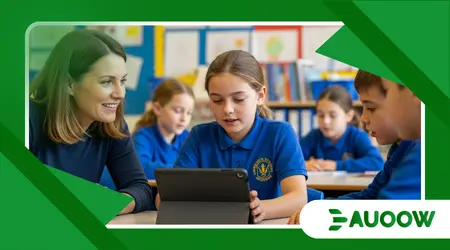
A AI literacy in inclusive education is now a global priority, yet the weight of this shift is often felt most acutely in the quietest moments of a classroom.
Consider Sarah, a ten-year-old student in London living with a significant speech processing disorder.
For years, her participation in group discussions was filtered through a human teaching assistant a well-intentioned but slow intermediary.
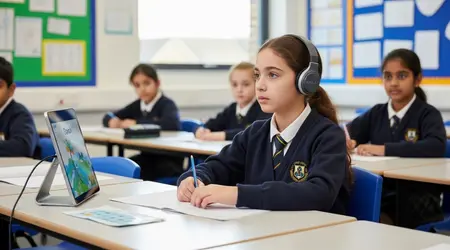
Today, Sarah uses a personalized voice-synthesis tool that learns her unique vocal patterns, allowing her to contribute to a debate on climate change in real-time.
But a quiet friction remains: her teacher is unsure if the AI is “correcting” Sarah’s thoughts or merely her delivery, and the school district is navigating the murky ethics of whether the data stored by the app compromises Sarah’s future privacy.
This scenario is repeating in thousands of variations worldwide.
We have moved past the era of seeing technology as a mere “add-on” for disability; we are now in a space where the cognitive tools used to learn are fundamentally changing how we think.
If the educators guiding this process do not understand the mechanics, biases, and ethics of these tools, we aren’t just failing a curriculum we are failing a generation of students who rely on these systems to interface with the world.
Navigating the Digital Frontier
- The Literacy Gap: Moving beyond functional use to critical understanding.
- Structural Barriers: Why access to hardware is only half the battle.
- The Ethics of Data: Protecting the digital autonomy of vulnerable learners.
- The Teacher’s Role: Reclaiming pedagogy in an automated age.
Why is traditional accessibility no longer enough?
For decades, the standard of inclusive education focused on physical and sensory barriers: ramps, Braille, and closed captioning. These are “static” accommodations.
Once installed, they function predictably. Artificial Intelligence, however, is “dynamic.” It evolves, predicts, and crucial to understand it can hallucinate or carry the narrow perspectives of its programmers.
This is precisely why AI literacy in inclusive education is now a global priority. We are no longer just providing a ramp; we are providing a vehicle that makes its own decisions.
What rarely enters the mainstream debate is that AI can inadvertently create new forms of exclusion while attempting to solve old ones.
If an AI-driven grading system hasn’t been trained on the syntax of students with cognitive disabilities, it might flag their work as “low quality” or “plagiarized.”
Without a high level of AI literacy, educators cannot advocate for students against the “black box” of algorithmic judgment. The barrier has shifted from the physical doorway to the digital code.
++ How AI policy in schools 2026 is shaping inclusive classrooms
How does structural neglect shape the AI experience?
There is a structural detail that is too often overlooked: the “digital divide” has matured into a “literacy divide.”
In many regions, there is a rush to purchase expensive licenses for AI teaching assistants without an equivalent investment in training staff to critique them.
There is an unspoken, and perhaps dangerous, assumption that “smart” tech is inherently “better” tech.
This feels like a lingering echo of the technocratic model of disability, which prioritizes the tool over the person’s lived experience and agency.
When we observe these systems more closely, the pattern repeats in how schools handle data.
Students with disabilities often generate more data than their neurotypical peers because they use more assistive devices. This data biometric, behavioral, and linguistic is immensely valuable to corporations.
From a rights-based perspective, the lack of AI literacy among policymakers suggests we are trading student privacy for basic accessibility a bargain that is rarely demanded of students who do not require assistive tech.
What actually changed after the 2024-2025 AI Integration Act?
The global legislative landscape has struggled to keep pace with the speed of generative models.
However, recent shifts have begun to recognize that energy dependency and digital literacy are now civil rights issues.
We have seen a reluctant transition from viewing technology as a luxury to seeing it as a human right, though the implementation remains uneven and frequently leaves the Global South behind.
| Era | Focus of Inclusion | Educational Outcome |
| Pre-2020 | Physical Integration | Ramps, elevators, and mainstreaming in physical classrooms. |
| 2021-2024 | Digital Access | Provision of tablets and basic software for remote learning. |
| 2025-Present | AI Literacy | Critical use of adaptive models and data sovereignty. |
The realization that AI literacy in inclusive education is now a global priority has forced a reassessment of teacher training.
It is no longer enough for a Special Educational Needs (SEN) coordinator to know how to operate a device; they must now understand the data privacy policy and the potential for algorithmic bias within that device.
Why is “Individualized Learning” a potential trap?
Technology designers often celebrate “hyper-personalization” as the ultimate win for inclusion. If an AI can tailor a lesson plan perfectly to a student’s specific processing speed, it sounds like a victory.
However, a more honest analysis suggests that this can lead to “educational siloing.”
If a student is only ever presented with material that fits their current cognitive profile, we risk removing the “productive struggle” that is essential for intellectual growth.
Furthermore, there is the risk of “automated low expectations.” If an algorithm determines that a student’s “optimal path” excludes certain complex concepts, the student may never be challenged.
This is where AI literacy becomes a shield. An AI-literate educator knows when to override the algorithm.
They understand that the software is a tool for support, not a definitive map of a child’s potential. We must ensure that AI serves to expand a student’s world, not shrink it to fit an optimized data set.
Also read: Inclusive Education in the Middle East: Emerging Opportunities
Can policy bridge the gap between innovation and equity?
The legislative frameworks we currently rely on, such as the ADA in the US or the European Accessibility Act, were written for a hardware-centric world.
They struggle to mandate “algorithmic fairness.” While these laws have evolved to include website accessibility, they are often silent on the transparency of the AI models used in schools.
There are valid reasons to question this approach, as it leaves the most vulnerable students at the mercy of proprietary software.
Imagine a student in a rural district where the school uses an AI tutor to compensate for a lack of specialized staff.
If that AI has a cultural bias that fails to understand the student’s dialect or local context, the student is effectively being silenced by the machine.
Policy must move beyond just funding the purchase of these tools; it must mandate that AI literacy in inclusive education is now a global priority within the teacher certification process.
We need a “Universal Design for Learning” (UDL) that is explicitly AI-aware.
Read more: Africa’s Innovative Approaches to Inclusive Learning
What does “Inclusive AI Literacy” look like in practice?
A truly inclusive future requires us to stop viewing assistive devices as gadgets and start seeing them as cognitive extensions.
Just as we wouldn’t allow a textbook to contain blatant misinformation, we shouldn’t allow an AI tool to operate in a classroom without rigorous, transparent oversight.
This requires a cultural shift in how we value the professional judgment of educators versus the efficiency of the software.
Practical innovation would involve “Explainable AI” (XAI) in the classroom tools that tell the teacher why a certain recommendation was made for a student.
It would also look like “Data Sovereignty” for students, where they or their guardians have the right to manage or delete the learning history that an AI has compiled over time.
Acknowledging that AI literacy in inclusive education is now a global priority means recognizing that the right to learn is now inextricably linked to the right to understand the machines that facilitate that learning.
The Path Toward Cognitive Justice
The struggle for accessibility has always been a struggle for space the right to be in the room, the right to be on the bus, the right to be at the table.
In 2026, that struggle has expanded to include “cognitive space.” We cannot claim to be an inclusive society if our students are being mediated by algorithms that their teachers do not understand.
The shift toward a more resilient form of inclusion won’t happen through a single breakthrough in software.
Real progress happens when we stop treating AI as a magic wand and start treating it as a complex, powerful, and fallible tool.
AI literacy in inclusive education is now a global priority because it is the only way to ensure that technology serves as a bridge to the world, rather than a new set of invisible walls.
The goal is not just a “smarter” classroom, but a more just one, where every student has the power to be understood on their own terms, both by humans and by the machines we create.
Frequently Asked Questions
Is AI literacy just about learning how to code?
No. In the context of inclusive education, it is more about “critical consumption.”
It means understanding how AI makes decisions, recognizing its limitations, and knowing how to protect student privacy. You don’t need to write code to know when the code is failing a child.
Will AI replace special education teachers?
No, but it will shift their roles. AI can handle repetitive tasks like data tracking or basic skill drills, but it cannot provide the emotional intelligence, advocacy, and nuanced understanding of a student’s home life that a human teacher provides.
How can parents support AI literacy?
Parents should ask schools specific questions about the AI tools being used: Where is my child’s data stored?
Is the tool being used to supplement or replace human instruction? Does the tool have a manual override if it’s not working for my child’s specific needs?
What is the biggest risk of AI in inclusive classrooms?
The greatest risk is “algorithmic bias.” If an AI was trained mostly on neurotypical students, it might categorize a student with autism or dyslexia as “incorrect” simply because their way of thinking doesn’t match the average data point in the training set.
Are there free resources for teachers to improve their AI literacy?
Yes, many international organizations and universities are now offering open-source modules on “Inclusive AI.”
The focus is moving away from tech-heavy manuals toward pedagogical guides that help teachers integrate these tools ethically and effectively.
