
How Emerging Technologies Can Reduce the Global Accessibility Gap
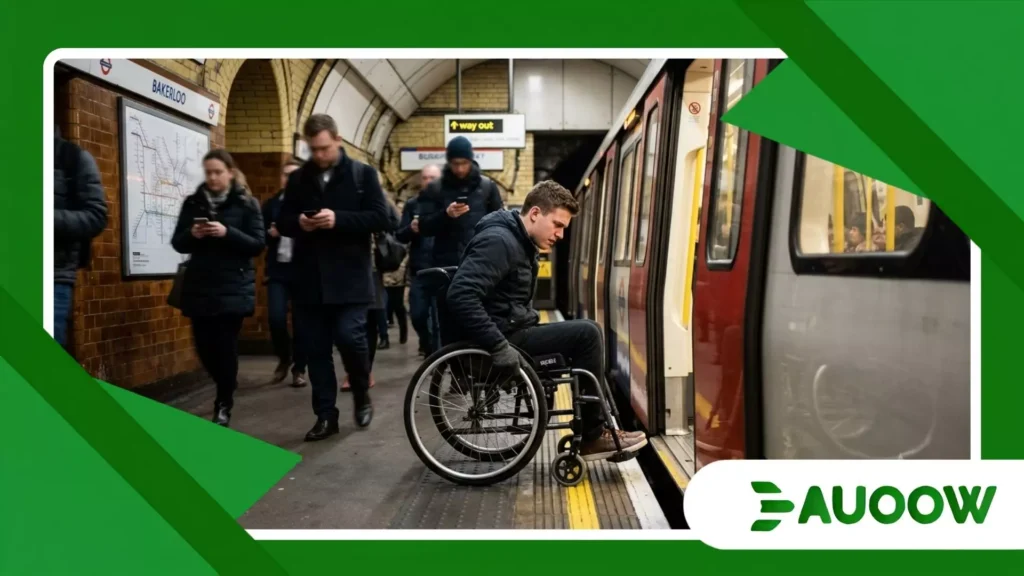
At the edge of a busy subway platform in London, I watched a young man using a wheelchair struggle with a gap between the train and the platform edge that seemed designed to ignore his existence.
Emerging technologies can reduce the global accessibility gap, yet here he was, navigating a physical landscape that hasn’t evolved since the Victorian era.
The struggle was quiet, rhythmic, and entirely invisible to the hundreds of commuters rushing past him, each absorbed in their own screens, oblivious to the fact that the platform they stood on was a static wall in a world that claims to be moving forward.
We often talk about the digital revolution as a universal tide that lifts all boats. But when we look at the intersection of urban design and personal autonomy, we see that the tide hasn’t risen for everyone.
The gap isn’t just about code or hardware; it’s about the stubborn persistence of physical spaces that were never built with the human body’s diversity in mind.
The Invisible Layers of Our Infrastructure
The history of accessibility is not a straight line of progress. For decades, the onus was placed on the individual to “adapt” to their environment.
If a building had stairs, you were expected to find another way or simply not enter. It was a failure of imagination disguised as architectural tradition.
What we see today is a collision between legacy infrastructure and high-speed innovation.
Many of the barriers we face in 2026 are holdovers from mid-20th-century planning, where efficiency was measured by the speed of a theoretical standard majority.
When we consider how emerging technologies can reduce the global accessibility gap, we have to acknowledge that these tools are not magic wands. They function as corrections for a long-standing systemic oversight.
The shift we are seeing now moves away from static solutions like adding a ramp as an afterthought towards dynamic environments that recognize individual requirements.
Sensors that adjust lighting based on neurodivergent needs, or navigation interfaces that provide haptic feedback in crowded transit hubs, are beginning to dismantle the assumption that the “standard user” is a constant.
++ Smart Glasses for Blind Users: Beyond Navigation
Does Policy Keep Pace with Potential?
Legislation is often the floor, not the ceiling. The Equality Act in the UK and similar frameworks in North America have pushed property owners to consider universal design, but enforcement remains fragmented.
There is a structural detail that is frequently ignored: regulations often focus on physical access while neglecting the sensory or cognitive layers of a space.
We have spent years debating the width of a doorway, yet we are only just beginning to regulate the clarity of wayfinding for people with cognitive disabilities.
It is a slow, grinding process of updating building codes that were written when “access” meant nothing more than a curb cut.
- Legacy Systems: Often rigid, costly to retro-fit, and protected by heritage status.
- Modern Integration: Focused on flexible, software-based overlays that work with existing structures.
- User Autonomy: The critical metric that shifts the focus from “charity” to an absolute right of use.
The Reality of Daily Navigation
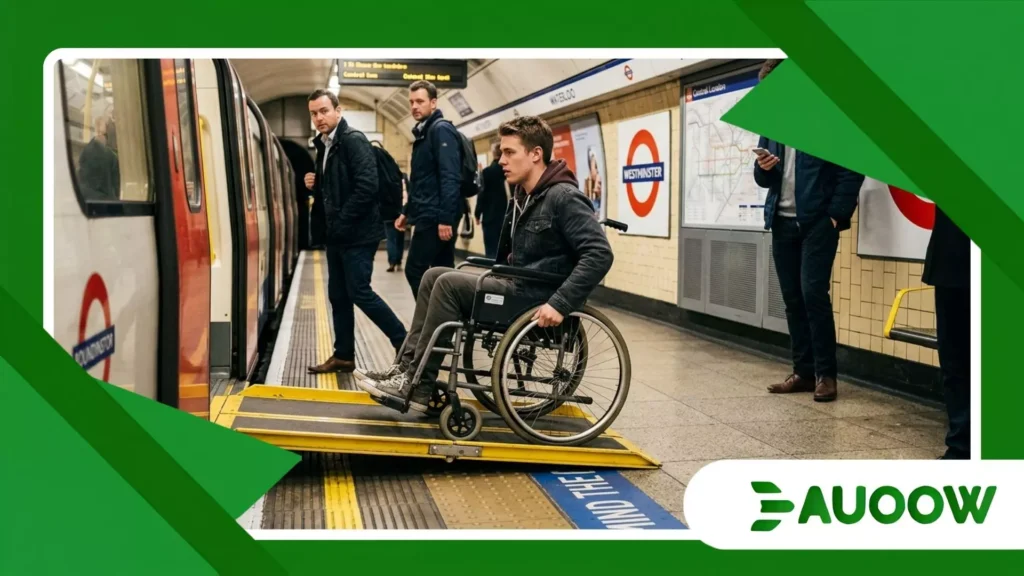
Consider a student living in a sprawling urban center, navigating the city using a combination of public transit and ride-sharing services.
For this individual, the promise that emerging technologies can reduce the global accessibility gap is not an abstract concept; it is the difference between attending a lecture or staying home.
Advanced pathfinding algorithms now integrate real-time elevator status data with precise crowdsourced reports on pedestrian congestion.
A decade ago, this was rarely feasible. Today, it is becoming a basic expectation.
However, if the underlying mapping data is biased or incomplete if it overlooks neighborhoods where low-income residents with disabilities reside the technology merely recreates old patterns of exclusion under a new, digital mask.
We must remain critical of the data fed into these systems. If algorithms are trained primarily on historical usage patterns that excluded disabled populations, the technology will continue to route people away from the city center, reinforcing the very isolation we claim to be solving.
Who Controls the Interface?
The democratization of assistive tools is a radical shift. Historically, assistive devices were expensive, proprietary, and difficult to repair.
Today, the rise of open-source hardware and modular design means that a person does not always need to wait for a government grant to access a vital interface.
The real breakthrough isn’t in the device itself, but in interoperability.
When a prosthetic limb can communicate smoothly with a smartphone, or a screen-reader can navigate a custom-built smart home interface, we enter an era of personalized autonomy.
Also read: Why Assistive Technology Regulation Still Focuses on Devices, Not Systems
Why the “Standard” is a Myth
We have lived under the tyranny of the “normative” body for too long. Design schools have historically taught that accessibility is a specialized sub-discipline rather than the core of design itself. This is where the narrative shifts.
When we integrate technology that adapts to the user rather than forcing the user to adapt to the machine we stop seeing accessibility as a burden on the economy. We start seeing it as an efficiency gain.
After all, when a building is made accessible for a wheelchair user, it becomes more convenient for the delivery worker with a trolley, the parent with a stroller, and the traveler with heavy luggage. It is a quiet optimization of public space.
Assessing the Shift: A Decade of Change
| Metric | 2016 Context | 2026 Context |
| Data Reliance | Static, pre-programmed maps | Dynamic, real-time feedback loops |
| Device Cost | High, proprietary systems | Modular, community-driven hardware |
| Public Policy | Reactive (fixing errors) | Proactive (universal design mandates) |
| User Agency | Limited to compliant zones | Ubiquitous across digital/physical blends |
Even with these gains, we must be careful not to fall into uncritical techno-optimism.
Technology, while powerful, cannot replace the human empathy required to recognize where barriers persist.
A sensor in a floor is useless if the building management refuses to keep the path clear.
The bridge between potential and reality is built by policy, funding, and the persistent voices of people who demand to be included.
Read more: Public Procurement’s Role in Shaping Assistive Tech Markets
Breaking Down the Barriers
When I look at the future of education, I see inclusive classrooms that use AI-driven captioning and real-time sensory adjustment.
These are tools that lower the barrier to entry, but they don’t erase the prejudice that sometimes keeps students from feeling welcome in the first place.
The assertion that emerging technologies can reduce the global accessibility gap holds up only if we treat these technologies as part of a social contract.
They must be accessible, affordable, and inclusive by design. If we allow these tools to become luxury goods, we will simply replace old physical barriers with new, expensive digital ones.
Looking Ahead
The path forward requires us to move beyond the idea of “special needs.” We need to view the environment as an active participant in our collective life.
Whether it is through smarter public transit apps or more inclusive urban planning, the goal is to make the city a space that responds to the citizen, rather than the other way around.
The young man at the train station I mentioned earlier he shouldn’t need a miracle to get on a train. He needs a system that recognizes he is there.
And as we continue to push the boundaries of what is possible, we must ensure that the global gap we talk about is narrowing because we are prioritizing the right things.
Frequently Asked Questions
Is technology alone enough to solve accessibility problems?
No. Technology is a tool, not a solution in itself. Without policies that mandate universal design and a social shift toward genuine empathy, technology will only serve as a temporary patch for deeper, systemic problems.
How do we ensure that new tech doesn’t exclude those who can’t afford it?
This is a critical concern. We need to advocate for accessibility as a public utility.
Governments and institutions must play a role in subsidizing essential assistive technologies, ensuring they are treated as necessary infrastructure rather than optional consumer luxuries.
Why do some accessibility projects fail even with high-end tech?
Often, it’s a failure of input. If developers don’t actively involve people with disabilities in the design and testing phases, they build solutions for problems that don’t exist while ignoring the actual barriers encountered daily.
What is the most significant change in accessibility over the last five years?
The shift toward interoperability. We are moving away from isolated, proprietary devices and toward systems that can communicate with each other, creating a more seamless experience for the user.
Can emerging technologies reduce the global accessibility gap in developing countries?
Yes, but the approach must adapt to the context. Instead of expensive, high-tech installations, the focus should be on low-cost, mobile-first, and open-source solutions that can be deployed effectively without requiring massive infrastructure investment.
