
Accessibility Budgets Explained: Where the Money Goes (and Where It Doesn’t
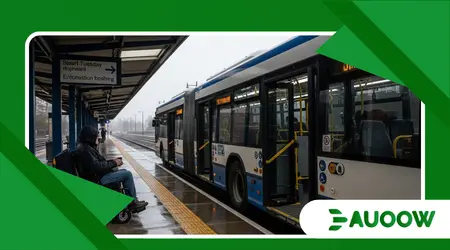
To truly understand Accessibility Budgets Explained, one must look at the quiet frustration of a rainy Tuesday morning at a suburban train station.
I recently watched a commuter using a motorized wheelchair wait as three consecutive buses passed him by. Each driver offered the same apologetic gesture toward a kneeling ramp that refused to move.
It wasn’t a lack of technology; the ramps were installed and present. It was a failure of maintenance a line item in a budget that someone, somewhere, decided was secondary to other “core” operational costs.
This gap between having a tool and having a working tool is where the real story of inclusive funding begins.
Inside the Financial Architecture of Inclusion
- The Maintenance Gap: Why initial hardware investments often fail without long-term funding for repairs.
- Digital vs. Physical: Comparing spending patterns between urban infrastructure and web accessibility.
- Shadow Costs: Examining the economic burden shifted onto families when public systems fail.
- Policy Evolution: How legislative shifts since the 1990s dictate today’s municipal spending priorities.
- Resource Allocation: A breakdown of where accessibility dollars are actually distributed in the 2026 fiscal year.
Why does the money seem to vanish before it reaches the ramp?
When discussing Accessibility Budgets Explained, we must recognize the divide between capital investment and operational upkeep.
There is a recurring pattern in public policy: governments often prioritize the ribbon-cutting ceremony. They may spend millions on a new fleet of low-floor buses, which serve as high-visibility wins for annual reports.
However, a structural detail often ignored is that a ramp is only as effective as the recurring maintenance behind it.
Maintenance is unglamorous and frequently among the first items trimmed during a fiscal squeeze.
When a city council faces a deficit, they rarely remove the “accessible” sticker from the bus; instead, they might quietly extend the repair cycle.
The result is “zombie infrastructure” equipment that exists on paper but remains unreliable on the street.
++ Accessibility Audits in Public Buildings: Are Governments Checking Compliance?
What rarely enters the debate about inclusive spending?
Current budgeting models are often reactive, meaning funds are allocated to fix barriers only after they are reported, rather than designing them out from the start.
A significant hurdle is how city treasurers view a tactile paving project or a sign-language interpreter as a “specialized expense” for a small group.
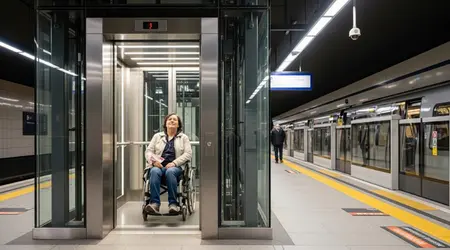
In reality, these funds serve a much broader demographic. An elevator in a metro station assists a person using a wheelchair, but it also serves parents with strollers and elderly travelers.
By labeling these funds strictly as “disability spending,” we make them vulnerable to political debates about balancing the needs of the many against the few.
This misses the “curb-cut effect,” where inclusive design improves the environment for the entire community.
How do decisions from thirty years ago shape our current sidewalks?
Decisions made in the early 1990s, following the first wave of major disability rights legislation, still influence current budgets.
Back then, many cities opted for the most affordable retrofits possible to meet legal requirements. They installed steep ramps or heavy manual doors that prioritized compliance over actual usability.
Today, we are paying the price for that frugality. Modern Accessibility Budgets Explained are often consumed by the need to “fix the fix.”
We are spending money today to remove substandard features installed decades ago.
Treating accessibility as a series of apologies in concrete, rather than a permanent standard of excellence, has created a cycle of fiscal inefficiency.
Also read: Who Monitors Accessibility Laws? The Accountability Gap in Public Policy
Hidden barriers in the professional world
Imagine Elias, a software developer who is blind and uses screen-reading software.
His company recently spent $2 million on a new internal project management tool, focusing the budget on speed and aesthetics. When Elias tried to log in, the tool was essentially a void for his screen reader.
The “Accessibility” line item was a mere 0.5% of the total project cost treated as a footnote.
The cost to retrofit that software after launch was estimated to be significantly higher than if an accessibility consultant had been involved during the design phase.
This illustrates where much of the money goes: into the high cost of avoidable mistakes.
Are we spending enough on the “Human Layer”?
Investment often focuses on objects rather than people. A city might spend $10,000 on a sophisticated hearing loop system for a public auditorium, but if the staff is not trained to operate it, the investment is wasted.
The “Human Layer” training, protocol, and empathy is frequently the least expensive part of a budget but the most frequently ignored.
We see massive allocations for “Smart City” sensors, yet very little for audits led by people with disabilities.
Treating the disability community only as “beneficiaries” rather than “architects” of the budget is why projects often fail to meet real-world needs.
Read more: Middle East Accessibility Policies: Slow Change or Silent Revolution?
The “Shadow Budget” affecting families
When a public school lacks a budget for a dedicated educational assistant, or a transit system is unreliable, the family often pays for private alternatives.
This is the “Shadow Budget” the invisible tax on disability. In 2026, the cost of living with a disability in a mid-sized North American city remains significantly higher than for non-disabled peers.
Every dollar cut from a public Accessibility Budgets Explained report doesn’t simply disappear; it is often transferred to the personal finances of families.
By failing to fund the public good of accessibility, we essentially force individuals to subsidize the city’s budget through their own private struggle.
What changed in the world of assistive technology?
There has been a shift in how personal inclusion is funded. For a long time, the financial burden was almost entirely on the individual to purchase expensive, specialized hardware.
| Feature | The Traditional Model (Pre-2020) | The Current Shift (2026) |
| Personal Tools | High cost for specialized braille or mobility tech. | Accessibility features integrated into standard OS/mobile devices. |
| Education | “Resource rooms” with limited, separate hardware. | Universal Design for Learning (UDL) software for all students. |
| Workplace | Individual requests for “accommodations.” | Digital-first standards; mandatory compliance for all corporate tools. |
While software is becoming more inclusive by design, the physical world is lagging.
The “Digital Divide” is being replaced by a “Physical Repair Gap,” where software accessibility is improving while physical infrastructure remains in disrepair.
The reality of Accessibility Budgets Explained is that it remains a work in progress and a mirror of our civic priorities.
Choosing to fund a stadium while neglecting sidewalk repairs is a moral choice reflected in a financial report.
Progress lies in the steady funding of the mundane: maintenance, training, and inclusive design. When the ramp works every time, our budgets will finally align with our stated values of inclusion.
How is accessibility being funded in your local community or workplace? Have you noticed a “Maintenance Gap” nearby? Let’s discuss below.
Frequently Asked Questions
How is an accessibility budget actually calculated by a city?
Most cities use a mix of “Compliance Spending” (doing the bare legal minimum) and “Project Integration” (adding features to existing construction). It is rarely a single, dedicated fund, which can lead to fragmented results.
Does making a website accessible cost a significant amount of money?
If integrated during the design phase, it typically adds 1% to 3% to the total cost. Retrofitting a finished site can cost significantly more, sometimes up to 50% of the original price, because the foundation may need to be rebuilt.
Why are elevators in subway stations frequently out of service?
This is usually due to operational budget squeezes. Cities may secure the capital to build elevators but fail to fund the specialized staff and parts needed for continuous maintenance in high-traffic environments.
Can small businesses receive help for accessibility upgrades?
Many regions offer tax credits or small grants. However, many business owners do not apply because the administrative process can be complex. The funds exist, but the “accessibility to the money” is often a hurdle.
What is the difference between “Medical” and “Social” budgeting?
Medical budgeting typically funds items like wheelchairs for individuals. Social budgeting funds environment-wide features like ramps and captions that benefit everyone. We are currently seeing a shift toward the social model.
