
Energy Dependency in Assistive Hardware: Accessibility During Power Failures
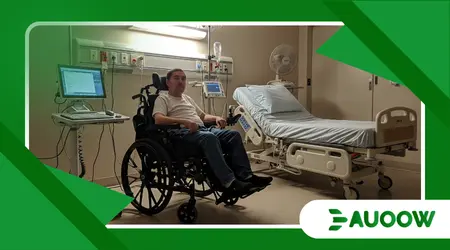
The quiet hum of a ventilator is often the only sound in Marcus’s bedroom during a humid Chicago night, a mechanical lullaby that signifies safety.
For Marcus, who lives with a high-level spinal cord injury, Energy Dependency in Assistive Hardware is not a technical abstraction; it is the tether that connects him to the physical world.
When a sudden summer storm knocked out the local grid last July, that hum stopped.
In the sudden, heavy silence, the “smart” features of his environment the lift that moves him, the bed that prevents pressure sores, and the interface he uses to call for help became motionless objects.
His autonomy did not just fade; it vanished the moment the power stopped.
This vulnerability highlights a gap in our push for a digital-first society. While we celebrate the “smart” revolution in assistive technology, the fragile infrastructure supporting it is frequently overlooked.
As we navigate an era of climate instability and aging power grids, the intersection of disability and energy becomes a significant frontier for civil rights.
Core Themes of the Energy Gap
- The Fragility of Innovation: High-tech tools often lack low-tech redundancies for emergencies.
- Infrastructure as Exclusion: Urban planning that fails to prioritize life-sustaining circuits in residential areas.
- The Cost of Preparedness: The economic burden of backup power on households with disabled members.
- Policy Shortfalls: Emergency protocols that may treat electricity as a standard utility rather than a critical necessity.
Why has energy become a barrier to inclusion?
For decades, accessibility was largely defined by physical structures like ramps and braille buttons. These are passive solutions; once built, they function without external fuel.
Today, many transformative leaps in inclusion from eye-tracking communication devices to robotic exoskeletons are active.
This shift means we have transitioned from overcoming physical barriers to managing energy-dependent ones.
When a city experiences a blackout, a staircase remains a barrier for a wheelchair user, but a dead battery in an electric wheelchair can turn an entire environment into an obstacle.
Consequently, Energy Dependency in Assistive Hardware now acts as a gatekeeper for social participation.
If a student cannot charge a specialized communication tablet, they face a barrier to the classroom as real as a locked door.
++ Repairability and Right-to-Fix in Assistive Devices
How does structural neglect affect the experience of power failures?
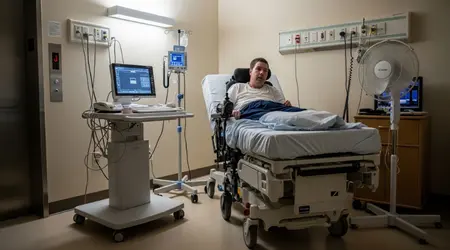
A structural detail that is often misconstrued is that emergency grids are typically designed around the needs of centralized institutions like hospitals, rather than distributed medical needs in the community.
This focus can sometimes reflect an outdated view that prioritizes institutionalization over independent community living.
When looking closely at how utility companies manage “critical care” registries, the limitations become clear.
These lists often provide little more than a courtesy notification before a planned outage. They rarely offer immediate backup power solutions or guaranteed priority for restoration.
In many cases, the current system appears designed to manage logistics rather than to fully support the independent living of residents.
What has changed after the 2024-2025 grid alerts?
Recent extreme weather events have prompted a reassessment of domestic energy needs. For many, a power outage has moved from being an inconvenience to a life-threatening event.
We are beginning to see a shift from viewing this as an individual responsibility toward a need for systemic resilience.
| Period | Perspective on Energy | Policy Response |
| Pre-2020 | Electricity as a general utility. | Minimal registries for at-risk users. |
| 2021-2024 | Energy as a convenience. | Focus on green transition, often with gaps in disability tech. |
| 2025-Present | Energy as a fundamental right. | Emerging discussions on priority restoration and battery subsidies. |
Why is the “Smart Home” sometimes a challenge for residents?
Designers often prioritize the aesthetics of a connected home without fully considering the “fail-state” of their products.
If a front door is controlled by a digital lock requiring a powered hub, a blackout does more than turn off the lights it can compromise safety and exit routes.
This is where Energy Dependency in Assistive Hardware moves from an inconvenience to a safety hazard.
Optimizing for the majority of the time when systems work can leave gaps for the moments they fail.
Some high-end wheelchairs lack a simple, manual “neutral” gear that is easily accessible to a user with limited hand function.
This is not necessarily a lack of technology, but perhaps a lack of inclusive perspective during the engineering phase.
Also read: Self-Healing Materials in Medical Devices: A Innovation to Watch
Can policy bridge the gap between voltage and dignity?
Legislative frameworks like the ADA or the European Accessibility Act were established in an era where hardware was primarily physical.
While these laws evolve, they still face challenges in mandating that landlords or businesses provide charging stations or uninterruptible power supplies (UPS) as a standard form of reasonable accommodation.
Consider a professional in a modern office. They may have the right to an adjustable desk, but the right to a dedicated, backup-powered outlet for life-sustaining equipment is often less clear.
Frequently, the burden of ensuring survival during a failure is placed on the individual, rather than being addressed through systemic infrastructure.
Read more: Why Are Prosthetics Still So Expensive? Breaking Down the Costs
What does “Universal Energy Design” look like in practice?
An inclusive future requires us to view assistive devices as essential extensions of the person.
Just as a city manages water supply with immense logistical care, the supply of electricity to those with Energy Dependency in Assistive Hardware deserves similar gravity.
Practical innovation could include standardized, hot-swappable battery packs compatible across different brands.
It might also involve “Energy Priority Zones” in new housing developments.
Most importantly, it requires acknowledging that in a digital world, the right to participate in public life is tied to the reliability of a power source.
The Path Toward Resilient Autonomy
The struggle for accessibility has always been a struggle for the right to occupy space the right to be in the room, on the bus, or at the table.
In 2026, that struggle includes the right to be “plugged in.” True inclusion cannot exist if autonomy is vulnerable to a single thunderstorm.
Progress toward resilient inclusion will not come from a single technical breakthrough.
It will happen when architects, policymakers, and engineers treat energy as an essential requirement for the people they serve.
Real progress is the certainty that life-sustaining tools will function even when the world goes dark.
How has your community handled recent power challenges? Are there local initiatives that prioritize energy for those who need it, or is this still an unrecognized gap? Your observations help map the path toward a more resilient future.
FAQ: Navigating the Grid
Should I rely on my utility company’s “critical care” list?
It is a useful step, as these lists often protect you from disconnection for non-payment.
However, they rarely guarantee that your power will remain on during a major storm or grid failure. It is a helpful administrative safeguard, but not a physical one.
What is an effective backup for medical hardware in an apartment?
For many, a large-capacity portable battery station (often called a solar generator) is a practical choice. They can be kept indoors, produce no fumes, and charge from a standard wall outlet when the grid is active.
Does insurance cover backup power supplies?
Historically, coverage has been limited. Most insurers view backup power as essential only in specific, high-risk cases.
However, advocacy groups are working to have these recognized as vital components of the primary medical device.
What should I ask a potential landlord about power accessibility?
Inquire if the building has backup power for elevators and if there is a plan for residents with medical needs during emergencies. These questions are becoming more common in urban leasing.
How do I identify if my device has a manual override?
Review the “Fail-Safe” or “Emergency Operations” section of your manual.
If a device whether a bed, lift, or door lacks a clear manual operation method for you or a caregiver, it is important to develop a specific backup plan for power failures.
