
SEND 2026 reform in the United Kingdom and its effects on inclusive education.
The SEND 2026 reform arrived not with a sudden fanfare, but in the quiet, anxious rustle of papers on a kitchen table in Birmingham.
Elena, a mother of two, sat staring at her seven-year-old son’s draft Education, Health and Care Plan (EHCP).
For three years, she had navigated a labyrinth of tribunals and private assessments for a child who exists on the autism spectrum.
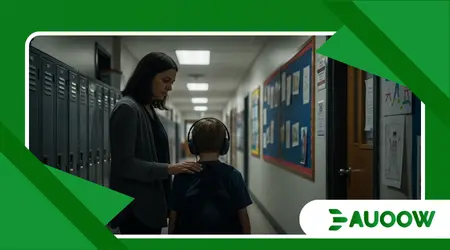
Her son, Leo, had spent most of the previous term in a hallway because his mainstream classroom’s sensory roar was too loud, and the school’s “resource” was spread thin.
When the UK government finally unveiled the SEND 2026 reform, the rhetoric promised a “generational shift.”
But as Elena traced the new lines of the legislation, her question remained: is this a genuine expansion of rights, or a sophisticated way to manage a system that has financially collapsed?
Summary of the Editorial Analysis
- The Shift: Moving from an adversarial model to a standardized “Inclusive Mainstream” approach.
- The Mechanism: National Standards and Local Inclusion Plans intended to reduce the “postcode lottery.”
- The Concern: Potential dilution of legal protections in favor of school-level “Individual Support Plans.”
- The Workforce: A significant demand for educational psychologists to meet the reform’s timeline.
Why was the British SEND system facing an existential crisis?
To understand why the SEND 2026 reform became an inevitability, one must look at the structural decay of the 2014 Children and Families Act.
For over a decade, the UK’s approach to Special Educational Needs and Disabilities became fundamentally adversarial.
It was a system that often rewarded families with the time and capital to navigate local authority disputes in court, leaving others behind.
By the mid-2020s, the number of children identified with SEND surged to nearly 1.6 million. Local councils carried multi-billion-pound deficits, and schools struggled to provide even basic reasonable adjustments.
The 2014 legislation promised rights without providing the corresponding infrastructure. It functioned like a ticket to a train that hadn’t been built yet.
The 2026 framework attempts to pivot from crisis-mode intervention toward a tiered, “inclusive-by-design” model.
Rather than flowing primarily into individualized, legally-heavy EHCPs, the government is focusing on the “Universal Offer.”
This represents a significant gamble on the capability of mainstream schools to absorb complexity and provide a sense of belonging for every learner.

How does the reform change the classroom for a neurodivergent child?
In this new landscape, the classroom experience is intended to change through the “Inclusion Base” mandate.
Under the SEND 2026 reform, mainstream secondary schools are required to provide dedicated sensory-neutral hubs.
These are designed not as isolated units, but as fluid spaces where a student like Leo can retreat for speech therapy or sensory regulation before returning to their peer group.
++ Special Education vs Inclusive Education: Can They Coexist?
Is the “Inclusion Passport” a tool for progress?
There is a structural detail that often escapes notice: the digitalization of a child’s educational journey. The reform introduces a Digital Inclusion Passport.
This record follows a student from nursery to college, aiming to end the trauma of parents having to repeat their child’s history diagnoses, triggers, and past failures to every new educator they encounter.
Also read: Grading with Equity: Practical Approaches for Teachers
What are the risks of standardization?
When efficiency meets empathy, patterns often repeat. Standardizing “bands” of support to manage resources risks treating a child’s needs as a mathematical average.
A child with a visual impairment in a rural setting faces different environmental barriers than one in an urban academy.
There is a valid concern that by seeking system-wide consistency, we may inadvertently introduce rigidity.
Who really benefits from the new Local Inclusion Plans?
Analysis suggests that the primary beneficiaries of the SEND 2026 reform might be the Local Authorities seeking financial sustainability.
The new “Local Inclusion Plans” (LIPs) harmonize what schools offer. While this aims to end the “postcode lottery,” there is a risk it creates a ceiling on the support parents can realistically request.
The recruitment crisis remains a significant hurdle. One can mandate an “Inclusion Base,” but providing a speech and language therapist where there is a shortage is a different challenge.
Policy resolution is high, but the workforce remains out of focus. A SENCO in Kent recently noted that legislative changes cannot instantly fill long-standing vacancies for specialist teaching assistants.
Read more: Standardized Testing vs Inclusive Assessment: What Works Better?
Can “Early Resolution” replace the SEND Tribunal?
The SEND 2026 reform places a heavy bet on mediation. The government aims to reduce the number of families heading to courts.
In 2024, the vast majority of parents who reached a tribunal won their case, which highlighted flaws in local decision-making.
The 2026 reform introduces a mandatory “Early Resolution” phase to settle disputes faster.
| Feature | Pre-2026 System | Post-SEND 2026 Reform |
| Legal Threshold | High; often required tribunal | Tiered; emphasis on mediation |
| Funding Flow | “High Needs” via Local Authority | Direct-to-School Inclusion budgets |
| Staffing Focus | 1:1 Teaching Assistants | Specialist Leads & Inclusion Bases |
| Parental Role | Litigant/Advocate | Co-designer of the Passport |
| Outcome Metric | Completion of EHCP goals | Belonging & Participation indices |
Why is the new SENCO qualification so important?
A quietly transformative part of the SEND 2026 reform is the new National Professional Qualification (NPQ) for SENCOs.
For the first time, the individual overseeing inclusion must be part of the school’s senior leadership team. This acknowledges that accessibility is not a peripheral administrative task, but a pillar of school leadership.
When an inclusion lead has a seat at the budget table, quiet zones are funded and teacher training becomes a priority rather than an afterthought.
However, the true measure of success will be whether these leads have the power to veto exclusionary practices and reshape curricula that might otherwise marginalize neurodivergent learners.
The Path Forward: Empathy as Infrastructure
The SEND 2026 reform is an admission that the previous decade required a change in scale. Inclusion is not a destination reached solely through legislation; it is a daily practice.
As Elena closed her laptop, the reform felt like a new map for a difficult journey. The UK has committed to the “Inclusive Mainstream,” but for this map to work, the specialists and therapists must be in the room.
We must ensure the geometry of our schools expands to fit the child, rather than asking the child to shrink to fit the room.
Frequently Asked Questions
Will my child’s current EHCP be cancelled under the 2026 reform?
No. Existing Education, Health and Care Plans (EHCPs) remain legally binding. The reform changes how new plans are drafted and how support is integrated into mainstream settings.
What is an “Inclusion Base” exactly?
It is a dedicated space within a mainstream school staffed by specialists. It allows students to access the mainstream curriculum while having a retreat for sensory regulation or specific therapeutic interventions.
Does “Early Resolution” mean I can’t go to a tribunal anymore?
You retain the right to a tribunal, but the reform requires engagement in a structured mediation process first. The goal is to resolve disagreements in weeks rather than the year-long waits often seen in the court system.
How does the Digital Inclusion Passport protect my child’s privacy?
The passport is built on a “need-to-know” basis. Parents maintain control over which parts of their child’s history such as medical details are visible to different levels of staff.
