
Telehealth and Assistive Tech: Closing the Accessibility Gap
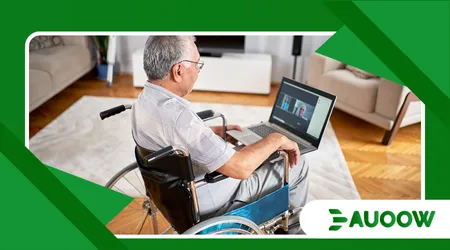
Telehealth and Assistive Tech are fundamentally reshaping healthcare delivery, moving services out of clinics and into the homes of those who need them most.
This powerful convergence is actively addressing long-standing barriers, such as geographical distance and physical mobility constraints.
The goal is to provide equitable and comprehensive care, regardless of a patient’s physical abilities or location.
In 2025, the synergy between Telehealth and Assistive Tech is no longer an aspiration but a core pillar of modern healthcare policy.
By leveraging digital platforms and specialized tools, we are creating a more inclusive system.
This new paradigm ensures continuous monitoring, remote therapy, and specialized consultations are finally within reach for millions.
What is the Synergy Between Telehealth and Assistive Tech?
Telehealth and Assistive Tech represent a natural, powerful partnership designed to overcome physical and logistical hurdles.
Telehealth provides the digital infrastructure the video calls, remote monitoring, and data transfer.
Assistive Tech provides the specialized tools the smart sensors, modified interfaces, and remote diagnostic equipment. This synergy allows clinical interventions and monitoring that previously required an in-person visit.
++ AI in Speech Therapy: How Adaptive Systems Boost Progress
How Does Telehealth Enhance Access for Users of Assistive Tech?
Telehealth dramatically reduces the need for physically challenging travel for individuals with mobility impairments.
A patient using a power wheelchair, for instance, avoids the immense logistical difficulty of specialized transport and inaccessible clinic entrances.
Furthermore, remote consultation is often less stressful, especially for individuals with cognitive disabilities or sensory sensitivities.
Receiving care in a familiar home environment significantly improves patient engagement and reduces anxiety, leading to better diagnostic outcomes.
Also read: Wearable Health Monitors for Chronic Conditions
What are the Key Examples of Converging Technology?
One key example of this convergence is the use of remote vital sign monitoring systems.
Wearable sensors track heart rate, blood pressure, and glucose levels continuously. This data is transmitted via a telehealth platform to a specialist hundreds of miles away.
Another innovation involves remote rehabilitation platforms. A patient recovering from a stroke can use haptic feedback gloves or motion-sensing cameras at home. A physical therapist supervises and customizes exercises in real-time via video link.
Read more: Metaverse Accessibility: Opportunities and Risks in Virtual Worlds
Why is this Convergence Crucial for Rural Communities?
For individuals in rural or remote areas, access to specialized care, such as speech-language pathology or complex geriatric care, is often non-existent. Telehealth and Assistive Tech effectively eliminate this geographical isolation.
This technological bridge connects patients directly to urban specialists and tertiary care centers. This saves substantial time and travel costs, preventing conditions from worsening while waiting for distant appointments.

How is Telehealth Improving Remote Rehabilitation and Therapy?
Remote rehabilitation through telehealth is fundamentally changing how patients recover from injuries or manage chronic conditions. It allows for highly personalized, consistent therapy without the disruption of weekly clinic visits.
This system encourages greater patient adherence to treatment plans. Therapists can observe the patient’s actual home environment, providing more relevant and practical advice for daily living tasks.
What are the Advantages of Using Assistive Robotics in Tele-Rehab?
Assistive robotics, when integrated with telehealth, allows for sophisticated, high-frequency therapy at home. Robotic exoskeletons or motorized devices can guide limbs through repetitive motions.
A therapist monitors the session remotely, adjusting resistance or range of motion via the telehealth interface. This maximizes the therapeutic intensity while minimizing the need for the therapist’s physical presence.
What Role Does Artificial Intelligence (AI) Play in Remote Monitoring?
Artificial Intelligence is making remote monitoring proactive and highly predictive. AI algorithms analyze data streams from wearable sensors, detecting subtle changes in patterns that human staff might miss.
For instance, AI can identify slight shifts in a gait pattern, predicting an increased fall risk days before an incident occurs.
This allows the care team to intervene immediately, fulfilling the promise of proactive, preventative care.
What Statistical Data Highlights Telehealth’s Impact on Mental Health?
The impact on mental health services is profound. According to a 2024 report by the World Health Organization (WHO), the adoption of remote mental health services integrated with assistive communication technologies led to a 35% increase in treatment completion rates among individuals with severe social anxiety disorders.
This powerful statistic demonstrates that reducing the stress of travel and in-person confrontation can be a major factor in therapeutic success.
Telehealth and Assistive Tech removes these barriers, fostering comfort and consistency.
How Can We Understand this System Through the Lens of an Analogy?
We can understand the synergy between Telehealth and Assistive Tech through the analogy of a home security system. The system (Telehealth) provides the central hub and the communication lines.
The specialized sensors, cameras, and motion detectors (Assistive Tech) are the customized tools that provide the essential, real-time data to the monitoring station (the clinical team).
The system only works effectively when both components are seamlessly integrated.
What are the Ethical and Regulatory Challenges of Telehealth?
While the benefits of Telehealth and Assistive Tech are transformative, their widespread deployment faces complex ethical, privacy, and regulatory hurdles.
Ensuring data security and equitable access requires robust policy development.
The rapid pace of technological change often outstrips the ability of healthcare regulations to adapt. Policymakers must strike a difficult balance between innovation and patient protection.
Why is Data Privacy a Major Concern in Remote Monitoring?
Remote monitoring generates vast quantities of sensitive personal health data (PHD). Securing this data against breaches and unauthorized access is paramount, especially when devices are used outside secure hospital networks.
Effective implementation of Telehealth and Assistive Tech requires rigorous adherence to international data privacy standards, such as HIPAA or GDPR. Patients must have absolute trust that their constant stream of intimate health data is protected.
What Does the Issue of “Digital Divide” Mean for Accessibility?
The digital divide refers to the gap between those who have access to reliable internet, devices, and digital literacy, and those who do not. This poses a major threat to the promise of universal accessibility.
If marginalized populations lack the infrastructure to use Telehealth and Assistive Tech, the technology risks creating new forms of healthcare inequality, rather than closing existing gaps.
Subsidized hardware and broadband are essential solutions.
What Regulatory Standards are Needed for Assistive Technology Devices?
Unlike traditional medical equipment, many consumer-grade assistive technologies lack standardized regulatory oversight. This raises concerns about device accuracy, reliability, and potential malfunctions.
Regulators must establish clear approval pathways for devices that perform remote diagnostic or therapeutic functions. This ensures the safety and efficacy of new tools integrated into telehealth platforms.
How Can We Ensure Equity of Access in Telehealth Implementation?
Ensuring equity requires a multi-faceted approach, moving beyond simple technological deployment. This involves mandating affordability, providing technical support, and offering language and cultural accommodations.
Should governments not step in to subsidize internet access and hardware for low-income patients, the transformative power of Telehealth and Assistive Tech will remain a privilege, not a universal right.
Is it not our ethical imperative to ensure technology serves everyone, not just the connected?
Overcoming Accessibility Barriers via Telehealth and Assistive Tech (2025 Focus)
| Barrier | Traditional In-Person Care (Pre-2020) | Telehealth & Assistive Tech Solution | Impact on Accessibility |
| Geographical Distance | Required hours of travel to specialist clinics | Remote video consultation and data transfer (Telehealth) | Eliminates travel, saves time and cost |
| Physical Mobility | Difficult transport and inaccessible buildings | Home-based sensors, robotic devices (Assistive Tech) | Removes physical barriers and necessity for transport |
| Consistency of Care | Sporadic appointments, relying on memory/notes | Continuous remote monitoring, AI-driven alerts | Enables proactive, data-driven, and timely interventions |
| Social Anxiety/Stress | High stress associated with clinic settings | Consultations in a familiar, comfortable home environment | Improves patient engagement and reduces anxiety for therapy |
Telehealth and Assistive Tech together represent a revolutionary force in healthcare, successfully bridging geographical and physical gaps to deliver high-quality, personalized care.
By enabling continuous monitoring, remote specialized therapy, and proactive intervention, this synergy is fulfilling the promise of a truly accessible healthcare system.
The future success of this domain hinges on the secure, ethical, and equitable deployment of these tools, ensuring that the digital divide does not replace the geographical divide.
The convergence of Telehealth and Assistive Tech offers a clear pathway to better outcomes, particularly for individuals with disabilities and those in underserved regions.
This ongoing innovation demands continuous policy attention to ensure its benefits are shared by all.
Share your experience using remote care or assistive technologies in the comments below! What further technological integration do you believe is most crucial for accessibility?
Frequently Asked Questions
Is remote physical therapy as effective as in-person therapy?
Studies, including a 2024 meta-analysis in The Lancet, show that remote physical therapy using integrated Telehealth and Assistive Tech (like motion sensors) is often equally effective as in-person care for common musculoskeletal and neurological conditions, due to increased consistency and patient adherence.
What is the biggest security risk with remote monitoring devices?
The biggest risk is the security of the data transmission and storage. Since devices collect highly sensitive data outside secured hospital firewalls, encryption and secure cloud storage must be flawless to prevent hacking or data breaches.
Do all insurance providers cover services using Telehealth and Assistive Tech?
Coverage is rapidly expanding in 2025, largely due to policy shifts, but it is not yet universal. Coverage still varies significantly by region, specific service type (e.g., counseling vs. robotic rehab), and the patient’s specific plan.
How is the issue of reliable internet access being solved?
Governments and private partners are implementing several solutions, including subsidizing high-speed broadband access in remote areas, providing low-cost or free cellular data plans, and distributing easy-to-use, pre-configured hardware devices to vulnerable populations.
Will this technology replace healthcare professionals entirely?
No. Telehealth and Assistive Tech are powerful tools designed to augment and extend the capabilities of human professionals.
AI handles data monitoring and alerting, but complex diagnosis, treatment planning, and human empathy remain the exclusive domain of qualified healthcare providers.
