
The End of ‘Workplace Accommodations’ as a Concept?
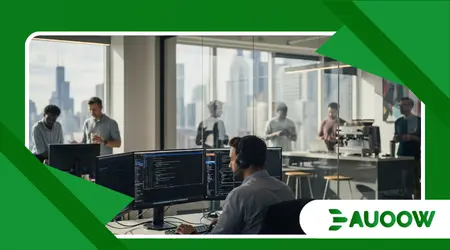
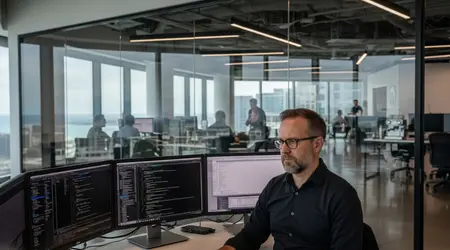
In a glass-walled office in Chicago, a senior developer named Marcus sits before three monitors.
The room is sleek, but for Marcus, who is neurodivergent, the open-plan layout with its hum of espresso machines and overlapping conversations is a sensory minefield.
He doesn’t need a specialized chair or a screen reader; he simply needs the permission to wear noise-canceling headphones and work from a secluded booth for part of his day.
To secure this, Marcus had to file a formal request for workplace accommodations, a bureaucratic process that felt less like a professional adjustment and more like asking for a permission slip in high school.
This friction highlights a shifting paradigm in how we view labor, disability, and design.
As we move through 2026, we are witnessing the potential obsolescence of the very term “accommodation” a word that implies a favor granted rather than a right fulfilled.
How we navigate the current landscape
- The Shift to Universal Design: Moving away from retrofitting toward systems that are inherently accessible.
- The Psychological Toll: Understanding how the “request and approve” model can create unintended hierarchies.
- Technological Integration: How AI and flexible infrastructure are making adjustments a standard feature.
- Policy Evolution: Why legal frameworks like the ADA are moving from minimum compliance to broader inclusion.
Why is the term ‘accommodation’ becoming problematic?
When we talk about workplace accommodations, the language itself often suggests a deviation from a “normal” standard.
For decades, the corporate world has operated on the assumption that there is a default type of worker one who processes information and moves through space in a homogenized way.
Anyone falling outside that narrow bandwidth is “accommodated,” a term that historically carries the weight of being an exception to the rule.
The problem with this approach is structural. It places the burden of disclosure and proof on the employee, often requiring medical documentation to justify a change that might actually benefit the entire team.
Many of these adjustments, like flexible hours or quiet zones, have become common needs for the general workforce following the global shifts of recent years.
By building a world for a perceived few and expecting others to fit in, we maintain an industrial-era mindset one where workers are viewed as interchangeable parts rather than individuals with varying sensory and physical needs.
++ Hybrid Work Policies in 2026: Accessibility Wins and New Exclusions
How does the ‘Interactive Process’ work in practice?
Legally, the “interactive process” is designed as a collaborative dialogue between employer and employee.
In reality, it can feel like a negotiation where the employee must bargain for the tools they need to be productive.
This can create a power imbalance where a person with a disability feels forced to prove their “qualified” status before receiving equitable access.
A significant detail that often gets ignored is the fear of reprisal.
A 2025 study by the Job Accommodation Network (JAN) indicated that while most adjustments are low-cost, many employees hesitate to ask for workplace accommodations because they fear being viewed as “difficult” or “expensive.”
This psychological barrier silences a portion of the talent pool, often leading to burnout and higher turnover.
Is Universal Design the successor we’ve been waiting for?
Universal Design is the proactive side of accessibility; it is the practice of creating environments and policies that are usable by everyone to the greatest extent possible.
Instead of waiting for a specific request for a quiet space, a universally designed office includes sensory-friendly zones as a standard feature. This transition turns specific needs into systemic standards.
In the digital realm, this looks like software with built-in screen reader compatibility and captioning as default settings.
Companies adopting these principles find they improve the experience for parents, older workers, and people with temporary injuries alike.
Universal Design is more than an ethical choice; it is a resilient economic strategy. By designing for the “edges” of human ability, organizations build systems that cater to the full spectrum of experience.
It is the difference between a building with a steep staircase and a separate, hidden lift versus a building with a well-integrated ramp that everyone uses.
Also read: Why the Post-Remote Work Backlash Is Hitting Disabled Workers First
Why are we seeing a rise in ‘Self-Adjusting’ technology?
The integration of AI into workplace accommodations has created tools that adjust to the user in real-time.
This might include an interface that simplifies itself during periods of high cognitive load or communication platforms that provide instant, high-quality sign-language interpretation.
These innovations move us toward a responsive ecosystem rather than a static physical location.
Read more: Boardroom Diversity: How Disability Inclusion Impacts Corporate Decisions
When technology handles the heavy lifting of accessibility, the concept of a formal “request” starts to dissolve into the background of modern productivity.
Gatekeeping hurdles only serve to limit the level of participation required for a truly inclusive society.
The goal is to make the environment flexible enough that a “special request” becomes an anomaly.
Moving beyond the ‘Exception’ mindset
Transitioning away from the exception mindset requires a cultural shift. Accessibility is not a “disability issue”; it is a human performance issue.
Most people experience a change in their abilities at some point in their lives through age, illness, or accident. Inclusive design is, in many ways, a gift to our future selves.
If a company focuses on “accommodating” an individual, they may still subtly frame that person as an outsider.
However, if they prioritize a frictionless environment that supports multiple ways of working, they have evolved. This is the difference between tolerance and true belonging.
Comparing Models of Inclusion
| Feature | The Legacy ‘Accommodation’ Model | The Emerging ‘Universal Inclusion’ Model |
| Primary Driver | Legal compliance and risk mitigation. | Talent retention and innovation. |
| Responsibility | Employee must disclose and request. | Employer builds inclusive systems by default. |
| Cost Perception | Often viewed as an “extra” expense. | Integrated into the general HR and R&D budget. |
| Technology | Specialized, external assistive tools. | Built-in, customizable features in standard tech. |
| Social Impact | Can highlight the “difference” of the worker. | Normalizes varied ways of working for everyone. |
The evolution of our workspaces is a reflection of collective empathy. As we move toward a world designed for everyone, we acknowledge that the “normal” worker was always a myth.
We are finally building environments that fit the people who live in them, rather than forcing people to warp themselves to fit a world that wasn’t made for them.
How has the design of your own workspace impacted your ability to do your best work this year? Share your experience in the comments.
Navigating the Future of Work
Do I still need a doctor’s note to get help at work in 2026?
Legally, employers can still request documentation for formal workplace accommodations.
However, many progressive companies are moving toward “open-access” policies for low-cost items, such as ergonomic tools or flexible scheduling, to reduce unnecessary bureaucracy.
Is Universal Design more expensive for small businesses?
While the initial setup requires intentionality, it is almost always more cost-effective than retrofitting an inaccessible system later. Many digital tools with built-in accessibility are now industry standards.
What happens if my job says an adjustment is an ‘undue hardship’?
The definition of “undue hardship” is a legal standard, but the threshold is higher in 2026 due to the availability of low-cost assistive technology.
If a request is denied, you have the right to seek mediation through your local labor board.
Does remote work count as an accommodation?
It can be both. For many, it is a standard option, but for individuals with specific physical or immune-system conditions, it remains a critical, protected adjustment. Making it an option for all reduces the stigma for those who need it most.
