
The Role of Robotics in Independent Living
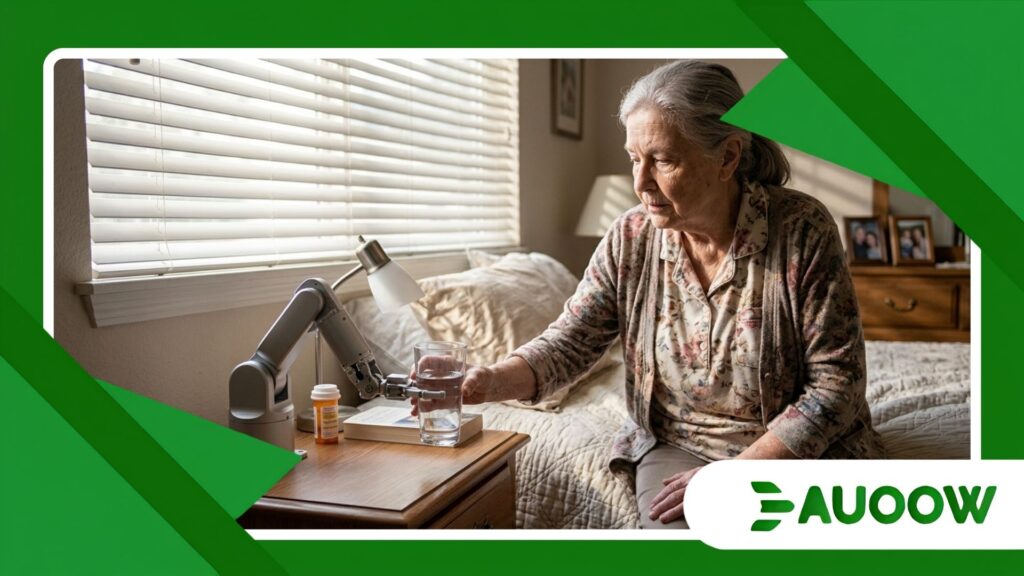
The morning light filters through the blinds, casting long shadows across a quiet room where an elderly woman with advanced arthritis attempts a single, straightforward task: lifting a glass of water from her nightstand.
Her hand trembles, her grip fails, and the glass tips over. For years, the response to this moment would have involved waiting for a visiting caregiver, moving into a specialized care facility, or accepting a gradual retreat from personal autonomy.
Today, a subtle mechanical hum accompanies a small robotic arm fixed to her nightstand, which gently stabilizes the glass and moves it within her reach.
Understanding the role of robotics in independent living requires looking closely at these quiet, unglamorous interactions where physical engineering meets the daily human desire for agency.
What follows is an exploration of how technology shapes autonomy in our homes:
- The shift from industrial machinery to personal assistive robotics
- Why physical infrastructure often lags behind technological promise
- The invisible economic and social barriers determining who gets access
- Lessons learned from real-world deployments in home care
- What a truly accessible ecosystem looks like beyond high-tech gadgets
How Did We Get from Industrial Assembly Lines to Personal Living Spaces?
For decades, robotics belonged almost exclusively to factory floors heavy, dangerous, and programmed to perform repetitive tasks behind protective cages.
The transition into domestic environments did not happen overnight, nor did it begin with high-minded social goals.
It began when sensor technology, miniaturized motors, and machine vision became affordable and reliable enough to navigate unpredictable spaces like living rooms and kitchens.
When we observe this transition with more attention, a clear pattern emerges regarding how society defines support.
Early home automation focused primarily on efficiency and convenience for non-disabled users: sweeping floors, turning off lights, or regulating thermostats.
However, for a person navigating life with a mobility impairment, a neuromuscular condition, or age-related frailty, the stakes are fundamentally different.
An assistive device is rarely about convenience; it is about retaining control over one’s schedule, body, and dignity.
Yet, a structural detail is routinely ignored in enthusiasm over smart devices. Designing a robot to operate in a controlled lab is radically different from placing it in a cluttered two-bedroom apartment.
A rug that bunches up, an unexpected pet, or a narrow hallway can render an expensive piece of engineering unusable.
The evolution of personal robotics has forced engineers to confront the messy, unpredictable reality of human domestic life.
What Is the Difference Between Mechanical Help and True Autonomy?
It is easy to confuse assistance with independence, but they are not the same thing.
Assistance implies that a task is completed for someone; independence means that the individual retains authority over how, when, and if that task is carried out.
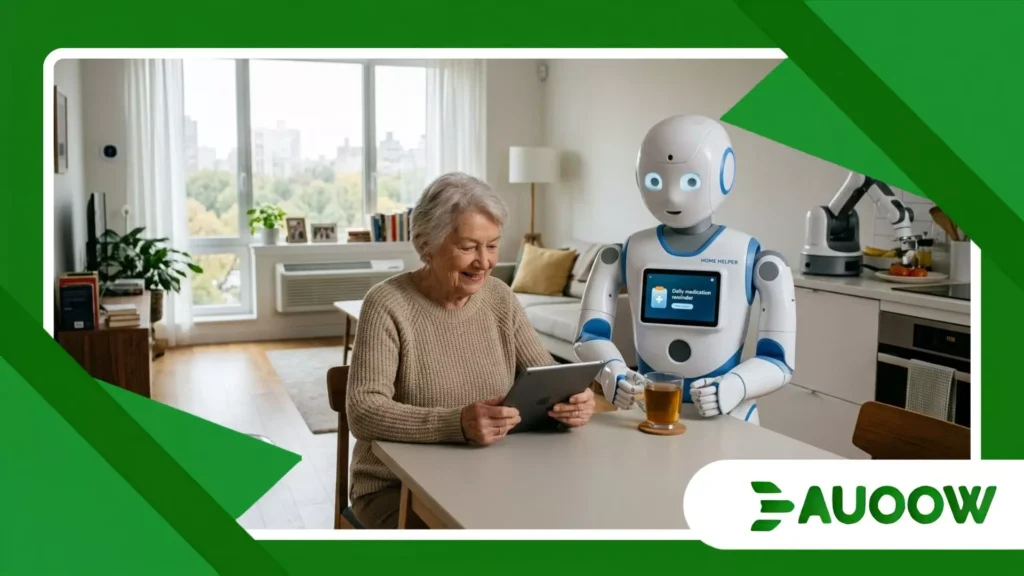
The most thoughtful robotic applications are not those that attempt to replace human care entirely, but those that restore agency to the individual.
Consider the ordinary act of eating meals. Traditional care routines often dictate that a person must wait for a relative or paid aide to assist with feeding at predetermined times.
A motorized, user-controlled robotic eating utensil allows an individual to choose their own pace, pause for conversation, and decide when they are finished.
The technology itself is relatively simple compared to complex industrial systems, yet its psychological impact is profound. It moves the user from a passive recipient of care to an active participant in their own day.
Technology alone cannot solve the crisis of isolation or physical care.
When a machine handles a physical task, it frees human caregivers to provide emotional, social, and complex medical support provided our social systems choose to reinvest that saved time wisely, rather than simply cutting care budgets.
Why Does Physical Infrastructure Keep Holding Innovation Back?
There is an underlying contradiction in how we approach modern accessibility.
We celebrate cutting-edge exoskeletons and autonomous mobility devices, while the physical world around us remains obstinately inaccessible.
A costly mobility device offers limited value if the local bus lacks a working ramp, or if the entrance to the grocery store includes two unnecessary steps.
Urban spaces were historically built around a very specific, narrow standard of human mobility. Retrofitting these environments is slow and expensive.
Consequently, personal robotics often ends up serving as a private workaround for public policy failures.
We ask the individual to buy advanced technology to adapt to an environment that should have been built inclusively in the first place.
This dynamic creates a growing divide. The benefits of automated personal support remain largely restricted to those who can afford specialized equipment or who live in modern, accessible housing.
Until living spaces, doorways, and power grids are designed with assistive integration in mind, the reach of these technologies will remain artificially constrained.
++ The Evolution of Braille Technology in the Digital Age
How Are Real Families Navigating This Shift Today?
Imagine a veteran with a spinal cord injury living in a suburban home.
His primary goal is not to execute complex technical feats, but to perform basic transfers moving from his bed to a wheelchair, or from the chair to a shower seat without risking injury to himself or his partner, who acts as his primary caregiver.
In this scenario, a ceiling-mounted robotic hoist paired with smart sensors alters the dynamic of the entire household.
The physical strain that often leads to caregiver burnout is dramatically reduced.
More importantly, the user can operate the system independently via voice interface or head-tracking controls, eliminating the constant need to ask for manual physical lifting.
However, the real-world trajectory of such setups is rarely seamless. Equipment breaks, software updates introduce glitches, and insurance coverage for maintenance is notoriously difficult to secure.
A system that works brilliantly on Monday can become unusable by Friday if technical support is unavailable.
The lived reality of assistive technology depends heavily on maintenance networks that are rarely discussed in product launches.
Also read: Why Assistive Technology Regulation Still Focuses on Devices, Not Systems
Who Actually Benefits When Robotic Systems Enter the Home?
The economic realities governing assistive robotics reveal stark inequities.
Developing hardware designed for specific, smaller demographics involves high research costs and modest production volumes, driving up the retail price for end users.
What rarely enters this debate is how public health insurance schemes classify these devices.
In many jurisdictions, a device is only funded if it fulfills a direct medical necessity, rather than a functional life requirement.
A robotic arm that enables someone to draw, write, or manage personal hobbies may be deemed a “lifestyle enhancement” rather than a medical essential, leaving the user to pay out-of-pocket.
| Category | Traditional Assistive Devices | Advanced Assistive Robotics | Social Impact & Limitations |
| Primary Function | Passive mechanical support (manual chairs, grab bars). | Active task execution (automated transfer, adaptive feeding). | Shifts role from passive support to active personal control. |
| Funding & Access | Often covered by public health plans and insurance. | Highly restricted; frequently self-funded or pilot-based. | Creates a stark technological divide based on income. |
| Maintenance Need | Low maintenance; simple mechanical repairs. | High maintenance; requires specialized software and hardware support. | Risk of total loss of function if local support fails. |
| Infrastructure Fit | Works in most standard living environments. | Requires reliable power, digital network, and spatial clearance. | Constrained by older, non-accessible housing stock. |
When we analyze the commercial landscape, we see a system that favors high-margin products over open-source, affordable interventions.
As a result, the people who stand to gain the most from independent living solutions are often those least capable of acquiring them under current market dynamics.
Read more: Public Procurement’s Role in Shaping Assistive Tech Markets
Designing a Cohesive Future for Universal Autonomy
The future of personal autonomy will not be decided solely by engineers in robotics labs.
It will be shaped by urban planners, policy makers, insurance regulators, and disabled advocates working in concert.
Technology is merely a tool; its ethical value depends on how broadly and fairly it is deployed.
If we wish to build a society where technology genuinely fosters inclusion, we must move past the novelty of home automation and address the underlying structural barriers.
This means updating building codes, reforming medical device funding, and centering the design process on the actual lived experiences of disabled individuals.
Only then will these systems fulfill their true purpose: enabling individuals to live on their own terms in the communities they choose.
FAQ Editorial
What is the primary role of robotics in independent living for people with disabilities?
The main purpose is to restore personal agency by assisting with or completing physical tasks such as eating, transferring, or reaching items without relying constantly on human intervention.
Are personal assistive robots covered by standard health insurance?
In most regions, coverage remains very limited. Standard insurance typically funds basic medical equipment, while advanced robotic tools are often classified as non-essential, leaving users to rely on personal funds, grants, or specialized pilot programs.
Do assistive robots replace human caregivers?
No. Their purpose is to handle physical, repetitive, or mechanical tasks, allowing individuals greater privacy and freeing human caregivers to focus on emotional support, social interaction, and complex care needs.
What are the main physical barriers to using robotics at home?
Inaccessible home layouts, narrow doorways, lack of ramp access, uneven surfaces, and insufficient digital infrastructure can prevent personal robots from operating effectively.
How do open-source robotics impact accessibility?
Open-source projects lower costs by allowing developers and communities to build, modify, and repair adaptive tools locally, making technology significantly more accessible outside commercial channels.
