
Wearables for Workplace Accessibility: Innovation That Matters

Wearables for Workplace Accessibility are quickly moving from niche assistive devices to mainstream enterprise technology in 2025.
These discreet, powerful tools are actively dismantling physical and cognitive barriers for employees with disabilities. They ensure talent is judged solely on ability, not on logistical challenges.
This technological revolution is not merely about compliance; it is about competitive advantage.
Companies leveraging these innovations are tapping into a skilled talent pool previously hindered by inaccessible work environments and outdated practices.
What Defines the New Generation of Accessibility Wearables?
The current wave of accessibility wearables transcends traditional, bulky medical equipment.
They are often sleek, consumer-grade devices integrated with advanced AI and sensors. Their power lies in real-time, personalized assistance.
These tools provide seamless, dynamic support that adapts to diverse needs. They are enabling unprecedented independence and integration across physical and digital workspaces.
++ Inclusive Incubators: How Startup Hubs Are Supporting Disabled Founders
How Do Smart Glasses Aid the Visually Impaired?
Advanced smart glasses, equipped with sophisticated computer vision, provide immediate environmental descriptions. They read documents, identify people, and navigate complex layouts.
This technology converts visual information into audio or haptic feedback. It allows visually impaired professionals to participate fully in dynamic meetings and site inspections.
Also read: How Internship Programs Are Opening Doors for Disabled Students
What is the Role of Haptic Feedback in Workplace Communication?
Haptic vests and wristbands are being used to translate auditory and visual cues into tactile sensations. This is vital for deaf or hard-of-hearing workers in noisy or manufacturing environments.
A specific vibration pattern can signal an emergency alarm or a colleague’s approach. This provides crucial, non-visual communication and enhances safety awareness.
Read more: Career Coaching for Disabled Professionals: Trends
Real-Time Transcription Glasses
A marketing executive who is deaf uses smart glasses that display real-time, on-screen captions of a presentation or a casual conversation. The transcription AI is customized to recognize industry jargon accurately.
This allows full, immediate participation without relying on an external interpreter. It ensures she receives information simultaneously with her hearing peers.
How Are Wearables Solving Cognitive and Neurodiversity Challenges?
Beyond physical aids, the most transformative impact of Wearables for Workplace Accessibility is in supporting neurodivergent employees.
These devices offer personalized sensory and organizational assistance. They help manage environments that might otherwise be overstimulating or confusing.
These tools stabilize the internal cognitive environment, allowing individuals with conditions like ADHD or autism to leverage their unique skills effectively.
How Do Haptic Devices Manage Sensory Overload?
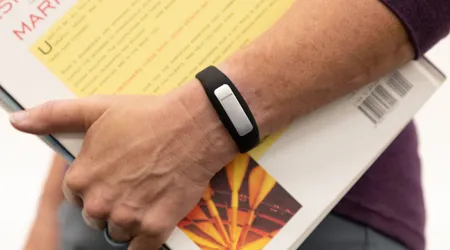
For individuals with sensory sensitivities, quiet, rhythmic haptic feedback can act as a grounding mechanism. A wristband can emit a gentle, consistent pulse to counteract stressful noise or light.
This discrete vibration helps regulate the nervous system. It maintains focus and minimizes the risk of sensory overload meltdowns during high-pressure situations.
What Features Aid in Executive Functioning?
Smartwatches and wristbands are being programmed with proactive, personalized nudges and organizational tools.
They provide subtle reminders for task shifting, scheduled breaks, and priority management.
These executive function aids help overcome common organizational hurdles. They ensure that time blindness or task initiation difficulties do not impede performance.
The Focus-Stabilizing Headband
An engineer with ADHD uses a lightweight EEG headband that monitors her focus levels. When the device detects high distraction or an imminent attention lapse, it plays a specific frequency of binaural beats.
This subtle auditory cue gently guides her attention back to the current task. It is a non-intrusive way to sustain deep, concentrated work.
What are the Economic and Ethical Considerations of Adopting Wearables?
Implementing Wearables for Workplace Accessibility is not just an ethical imperative; it is a shrewd economic decision.
However, this technology introduces complex ethical discussions regarding data privacy and surveillance.
Companies must balance the clear productivity gains with the responsibility of protecting sensitive employee biometric and personal data collected by these devices.
How Does Accessibility Technology Improve the Bottom Line?
Hiring and retaining employees with disabilities leads to demonstrable innovation and improved problem-solving diversity. The investment in wearables is quickly offset by the high ROI from this expanded talent pool.
The Job Accommodation Network (JAN) continually shows that the cost of most accommodations is low, while the benefits, including retention, are substantial.
Why is Data Privacy a Central Ethical Concern?
Wearables collect highly sensitive biometric data: heart rate, stress levels, movement patterns, and focus periods. Employees must be assured this data is strictly used for personal accommodation only.
Companies must establish clear, non-negotiable data protocols. Any perception of surveillance or performance monitoring will undermine trust and adoption.
The Wearable as a Custom Tool
A workplace wearable is not a crutch; it is a custom-designed tool, like a specialized hammer for a carpenter.
The tool allows the highly skilled professional to execute their job without structural impedance. The device unlocks, rather than compensates for, inherent talent.
What Policy Changes are Driving the Adoption of Accessibility Tech?
The current legal and corporate landscape is actively encouraging the adoption of these technologies.
Legal mandates combined with evolving corporate social responsibility (CSR) initiatives are making accessibility a priority.
This regulatory push, coupled with consumer expectations for inclusive corporate environments, is cementing the role of wearables as standard workplace equipment.
How Do ADA Requirements Drive Innovation?
The Americans with Disabilities Act (ADA) mandates reasonable accommodations, and technology is increasingly the most effective and cost-efficient way to meet this requirement.
This legal pressure fuels demand for innovative solutions.
Companies that proactively integrate cutting-edge accessibility tools demonstrate leadership. They move beyond mere compliance to genuine inclusion.
What is the Impact of the Global Inclusion Mandate?
Beyond US law, the global emphasis on ESG (Environmental, Social, and Governance) criteria compels multinational firms to prioritize social inclusion. Wearables for Workplace Accessibility are a tangible metric of commitment.
Companies seeking favorable ESG ratings are integrating accessibility into their core technological infrastructure, making it a strategic objective.
A 2024 analysis by the World Economic Forum and Accenture found that companies that prioritize disability inclusion consistently demonstrate 28% higher revenue, 30% higher economic profit margins, and double the net income compared to their peers.
This clearly illustrates the financial case for inclusion.
| Disability Supported | Wearable Technology | Key Workplace Function Aided | Privacy Concern |
| Visual Impairment | Smart Glasses (Computer Vision) | Reading documents, Navigation, Facial Recognition | Video/Image recording of the environment |
| Hearing Impairment | Haptic Vests/Wristbands | Safety alerts, Conference communications | Real-time translation data storage |
| ADHD/Executive Dysfunction | Smartwatch Prompts (Vibrational) | Task switching, Time management, Focus initiation | Tracking of attention/distraction metrics |
| Sensory Sensitivity (Autism) | Discreet Haptic Bracelet | Managing sensory overload/Stress regulation | Biometric data (Heart rate variability) |
Conclusion: The Future of Equitable Employment
The integration of Wearables for Workplace Accessibility represents a fundamental shift toward truly equitable employment.
These tools erase the line between ability and accessibility. They ensure that every talented individual can contribute fully, regardless of their physical or neurological profile.
As these devices become more personalized, cheaper, and smarter, the burden of accommodation shifts from the employee to the infrastructure.
We are moving toward a future where inclusive design is simply smart design.
What specific workplace barrier could a wearable solve for you or your team? Share your innovative ideas for accessibility in the comments below!
Frequently Asked Questions
Are these wearables expensive for employers?
The cost varies, but many high-impact wearables are surprisingly affordable, often costing less than a high-end laptop. The cost is generally minimal compared to the employee’s salary and retention value.
Who owns the data collected by workplace wearables?
This must be clearly stipulated. Best practice dictates the employee owns the data, and the company only receives aggregate, anonymous feedback on system performance, not individual biometrics.
Will using a wearable identify me as having a disability?
Modern wearables are often discreet, even fashionable, minimizing external visibility. Furthermore, many non-disabled employees use similar devices for productivity, increasing mainstream acceptance.
Is the technology standardized across different disabilities?
No. The power lies in personalization. Each wearable is typically tailored to address specific, individual needs, ranging from motor control assistance to managing auditory processing challenges.
What is the difference between a wearable and an assistive app?
A wearable provides hands-free, continuous, and often real-time haptic or audio feedback directly on the body. An app relies on the user actively engaging with a screen, which can be distracting.
