
Why Accessibility Is Rarely Included in Economic Recovery Plans
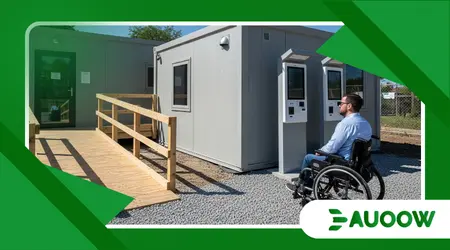
The morning mist was still clinging to the glass facades of the financial district when I met Elias, a systems analyst with a sharp mind and a custom-engineered wheelchair.
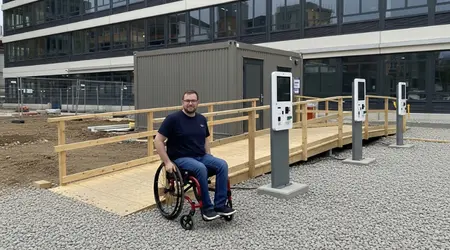
He was staring at a fresh construction site a “pop-up” business hub funded by a post-recession stimulus package designed to “get the city moving again.”
The plywood ramp was too steep, the gravel path was a nightmare of friction, and the digital kiosks were positioned at a height that assumed every user stood six feet tall.
As we watched laborers rush to meet a ribbon-cutting deadline, Elias remarked quietly, “They are building the future at record speed; they just didn’t build it for me.”
It was a stinging reminder of a systemic oversight: accessibility is rarely included in economic recovery plans, treated instead as a luxury to be retrofitted once the “real” economy is stabilized.
In this exploration of fiscal priorities and social architecture, we will examine:
- The psychological divide between growth and inclusion.
- How the “Speed vs. Standards” trap dictates recovery spending.
- The historical legacy of the “Medical Model” in treasury departments.
- Structural shifts required to move from charity to capital investment.
Does the rush for “shovel-ready” projects bury inclusive design?
When a nation faces an economic downturn, the political pressure to inject liquidity into the market becomes a fever.
The mantra is usually “speed.” Governments look for shovel-ready infrastructure projects roads, bridges, and rapid transit that can absorb workers immediately.
In this race to break ground, the nuanced requirements of universal design are often viewed by budget hawks as “regulatory friction.”
I have spent years looking at these spreadsheets, and the pattern is unmistakable.
When we talk about “rebuilding,” the focus remains on the macro: GDP growth, employment percentages, and consumer spending.
Because accessibility is rarely included in economic recovery plans as a core performance indicator, it is frequently relegated to the “compliance” phase. This is a fundamental category error.
By treating accessibility as a secondary check rather than a primary economic driver, planners ignore the massive “purple pound” or “disabled dollar” the purchasing power of people with disabilities that remains untapped when the infrastructure of commerce remains barred to them.
The logic suggests that this isn’t just an oversight; it’s a structural bias.
If a bridge is built but a significant portion of the population cannot reach the bus stop leading to it, the economic utility of that bridge is lower.
Yet, the metrics used by treasuries rarely account for the “lost opportunity cost” of exclusion.
++ Disability Benefits and Employment Traps Created by Policy Design
Why do we still view disability through a lens of welfare rather than productivity?
There is a historical ghost haunting our modern recovery strategies. For most of the 20th century, policies regarding disability were housed in ministries of health or social welfare, rarely in ministries of finance or labor.
This siloed approach created a persistent myth: that people with disabilities are passive recipients of care rather than active agents of economic growth.
When a crisis hits, recovery plans focus on “productive” sectors.
Because of this outdated mental model, accessibility is rarely included in economic recovery plans because many planners don’t see the disabled community as a vital workforce to be mobilized.
Instead, they see a demographic to be supported by the safety net once the “productive” economy is back on its feet. This is both an ethical and economic failure.
When we invest in assistive technology or accessible workplaces during a recovery, we aren’t just performing an act of social justice; we are expanding the labor pool and reducing long-term dependency on the state.
A detail that is often ignored is that accessibility features like curb cuts or digital captions have a “curb-cut effect” that benefits everyone, including the elderly and parents with strollers.
In an aging global society, an accessible recovery is the only sustainable recovery. Yet, the split between social policy and economic policy remains a chasm that few politicians are willing to bridge.
Also read: Why Assistive Technology Funding Rarely Reaches End Users
What actually changed after the 2008 and 2020 crises?
| Recovery Era | Primary Focus | The Accessibility Outcome |
| Post-2008 Financial Crisis | Bank bailouts and housing stability. | Accessibility was largely sidelined in favor of “low-cost” rapid housing, leading to a decade of inaccessible urban sprawl. |
| Post-2020 Pandemic Recovery | Digital transformation and healthcare resilience. | A significant leap in remote work accessibility, but physical “outdoor dining” and “pop-up” transit often bypassed equality standards. |
| The 2026 Outlook | Green energy and AI integration. | A risk of “Digital Divide 2.0” where AI-driven services are not built with screen-reader or neurodivergent compatibility. |
Looking at this data, it’s clear we are trapped in a cycle of “crisis-response-amnesia.” We celebrate the innovation of the moment while leaving the same old barriers in the dirt.
How does the “Retrofit Tax” drain public funds?
There is a quiet, structural detail that treasury departments consistently ignore: it is significantly cheaper to build accessibly from day one than to fix a building five years later.
Architects call this the “Retrofit Tax.” When accessibility is rarely included in economic recovery plans, the government essentially signs a check for future expenses.
Think of a worker who is highly skilled but finds their revamped office lacks the tactile signage or ergonomic flow they need to navigate independently.
The company loses a veteran employee, the government loses tax revenue, and the individual loses their livelihood.
This isn’t a tragic accident; it is the predictable result of a recovery plan that treated “human infrastructure” as an afterthought.
In the digital realm, we see the same pattern. As governments rush to digitize public services to save money during a recovery, they often launch platforms that are incompatible with assistive technologies.
The irony is sharp: a plan meant to modernize the economy ends up disenfranchising the very citizens who most need streamlined access to services.
Read more: Accessibility Policies in India: Progress and Pitfalls
Can we bridge the gap between legislation and lived experience?
Imagine a university student with a mobility impairment in a city that has just received a “Green Recovery” grant.
The city installs thousands of new electric vehicle charging stations and narrow “protected” bike lanes.
However, because accessibility is rarely included in economic recovery plans, the charging stations are placed in the middle of narrow sidewalks, making them impassable for wheelchairs.
The bike lanes, intended to be eco-friendly, create new barriers for those trying to board paratransit vehicles.
This is a real-world tension. We are seeing a conflict between different types of “progress.”
If our transition to a green or digital economy isn’t an inclusive one, it isn’t true progress it’s just a relocation of the barrier.
There are reasons to question why “shovel-ready” has become a synonym for “unfiltered.”
True recovery requires a shift in who is in the room when the money is allocated. It requires the presence of social analysts and disability advocates at the drafting table of the Ministry of Finance.
We must stop asking “How much will accessibility cost?” and start asking “How much is exclusion costing us?”
Why is the “inclusion” debate often silenced by the “inflation” debate?
In recent years, the specter of inflation has been used as a shield against social spending. When budgets tighten, “extras” are often the first to go.
The tragedy is that accessibility is still classified as an “extra.” Because accessibility is rarely included in economic recovery plans, it becomes a casualty of austerity.
But if we look closer, we see that inclusive design is actually a hedge against inflation. An accessible society is a more efficient one.
It reduces the cost of specialized transport, decreases the burden on family caregivers who could otherwise be in the workforce, and creates a more robust, diverse marketplace.
Current trends suggest we are building a “two-tier recovery.”
One tier for those who can navigate the fast-paced, digital-first, “shovels in the ground” world, and another for those left to wait for the improvements that may never come.
We need to dismantle the idea that economic health and social inclusion are competing interests. They are, in fact, the same pulse.
FAQ: Understanding the Gap
Why isn’t accessibility considered a priority in “shovel-ready” projects?
The term “shovel-ready” emphasizes speed.
Planners often fear that the detailed consultations and specific design requirements needed for universal accessibility will slow down the timeline and delay the “stimulus” effect on the economy.
Does including accessibility actually make a recovery more expensive?
While there can be a slight increase in initial design costs (often less than 1%), the long-term savings are significant.
It prevents expensive retrofitting later and allows more people to participate in the economy as workers and consumers, which increases tax revenue.
How can digital recovery plans exclude people with disabilities?
If a government moves services online without ensuring the code is compatible with screen readers or simplified for neurodivergent users, they effectively shut the door on many citizens, even if the intent was to make things more “efficient.”
What can the average citizen do to change this?
Public infrastructure is funded by your taxes. Demanding that local “revitalization” or “recovery” grants include strict universal design standards is a powerful way to ensure that the future being built is one everyone can actually enter.
Is there any country doing this right?
Some Scandinavian models and recent shifts in certain Canadian provincial policies have begun to tie infrastructure recovery dollars to strict accessibility outcomes, proving that a fast recovery can also be a fair one.
