
Why Assistive Technologies Still Don’t Talk to Each Other
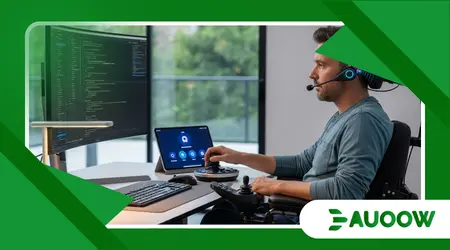
The reason why Assistive Technologies Still Don’t Talk to Each Other becomes painfully obvious when you watch someone like Marcus, a software architect who happens to be quadriparetic, try to start his workday.
Marcus uses a sophisticated sip-and-puff system to navigate his computer, a voice-to-text engine for coding, and a smart-home interface to adjust his desk lighting.
Each piece of equipment is a marvel of 2026 engineering. Yet, the moment he opens a secure corporate VPN, his sip-and-puff device loses its calibration.
When he toggles his voice software to dictate a message, a smart-home app mid-update “hijacks” the audio input, leaving him unable to move his cursor or speak to his team.
He sits there, locked out of his own tools, waiting for a neighbor to assist with a simple physical reset.
It is a digital standoff where tools meant to provide autonomy can end up creating a new kind of confinement.
The Silo Spectrum
- The Interoperability Gap: Why essential devices are often built as closed loops.
- Economic Incentives: The “walled garden” approach that prioritizes proprietary software over user flexibility.
- The Middleware Crisis: How the lack of universal communication protocols can leave users stranded.
- Legislative Blind Spots: Why accessibility laws often focus on individual devices rather than the entire digital ecosystem.
Why does digital isolation persist in an integrated era?
In much of the tech landscape, integration is seamless. Your watch syncs with your phone; your car communicates with your thermostat.
But for the disability community, the reality is often a fragmented mosaic. The fact that Assistive Technologies Still Don’t Talk to Each Other is rarely a technical limitation; it is frequently a result of market and design choices.
Historically, assistive technology was treated as a niche medical field rather than a branch of consumer electronics.
This fostered a “medical model” of development where a wheelchair or a screen reader was viewed as a standalone prescription.
Major tech conglomerates have often approached accessibility as a checklist for compliance rather than a space for open-source collaboration.
There is a structural detail that often goes unnoticed: the procurement systems of many health agencies. These systems frequently favor long-term contracts with single vendors.
Consequently, there is little financial pressure for a company making a high-end Braille display to ensure it is compatible with a third-party eye-tracking system.
In this environment, if you stay within one ecosystem, the tools work; the moment you try to bridge two worlds, you are often left without support.
++ Energy Dependency in Assistive Hardware: Accessibility During Power Failures
How decisions from the 1990s impact modern tech
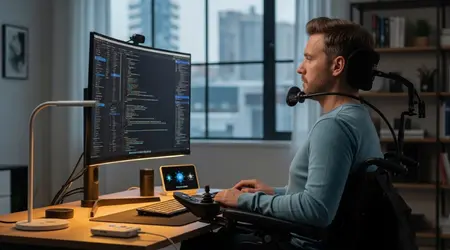
There is a direct thread connecting early web standards to the friction users face today.
Decisions made decades ago about how software hooks into operating systems were often built on the assumption of a “standard” user.
Accessibility was frequently bolted on as an afterthought, using “Accessibility APIs” that can be fragile and prone to breaking during system updates.
We are living with the legacy of those early assumptions. When a major operating system updates its core, it might inadvertently shut down the communication port used by a specialized speech synthesizer.
Because Assistive Technologies Still Don’t Talk to Each Other, a user might be forced to choose between the latest security features or their ability to communicate.
This is a byproduct of a history where inclusive design was seen as a decorative addition rather than the foundation.
Also read: AI in Speech Therapy: How Adaptive Systems Boost Progress
Progress and the persistent integration gap
While legislation has pushed for better individual device standards, a significant gap remains between legal requirements and functional integration.
| Year | Milestone | Impact on Individual Devices | Impact on Ecosystem Integration |
| 2010 | ADA Standards Update | Mandatory physical access for kiosks. | Minimal impact on software talkback. |
| 2019 | European Accessibility Act | Standardized UI for many consumer goods. | Improved cross-brand web access, but not hardware. |
| 2023 | Matter Protocol Launch | Smart home devices became interoperable. | Assistive tech was largely excluded from initial specs. |
| 2026 | Current Market State | High-spec AI-driven assistive tools. | Inter-device communication remains siloed. |
We tend to legislate the “doorway” (the interface) but ignore the “hallways” (the data exchange). The result is a series of accessible rooms that aren’t effectively connected to each other.
The “Walled Garden” and the threat to inclusion
Imagine a professional, qualified in every aspect of their job, who faces barriers that don’t appear in any employee handbook.
A blind accountant might use a specific screen reader, but if their firm switches to a new cloud-based payroll system with a proprietary keyboard map, the tools may conflict.
Because Assistive Technologies Still Don’t Talk to Each Other, the professional cannot always simply “remap” the software.
They are caught between two corporate entities, neither of whom may take responsibility for the bridge.
This “walled garden” approach, which offers a tidy experience for some, can become a barrier for those whose daily function depends on mixing and matching specialized equipment.
There are reasons to question this approach. By prioritizing brand exclusivity over protocol transparency, companies can inadvertently gatekeep employment.
If a person’s assistive tech only works with one specific software suite, their career can become tethered to that single product’s success or failure.
Read more: Wearable Health Monitors for Chronic Conditions
Can AI bridge the communication breakdown?
There is significant discussion regarding AI agents acting as a “universal translator” for hardware translating commands from a sip-and-puff system to a VPN in real-time.
While this is a promising area of development, relying on AI to fix “broken pipes” may be another temporary solution.
If the underlying architecture remains closed, AI may only act as a “hack” that could break with the next system update.
The deeper need is likely for simpler, universal, open-source protocols that treat assistive inputs with the same priority as a standard mouse or keyboard.
The fact that Assistive Technologies Still Don’t Talk to Each Other is a design philosophy issue as much as a technical one.
The human cost of fragmented technology
There is a human cost to these silos. It affects the student who can use a tablet for writing but cannot use that same device to adjust their powered wheelchair because the Bluetooth profiles are restricted.
It affects the elderly person whose new hearing aid won’t pair with their emergency alert system.
We should also consider the “invisible labor” of navigating a fragmented digital world.
Many people with disabilities spend hours acting as their own technical support, troubleshooting conflicts that shouldn’t exist.
This is time taken away from careers, families, and rest. When silos persist, the message is that a user’s time is less valuable than a company’s intellectual property.
Moving toward an integrated future
The shift must move toward “Universal Input Descriptors” the idea that whether a command comes from a wink, a breath, a voice, or a finger, the computer recognizes it as a standardized “intent.”
Some organizations are beginning to push for this, creating open-source hubs that act as a universal joint for assistive gear.
However, these initiatives will struggle until major tech developers open their platforms. We may need the equivalent of a “universal” mandate for accessibility protocols.
If every assistive device used a standardized communication layer, the fragmentation of these tools would finally be addressed.
This requires moving away from the “heroic” standalone invention model toward collaborative infrastructure.
We don’t necessarily need more “cool” gadgets; we need the tools we already have to speak the same language as the rest of the world.
The Ethical Imperative of Connection
Technological progress is often measured by speed, but for those who rely on assistive tools, it should be measured by connection.
When Assistive Technologies Still Don’t Talk to Each Other, we are essentially building “digital glass walls.” The opportunities are visible, but the lack of a common language prevents people from reaching them.
The next wave of innovation from AI to neural interfaces must be built on a foundation of openness.
A user shouldn’t need a neighbor’s help to reset a cable; they need a world where their tools are as interconnected as the society they live in.
Inclusion is about the conversation between our tools, ensuring that every voice can be heard.
FAQ: Navigating the Assistive Tech Ecosystem
Why doesn’t my screen reader work with certain apps?
This often happens when an app doesn’t follow “Semantic” structures or specific accessibility protocols. If a button isn’t correctly labeled in the code, the screen reader cannot “see” it to describe it to the user.
Is there a universal standard for assistive tech?
There are software guidelines, like the Web Content Accessibility Guidelines (WCAG), but hardware and inter-device communication still lack a single, mandatory global standard.
The “Matter” protocol in smart homes is currently one of the most successful models for interoperability.
Why are assistive devices often more expensive than consumer tech?
The “disability price tag” is often linked to smaller production runs and specialized certifications.
The lack of interoperability also plays a role, as users are sometimes forced to buy proprietary peripherals that don’t compete on an open market.
Can I use third-party apps to make my devices “talk” to each other?
There are “bridge” tools and middleware, but these often require significant technical skill to configure and can be less reliable than native integration.
What should I look for when choosing new assistive technology?
Inquire about “Open API” support or compatibility with universal standards like Bluetooth HID profiles.
Be cautious of devices that require a specific, proprietary “hub” to function, as these are more prone to becoming non-functional after system updates.
