
Why inclusive education observatories matter for school policy
Inclusive education observatories are quietly reshaping how local school boards view children who were once left out of official data.
On a humid Tuesday morning in late September, Clara sat outside a fifth-grade classroom in a suburban public school, resting her hands on her daughter’s manual wheelchair.
Inside, twenty-four children listened to a geography lesson. Outside, ten-year-old Sofia waited for someone to clear an unannounced barrier: a stack of broken desks blocking the narrow ramp to the doorway.
This was not a deliberate act of discrimination or a denial of rights. It was an administrative oversight, a routine failure of daily logistics that never appears in annual district reports.
Yet this small, quiet delay represents the exact moment where policy promises crumble into daily frustration.
Across hundreds of school systems, families face these friction points every single day, while administrators review polished statistics that report high rates of enrollment for students with disabilities.
Closing that gap requires more than good intentions. It demands systematic, independent scrutiny grounded in real classroom conditions.
Key Perspectives in This Article
- The Reality Gap: How everyday administrative oversights undermine official rights.
- Structural Roots: Why historical policy models struggle to track real-time inclusion.
- Independent Oversight: The distinct role monitoring bodies play in shaping genuine reform.
- Data in Action: A comparative look at reactive reporting versus proactive monitoring.
- Frequently Asked Questions: Clear answers to common policy and implementation concerns.
What happens when school rights exist on paper but fail in the hallway?
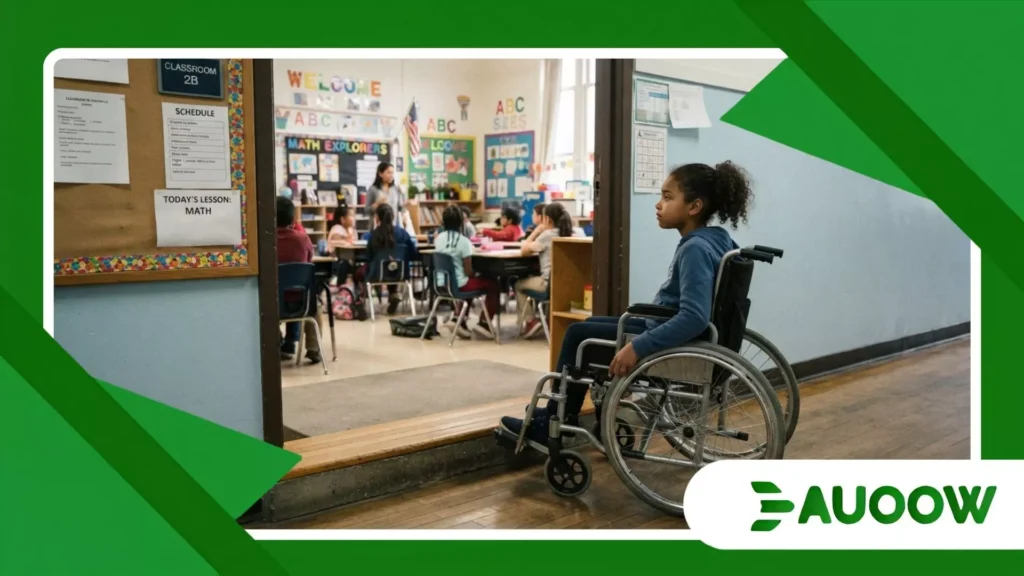
Every country that signed the UN Convention on the Rights of Persons with Disabilities uses frameworks designed to guarantee equal access to learning.
Governments update laws, circulate official directives, and publish press releases announcing progress. Yet walking down the corridors of local schools reveals a different narrative.
What rarely enters this debate is the distinction between formal access and functional participation.
A child may be officially enrolled, counted in state census figures, and assigned a desk.
But if the physical environment, adapted learning materials, or specialized support personnel are missing, enrollment becomes a passive form of exclusion.
A structural detail often gets overlooked: traditional school inspection systems were built to monitor compliance with administrative rules, not human experiences.
They check whether a ramp met building codes during construction years ago. They rarely check whether that ramp is routinely blocked by maintenance debris today.
When regional inclusive education observatories gather data directly from teachers, parents, and community organizations, they track these subtle operational failures.
Without this independent perspective, policymakers risk working under the impression that legal compliance automatically creates educational equity.
++ How Accessible Are Popular Educational Apps in 2026?
How do historical policy habits continue to shape modern classroom barriers?
To understand why modern schools struggle with inclusion, we have to look back at how public education systems were originally engineered.
For most of the twentieth century, public schooling operated on a model of segregation and specialization.
Children deemed “different” whether due to physical, intellectual, or sensory impairments were directed toward separate institutions, distinct budgets, and specialized personnel.
When governments shifted toward integrated schooling in the late 1990s and early 2000s, they often grafted new rights onto old administrative foundations.
Funding streams remained fragmented, teacher training programs kept special education isolated from general pedagogy, and school infrastructure was retrofitted in piecemeal fashion.
Looking closely at these systems, the pattern repeats across urban and rural districts alike.
Decisions made decades ago about school funding formulas still dictate how quickly a school can hire an auxiliary support worker or order braille textbooks.
Modern inclusive education observatories serve as historical mirrors. They allow social analysts and lawmakers to see how legacy policies drag down modern initiatives.
By analyzing long-term data, these monitoring centers show that today’s classroom barriers are rarely sudden emergencies; they are the predictable consequences of long-standing structural design choices.
A closer look at how real-time monitoring transforms a school district
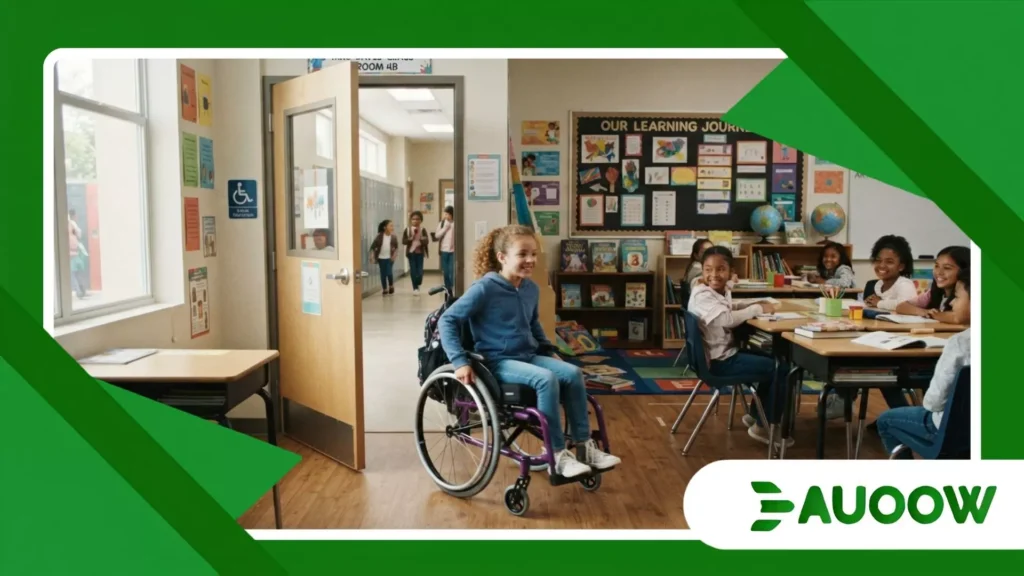
Imagine a blind ninth-grade student attempting to follow a digital science curriculum hosted on an inaccessible learning management platform.
The district purchased the software through a standardized procurement process that verified compliance with general IT standards, but omitted accessibility criteria for screen readers.
In a traditional administrative setup, the student’s family would file a formal complaint.
The grievance would move through bureaucratic channels for months, likely resolved long after the academic term ended.
The student falls behind, the teacher feels helpless, and the school district views the incident as an isolated, unfortunate conflict.
Now consider the same scenario under a system monitored by dynamic inclusive education observatories.
Instead of treating the situation as an individual issue, data analysts at the observatory aggregate reports from multiple schools.
They identify a systemic procurement pattern: software vendors routinely win public contracts without undergoing digital accessibility verification.
This shift from individual grievance to systemic detection is transformative. The observatory issues a policy brief recommending that future public tenders include mandatory accessibility testing.
The problem is addressed at the structural level, sparing future students from encountering the same invisible barrier.
Read more: Africa’s Innovative Approaches to Inclusive Learning
Why is raw statistical data insufficient without social and qualitative context?
Numbers alone tell an incomplete story. A state education department might report that most students with disabilities are placed in regular classrooms.
On paper, this looks like a victory for civil rights advocates and policy architects.
However, a deeper qualitative investigation often reveals a different reality. Many of these students spend half their school day in isolated resource rooms, or are sent home early due to a lack of trained staff.
Others sit in the back of crowded classrooms without adapted assignments, physical assistance, or peer interaction.
An honest assessment suggests that reliance on surface-level metrics creates a significant policy blind spot.
When governments measure success solely by enrollment counts, they lose sight of educational quality, personal autonomy, and long-term academic outcomes.
Independent monitoring entities do not just count heads; they evaluate relationships, pedagogical flexibility, physical autonomy, and social belonging.
By combining quantitative metrics with field interviews and observational surveys, inclusive education observatories provide the nuanced evidence base required to draft meaningful, human-centered legislation.
Also read: Inclusive Education in the Middle East: Emerging Opportunities
Comparing System Approaches: Administrative Reporting vs. Observatory Monitoring
The distinction between conventional data collection and independent social monitoring is crucial for understanding why traditional reform efforts frequently stall.
| Policy Dimension | Standard Administrative Reporting | Independent Observatory Monitoring |
| Primary Focus | Regulatory compliance and enrollment numbers | Everyday functional accessibility and pedagogical quality |
| Data Sources | School principal self-reports and official census data | Multi-stakeholder surveys, qualitative observations, and field audits |
| Problem Identification | Reactive; addresses issues after formal complaints are filed | Proactive; identifies systemic patterns and structural bottlenecks |
| Policy Impact | Maintains existing administrative frameworks | Drives systemic legislative and budgetary adjustments |
How independent evidence drives lasting legislative accountability
Policy reform without independent evidence is merely an exercise in rhetoric. When governments debate educational budgets, competing priorities fight for limited public funds.
In these negotiations, accessibility programs are often treated as discretionary line items rather than fundamental civil rights.
There are good reasons to question this approach when monitoring structures are absent.
Without reliable, real-time data demonstrating where resources are failing, advocates struggle to hold authorities accountable.
When independent researchers, organizations of persons with disabilities, and educators collaborate through organized inclusive education observatories, they generate institutional leverage.
They present lawmakers with clear, evidence-based insights showing where investments yield results and where bureaucratic inertia stalls progress.
This continuous feedback loop changes the political dynamic. It transforms inclusion from an abstract goal into an actionable, measurable public policy mandate.
Sustainable change in public education rarely happens through top-down mandates alone; it requires persistent, grounded data that reflects the daily reality of students and educators.
When independent observatories illuminate the small, routine barriers within local schools, they provide policymakers with the clarity needed to fix broken systems.
Ultimately, bringing visibility to these everyday realities ensures that educational rights do not end at the school door, but translate into genuine participation, dignity, and learning inside every classroom.
Frequently Asked Questions
What is the main purpose of an educational monitoring body?
An educational monitoring body tracks how national policies and legal rights are applied in daily school routines.
It gathers qualitative and quantitative data from students, families, and teachers to identify structural barriers, measure true inclusion, and provide evidence-based recommendations to local and national lawmakers.
How do monitoring centers differ from standard government inspections?
Government inspections typically focus on basic regulatory compliance, such as facility codes or administrative record-keeping.
Independent monitoring bodies look deeper into social experiences, adapted pedagogical tools, digital accessibility, and long-term educational outcomes to see if inclusion is actually functioning on a human level.
Why are official school enrollment numbers often misleading?
Official enrollment numbers show how many students are registered in a school, but they do not reflect whether those students receive accessible learning materials, adequate physical support, or meaningful social inclusion.
A student can be officially enrolled while facing daily exclusion inside the classroom.
Can local communities participate in educational data collection?
Yes. Effective monitoring models rely heavily on field reports, family surveys, and direct feedback from civil society organizations.
This grass-roots involvement ensures that local daily barriers such as missing transport options or inaccessible software are documented and addressed by policy experts.
