
Why SEND education reforms UK could transform inclusive schools
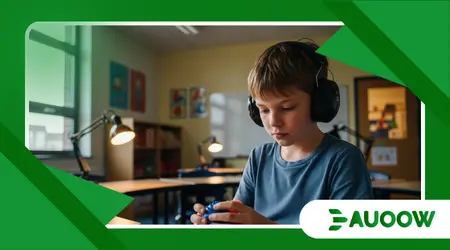
The morning rush at a primary school in Bristol looks much like any other, but for Sarah and her seven-year-old son, Leo, the threshold of the classroom represents a complex negotiation of sensory data and structural expectations.
Leo is autistic and has specific learning requirements that don’t always align with the rigid geometry of a standard school day.
On some mornings, the hum of the overhead lights or the scraping of chairs in the assembly hall feels to him like a physical assault.
Sarah stands by the gate, watching the staff navigate a system stretched to its limits, knowing that behind the welcoming smiles lies a scramble for funding and specialist support.
This quiet, daily friction is the backdrop against which we must understand why SEND education reforms UK could transform inclusive schools, moving beyond mere integration toward a genuine sense of belonging.
- The Structural Shift: Moving from a “diagnosis-led” model to a “needs-led” approach in the classroom.
- The Funding Paradox: Why increasing budgets haven’t always resulted in equitable outcomes for students.
- Early Intervention: The critical window between identifying a struggle and providing a solution.
- Mainstream Integration: Evaluating the capacity of local schools to support neurodiversity.
- Accountability and Standards: How the 2024-2026 legislative updates aim to unify a fragmented system.
What rarely enters the debate about special educational needs?
When we talk about reform, the conversation often settles on acronyms EHCPs (Education, Health and Care Plans), LAs (Local Authorities), and inspection ratings.
But a more honest analysis suggests the real crisis isn’t just about paperwork; it’s about the “illusion of inclusion.”
For too long, “inclusive” has been used as a synonym for “present.” A child might be physically in the room, but they remain on the periphery of the community and the curriculum.
This is why the focus on how SEND education reforms UK could transform inclusive schools is so vital. It seeks to address the silent architecture of the school system the hidden rules that decide who fits and who is perceived as “different.”
There is a structural detail that often goes unaddressed: our schools were largely designed for a model of uniformity.
When a learner does not progress at the expected pace, the system’s default reaction has historically been to treat them as a “problem to be solved” rather than an individual to be understood.
The current reforms attempt to pivot this mindset. By establishing a national standard for what inclusive provision looks like, there is an effort to remove the postcode lottery that currently dictates a child’s access to support.
The goal is to make the classroom flexible enough to bend around the child, rather than expecting the child to break to fit the classroom.
++ How AI in inclusive education is reshaping classrooms in 2026
How does the shift to early identification change the trajectory of a student?
Imagine a student with a moderate hearing impairment trying to follow a fast-paced phonics lesson.
Without early, non-invasive support, that child doesn’t just fall behind in reading; they may begin to internalize a sense of failure.
By the time an official assessment is finalized a process that often takes months, if not years the psychological impact is already significant.
This is a primary reason why SEND education reforms UK could transform inclusive schools. The push toward “Early Identification” is designed to bypass the bureaucratic wait times that leave families in limbo.
The transition from a reactive system to a proactive one represents a major cultural shift. It acknowledges that waiting for a child to reach a crisis point before qualifying for help is a failure of the system.
In a practical sense, this means equipping every mainstream teacher with the tools to adjust their environment lowering sensory triggers, using visual timetables, and employing assistive technology as a standard practice.
It is about treating accessibility as a fundamental right rather than a specialized luxury.

Why is the “Postcode Lottery” still a reality in 2026?
Despite national mandates, the experience of a family in one borough often looks radically different from that of a family in a neighboring town.
This disparity exists because local authorities have historically interpreted “reasonable adjustments” through the lens of their own budget constraints.
This lack of consistency often creates a “flight to specialists,” where families who have the means seek private or out-of-area provision, which can further deplete the resources and diversity of the local mainstream school.
Also read: Inclusive Education in the Middle East: Emerging Opportunities
What actually changed after the 2024-2025 SEND Improvement Plan?
The turning point was the realization that the system was both under-resourced and inefficiently managed.
The focus shifted toward a unified national framework, prioritizing how resources are deployed to ensure that SEND education reforms UK could transform inclusive schools in a measurable way.
| Feature | The Old Model (Pre-2024) | The 2026 Reality |
| Assessment Speed | Years-long waits for EHCPs | Fast-track “Needs-Based” early support |
| School Choice | Frequent conflict between parents and LAs | Emphasis on local, high-quality mainstreaming |
| Funding Focus | Crisis management and legal battles | Preventative, early-years intervention |
| Teacher Training | Optional SEND modules | Core competency for initial teacher training |
| Technology | Specialized, expensive hardware | Integrated, universal digital accessibility tools |
This framework attempts to move away from a “blame” culture. In the past, schools often felt penalized for having a high population of students with additional needs.
The 2026 framework seeks to reward schools that demonstrate excellence in inclusive design and student well-being.
How does haptic and digital technology bridge the gap?
Consider a teaching assistant using a tablet-based interface to help a non-verbal student communicate.
Or a student with visual impairments using a wearable that translates handwriting on a digital whiteboard into tactile feedback.
As we explore why SEND education reforms UK could transform inclusive schools, we see that technology is acting as an invisible bridge.
It is moving away from the “special needs room” model toward a seamless digital layer that exists over the entire school environment.
However, the most profound “technology” in an inclusive school isn’t always electronic; sometimes it is the way a building is acoustically treated or how a playground is mapped for accessibility.
Successful schools in 2026 treat technology as a partner to human connection, facilitating the intuition of an educator who understands a child’s needs before they are even voiced.
The persistent barrier of “Aspirational Clutter” in policy
One danger of major reform is that it can become a collection of high-minded goals that don’t reach the classroom.
“Aspirational clutter” refers to complex strategies that appear effective in policy documents but are difficult to implement in a busy classroom.
For these reforms to take hold, the workload of teachers must be addressed. True inclusion requires the time and the support staff necessary to make differentiated learning a reality.
Read more: Africa’s Innovative Approaches to Inclusive Learning
Is privacy the next major hurdle for SEND students?
As schools adopt more digital tools, they collect an unprecedented amount of data on how children move and learn. For a child with SEND, this data is sensitive, mapping cognitive patterns and health triggers.
As SEND education reforms UK could transform inclusive schools, we must consider who manages this digital record. There are valid concerns about how this data might follow a child into adulthood.
Protecting the “biometric privacy” of students is a cornerstone of responsible reform.
A child’s right to learn in a safe environment includes the right for their educational journey to remain private as they grow. Inclusion should never come at the cost of constant algorithmic monitoring.
The Quiet Evolution of the Classroom
The journey toward a truly inclusive school system is not a sprint; it is the methodical removal of barriers that make education a battleground for families.
When we look at why SEND education reforms UK could transform inclusive schools, we see a “Quiet Evolution.”
This is a world where Leo can walk into his primary school and find an environment that anticipates his presence rather than reacting to it with stress.
Success in this arena is measured by the number of children who leave school with their curiosity intact and their self-worth unchallenged.
We are beginning to understand that accessibility is not a “fix” for a person; it is a fix for an environment. If we get this right, we build a more resilient society for everyone.
The true measure of these reforms will be found in the moments when a child who used to be on the outside is simply just another student in the room.
Frequently Asked Questions (FAQ)
1. How do these reforms affect children without specific SEND labels?
Inclusive design is universal design. When a classroom is made quieter, more organized, and more visual, every student benefits. Reducing background noise or providing clear instructions helps all children focus and learn.
2. Will mainstream schools receive more funding for these changes?
The reforms aim to shift funding toward early-stage support to help children before they require a high-level EHCP.
However, the adequacy and distribution of this funding remain central to the national debate.
3. Does this mean specialist schools will disappear?
No. The reforms recognize that for some children, a highly specialized environment is the best setting to thrive.
The goal is to make mainstream education a viable, high-quality option for more families, ensuring specialist places are available for those who need them most.
4. How can parents hold schools accountable under the new reforms?
The 2026 framework introduces “Local Offers,” where every school must state the support they provide.
If a school falls below this baseline, parents have clearer routes to mediation through local authority “Inclusion Dashboards.”
5. Are teachers being trained specifically for these reforms?
Yes. Since 2025, initial teacher training (ITT) in the UK has included mandatory modules on neurodiversity and inclusive pedagogy, ensuring new educators see SEND support as a core part of their identity.
