
Closed Ecosystems vs Open Standards in Accessibility Innovation
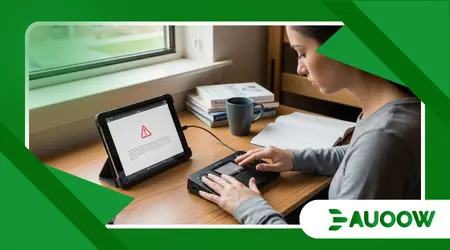
The tension between Closed Ecosystems vs Open Standards often materializes in the quiet frustration of a living room when a high-tech braille display suddenly refuses to talk to a newly updated smartphone.
Imagine Elena, a university student who saved for two years to afford a specific refreshable braille device. One morning, after a mandatory OS update on her tablet, the two devices simply stop shaking hands.
There is no physical breakage, no spilled coffee, and no wear-and-tear. Instead, a digital wall has been erected overnight.
Elena is left holding a thousand-dollar paperweight, not because the technology failed, but because the software protocols that allowed them to communicate were quietly altered or restricted by a manufacturer.
This friction is the frontline of a struggle in the assistive technology sector. To understand where we are headed in 2026, we must look at:
- The cost of proprietary “walled gardens” for disabled users.
- The history of interoperability and why it often fails.
- Economic incentives that favor exclusion over universal access.
- The rise of open-source communities as a grassroots response.
- Legislative shifts aiming to mandate digital bridges.
Why are we still building digital walls in 2026?
In the early days of personal computing, accessibility was often a series of “hacks” developed by hobbyists to make machines speak or listen.
As the industry matured, large tech companies realized that accessibility was not just a moral obligation but a significant market.
However, with this professionalization came the era of the “walled garden.” What rarely enters the debate is that many companies use accessibility features as a “stickiness” factor.
If your customized eye-tracking profiles, your specialized switches, and your communication software only work within one brand’s hardware suite, you are less likely to switch to a competitor.
The choice between Closed Ecosystems vs Open Standards is, at its heart, a choice between consumer captivity and user agency.
In a closed system, the manufacturer dictates the pace of innovation and the terms of repair. If they decide to discontinue a specific specialized interface, the user loses their voice or their mobility.
When we observe this with a critical eye, we see that the convenience of a “seamlessly integrated” ecosystem often hides a fragile dependency.
For someone without a disability, a closed ecosystem is a lifestyle choice; for a person with a disability, it can become a form of structural confinement.
++ Why Assistive Technologies Still Don’t Talk to Each Other
How did past design choices shape today’s barriers?

There is a recurring theme in the history of technology where standardization often happens only after significant public outcry or legal intervention.
Think back to the struggle for closed captioning on television; it wasn’t the “market” that decided to include it, but the Television Decoder Circuitry Act of 1990.
Today, we face a digital version of that same struggle. A structural detail of the industry that is often ignored is the way APIs (Application Programming Interfaces) are guarded.
When a company keeps its accessibility APIs closed, it prevents third-party developers from creating niche tools that might serve a small, specific portion of the disability community.
This is where the most vibrant innovation is often stifled. Large corporations frequently focus on the “mass market” of disability the features that assist the most people and generate positive PR.
The “Open Standards” approach, conversely, allows for a decentralized explosion of creativity, where a developer in Brazil can build a tool that works with a device manufactured in Japan, provided they both speak the same digital language.
Also read: Self-Healing Materials in Medical Devices: A Innovation to Watch
Imagine the professional facing a “silent” technical gate
Consider a worker like David, a graphic designer with limited hand dexterity who uses a sophisticated head-tracking system to operate his workstation.
David’s setup is a mosaic of different brands: a specific sensor from one company, a mounting arm from another, and software scripts he adjusted himself.
When the industry leans toward closed ecosystems, David’s mosaic begins to crack. A software update from the OS provider might disable the “non-certified” driver for his head-tracker.
There is no “Help” button for this; David is simply told his hardware is no longer supported.
This suggests we are sometimes prioritizing “system security” or “brand integrity” over a person’s basic right to access their livelihood.
What actually changed in the accessibility landscape?
| Feature | Closed Ecosystems | Open Standards |
| Interoperability | Limited to “Approved” partners | Universal across compliant devices |
| Cost over time | High: Forced hardware upgrades | Lower: Devices last through multiple cycles |
| Innovation Source | Corporate R&D only | Global community & Grassroots |
| Maintenance | Factory-only / “Authorized” | Community-supported / Open repair |
Why does the “Market” struggle to prioritize Open Standards?
There is a persistent myth that open standards lead to a “race to the bottom” in terms of quality.
Some argue that the competition between Closed Ecosystems vs Open Standards is a battle between polished, user-friendly experiences and clunky, fragmented ones.
While a closed system allows for tight control over the user experience, it also creates a monoculture.
If the lead designer at a dominant tech firm doesn’t understand the specific needs of a person with a non-standard speech pattern, that person is effectively erased from the ecosystem.
There are reasons to question the “security” argument used to justify closed systems. Often, “security” acts as a euphemism for revenue protection.
When a wheelchair’s diagnostic software is locked behind a proprietary code that only authorized dealers can access, a user in a rural area might be stranded for weeks waiting for a simple sensor reset.
This isn’t just about protecting the user; it’s about a service monopoly. On the other hand, open standards in medical and assistive hardware allow for “right to repair,” which is a fundamental component of bodily autonomy.
Read more: Why Are Prosthetics Still So Expensive? Breaking Down the Costs
A pattern that repeats across decades
The pattern repeats from the early days of the web to the current “Internet of Things.”
Decisions made in boardrooms about “proprietary protocols” for smart home lights or thermostats directly impact whether a blind person can heat their home independently.
If the thermostat doesn’t adhere to open accessibility standards, it won’t be readable by a screen reader. We aren’t just talking about gadgets; we are talking about the basic infrastructure of life.
The focus should be on continuity ensuring that the digital bridges we build today don’t collapse when a company goes bankrupt or changes its business model.
Is there a middle ground for assistive technology?
There is a growing movement toward “Hybrid” models, where core platforms remain proprietary but provide robust, standardized hooks for accessibility tools.
However, this is often a fragile peace. The only way to truly guarantee long-term accessibility is to move the “base layer” of communication into the realm of public commons.
Just as we have standard sizes for lightbulbs and electrical outlets, we need standard protocols for how assistive devices share data.
The disability community is often the “canary in the coal mine” for tech trends. The problems of Closed Ecosystems vs Open Standards hit this community first, but eventually, they affect everyone.
As we move into an era of wearable tech and augmented reality, the need for these devices to work together becomes a matter of universal usability.
If your AR glasses can’t “read” the data from a public transit kiosk because of a proprietary handshake failure, the city becomes a labyrinth for everyone.
Imagine a public policy applied in practice
Imagine a government mandate that requires any technology purchased with public funds such as in schools or hospitals to adhere to strictly defined open standards for accessibility.
This isn’t just about buying a product; it is about securing a right. In some European jurisdictions, we are seeing the early stages of this.
When schools decline to buy “walled garden” tablets that don’t allow for third-party screen readers, manufacturers are pressured to innovate toward openness.
This is the “power of the purse” used for social change, and it is a practical way to break the deadlock between competing ecosystems.
The Verdict on a Fairer Future
We are at a crossroads where the convenience of the “Smart” world threatens to become a set of golden handcuffs.
The Closed Ecosystems vs Open Standards debate is a reflection of our societal values: do we value the efficiency of the corporation or the autonomy of the individual?
The only sustainable path is one that treats accessibility as a shared human protocol rather than a private product.
The independence of Elena, David, and millions of others should not depend on the quarterly earnings report of a tech giant or the whims of a software update.
By advocating for open standards, we aren’t just fixing a technical problem; we are affirming that the right to participate in society digital or physical is not for sale.
We must continue to listen to the users, watch the legislative shifts, and demand that the doors to our digital future remain unlocked for everyone.
FAQ: Navigating the Digital Divide
Are closed ecosystems always bad for accessibility?
Not necessarily. Some companies have demonstrated that a closed ecosystem can provide a high-quality, out-of-the-box experience.
The problem arises when that “gold standard” becomes the only option, making the cost of entry too high or preventing the use of necessary specialized third-party tools.
What is an example of an “Open Standard” in accessibility?
The Web Content Accessibility Guidelines (WCAG) are a prime example.
They provide a universal set of rules for how websites should be built so that any screen reader or assistive tool can interpret them.
Without these standards, the internet would be a fragmented collection of inaccessible silos.
Why should I care about this if I don’t have a disability?
Open standards drive down costs and increase the longevity of your devices. Furthermore, accessibility features are often used by everyone like captions in a loud gym or voice commands when driving.
When we advocate for open standards in assistive tech, we are working toward a more flexible and durable technological future for everyone.
Can open-source software be as good as professional proprietary software?
Absolutely. Projects like NVDA (NonVisual Desktop Access) are open-source screen readers that are world-class and free to use.
They exist because a global community believes that the right to access should not have a price tag.
How can I support open standards?
As a consumer, you can support companies that prioritize “Right to Repair” and interoperability.
If you work in tech, you can advocate for the use of open APIs and contribute to open-source accessibility projects. Awareness is the first step toward shifting the market.
