
Accessible-First Startups: Building Products for Markets Others Ignore
Accessible-First Startups are rewriting a narrative that has, for decades, been defined by the “medical model” of disability a perspective that views the individual as something to be fixed rather than the environment as something to be redesigned.
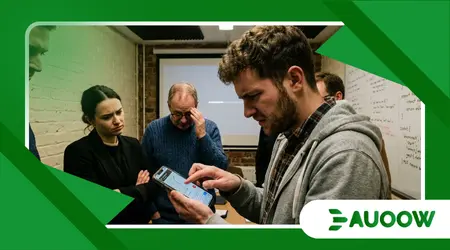
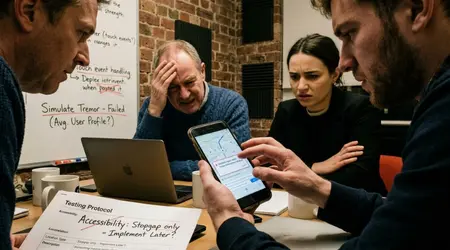
I remember sitting in a small, cramped boardroom in Shoreditch about eight years ago, watching a young developer struggle to demonstrate a navigation app.
He wasn’t the one with the impairment; he was trying to show how a person with tremors would interact with a touchscreen. Every time his hand shook, the interface reset, essentially erasing his progress.
The frustration in the room was palpable, not because the technology was failing, but because it was clear that the “average user” profile used to build the app simply didn’t include anyone with a motor disability.
It was an afterthought, a patch to be applied later, if the budget allowed.
That afternoon was a microcosm of a much larger structural failure. For too long, the tech industry has operated on a “build now, fix accessibility later” mindset.
However, we are seeing a shift. A new wave of founders is realizing that by ignoring the one billion people globally who live with some form of disability, they aren’t just failing ethically they are leaving trillions of dollars in disposable income on the table.
These ventures are not charities; they are sophisticated businesses leaning into a market gap that legacy corporations have treated as a niche.
Core Insights of this Exploration
- The transition from “compliance-driven” to “innovation-led” design.
- How historical policy failures created the current market vacuum.
- The economic reality of the “Purple Pound” and the “Disabled Dollar.”
- Case studies of startups integrating accessibility into their DNA.
- The long-term social impact of inclusive-by-design infrastructure.
Why has the market ignored a billion people for so long?
When we look closely at the history of product development, the barrier isn’t usually a lack of empathy; it’s a lack of imagination baked into the very frameworks of venture capital and engineering.
Traditionally, startups chase “scale” by targeting the most homogeneous user base possible to prove a concept.
The assumption is that accessibility is a friction point a set of expensive constraints that slow down the “move fast and break things” mantra.
In my reading of this scenario, this “move fast” culture has actually broken the very social contract it claims to improve.
By treating accessibility as a secondary feature something to be addressed only when a lawsuit or a government mandate appears companies bake exclusion into their code.
It’s much harder to retroactively fit a ramp onto a finished skyscraper than it is to design a level entrance from the start. The same applies to software architecture.
When Accessible-First Startups enter the fray, they aren’t just adding features; they are rethinking the foundation of how humans interact with machines.
++ Why Traditional Startup Accelerators Still Exclude Disabled Founders
How do these ventures turn “constraints” into competitive advantages?
There is a detail structural detail that often goes unnoticed in the debate over inclusive design: the “Curb-Cut Effect.”
When the city of Berkeley, California, first installed curb cuts for wheelchair users in the 1970s, they didn’t just help people in chairs.
They made life easier for parents with strollers, travelers with luggage, and delivery workers with carts. Modern Accessible-First Startups are the digital equivalent of those curb cuts.
By designing for the most extreme use cases, these companies often stumble upon UI/UX breakthroughs that benefit everyone.
A voice-to-text feature originally designed for people with limited mobility becomes a primary tool for a driver or a busy chef.
High-contrast displays meant for the visually impaired become the gold standard for outdoor readability.
When a company starts with the “difficult” user, the “easy” user is automatically accounted for. This isn’t just good social policy; it’s superior engineering.
The analysis most honest suggests that the traditional tech giants are now playing catch-up. They are bloated by legacy code that makes radical accessibility shifts difficult.
Startups, conversely, have the agility to build on modern, flexible stacks where accessibility hooks are integrated into every API call.
They are capturing the loyalty of a demographic that has been historically gaslit by brands claiming to be “inclusive” while providing broken digital experiences.
Also read: Why the Post-Remote Work Backlash Is Hitting Disabled Workers First
What actually changed after this shift began?
The transition from viewing accessibility as a “burden” to seeing it as a “blue ocean” opportunity has tangible results.
The table below illustrates the shift in approach between traditional development and the new inclusive model.
| Feature/Approach | Traditional Tech Startup | Accessible-First Startups |
| Development Priority | Speed to market for “typical” users. | Robustness for diverse sensory/motor needs. |
| User Testing | Focused on the 80% majority. | Deep co-design with the disability community. |
| Compliance | Aiming for the legal minimum (WCAG 2.1). | Exceeding standards to provide delight, not just access. |
| Market Perception | Niche or “Special Needs” category. | Universal design with broad market appeal. |
| Financial Outcome | High churn among users with disabilities. | High brand loyalty and untapped market capture. |
Is this a response to better laws or better business sense?
It is impossible to discuss the rise of Accessible-First Startups without acknowledging the long shadow of legislation like the Americans with Disabilities Act (ADA) or the European Accessibility Act.
These laws provided the “stick” the threat of litigation that made boardrooms pay attention. However, the “carrot” has always been the sheer economic power of the disabled community and their families.
When we observe with more attention, the pattern repeats: social change often follows the money. In the early 2000s, accessibility was a checkbox for government contractors.
In 2026, it is a brand differentiator. Investors are beginning to realize that a startup with an accessible-first mindset is inherently more resilient.
Why? Because they have already solved the hardest problems of user interaction.
If you can make a fintech app usable for someone who is neurodivergent and dealing with sensory overload, you have created an app that is remarkably easy for a stressed-out executive to use during a layover.
There are good reasons to question the “altruism” often cited in PR releases. Most of these founders aren’t trying to save the world; they are trying to build the best product.
And in a saturated market where every “Uber for X” has already been built, the only way to find new growth is to look where others are too blind to see.
Read more: Boardroom Diversity: How Disability Inclusion Impacts Corporate Decisions
Can a student with a disability truly thrive in this new ecosystem?
Imagine a university student named Leo. Leo is hard of hearing and attends a large institution where lecture halls are acoustic nightmares.
Historically, Leo would have had to wait weeks for a human transcriber or rely on buggy, delayed captions.
Today, an Accessible-First Startups approach provides him with real-time, high-fidelity AI transcription that integrates directly into his digital notebook.
This isn’t just about “getting through” the lecture. It’s about equity.
When the technology is built into the fabric of the learning platform rather than being a clunky add-on Leo isn’t “the student with the disability.”
He is just a student with a highly efficient workflow. The social friction of asking for an accommodation is removed. This is the quiet revolution of accessibility: when it works perfectly, it becomes invisible.
What rarely enters the debate is the psychological toll of being an afterthought.
When a person with a disability encounters a “404: Accessibility Not Found” error, the message they receive is: You don’t belong here.
Startups that reverse this that greet the user with a seamless experience are performing a profound act of social inclusion, even if their primary motive is profit.
How do we ensure this isn’t just another tech trend?
The risk, of course, is “accessibility washing” companies using the language of inclusion without doing the deep work of structural change.
We see this in “inclusive” marketing campaigns that feature models with disabilities but have websites that are completely inaccessible to screen readers. In my reading, the safeguard against this is the community itself.
Accessible-First Startups usually succeed because their founding teams are either led by people with disabilities or have them in senior leadership roles.
It is the difference between “designing for” and “designing with.” As we move further into the decade, the demand for authentic inclusion will only increase.
The demographic shift an aging global population means that almost everyone will eventually experience a temporary or permanent disability.
Building for accessibility is, quite literally, building for our future selves. If we don’t support the infrastructure for inclusive design now, we are creating a digital world that will eventually lock us out too.
The most successful founders of the next decade will be those who recognize that “access” is not a feature, but a human right that happens to be an incredible business strategy.
Frequently Asked Questions
Are products from accessible-first startups more expensive for the consumer?
Not necessarily. While the initial R&D might be more intensive, building inclusively from the start prevents the massive costs of retrofitting later.
Often, these products are priced competitively because they aim for a broad market, not just a specialized niche.
What is the difference between assistive technology and accessible-first design?
Assistive technology (like a specialized wheelchair) is often a standalone tool designed for a specific impairment.
Accessible-first design ensures that everyday products (like a banking app or a microwave) are usable by everyone, regardless of their physical or cognitive abilities.
How can I tell if a startup is truly accessible-first or just marketing?
Look at their core product. Is accessibility a separate “tab” or “mode,” or is it integrated into the main interface?
Does the company publish its accessibility standards (like VPATs)? Most importantly, check if they involve the disability community in their public-facing development process.
Do these startups only help people with permanent disabilities?
No. Most people will experience a “situational disability” at some point such as trying to read a phone screen in bright sunlight, using one hand while holding a baby, or recovering from eye surgery.
Accessible-first products excel in these everyday scenarios.
Why should investors care about accessibility?
Beyond the ethical implications, it’s about market size. The disability market is larger than the market of China. Ignoring it is a failure of fiduciary duty.
Companies that master accessibility are also better prepared for the increasingly strict global regulatory environment.
