
How to Monetize Lived Experience Without Falling into Exploitation
Learning how to monetize lived experience without falling into exploitation has become one of the most delicate challenges facing disabled professionals, advocates, and content creators today.
At a quiet coffee shop in downtown Chicago, Marcus, a wheelchair user, adjusts his microphone as a corporate client prompts him, for the third time that morning, to explain “what it really felt like” when he sustained his spinal cord injury.
Marcus holds a master’s degree and brings deep expertise in digital accessibility and urban transit policy, yet the firm hiring him seems far less interested in his technical audit than in the emotional cadence of his personal trauma.
What We Will Explore
- The Spectrum of Value: Distinguishing between authentic expertise and narrative extraction.
- Structural Roots: How historical charity models created today’s storytelling market.
- Fair Compensation vs. Emotional Tokens: The math behind ethical consulting.
- Practical Frameworks: How to maintain boundaries while building a sustainable career.
Why Is Personal Trauma Treated as Corporate Currency?

The contemporary gig economy and digital platforms have opened doors that were long bolted shut for disabled workers.
For generations, traditional workplaces excluded individuals with physical, sensory, or neurodivergent differences through rigid physical offices and inflexible schedules.
The digital pivot offered a broader, more open market where lived expertise could finally be converted into consulting fees, speaking engagements, and educational digital products.
However, a subtle structural trap emerged alongside this shift.
When organizations seek guidance on disability inclusion, they frequently bypass professional strategy, technical audits, or policy design. Instead, they buy emotional stories.
The market continually demands vulnerable personal accounts of overcoming adversity often called “inspiration porn” in advocacy circles rather than actionable systemic solutions.
A closer look at this dynamic reveals a troubling pattern: the consultant is paid for their pain, not their perspective.
To monetize lived experience without falling into exploitation, professionals must clearly define where personal history ends and professional methodology begins.
When a company buys a story without implementing structural change, it engages in narrative extraction a process that satisfies diversity metrics while leaving physical and digital barriers intact.
| Dimension | Story-Driven Extraction | Systemic Consulting |
| Primary Commodity | Vulnerability and personal history | Analysis, methodology, and strategy |
| Institutional Impact | Temporary empathy, no budget shift | Process redesign, policy updates |
| Labor Effort | High emotional strain, repeatable trauma | Intellectual problem-solving |
| Pricing Basis | Flat, low-tier speaking fees | Standard professional day-rates |
| Ownership | Organization consumes the story | Consultant retains methodological framework |
How Did We Move from Charity Models to Narrative Extraction?
This tension is not a recent invention; it descends directly from mid-twentieth-century telethons and public charity campaigns.
Decades ago, non-profit institutions routinely relied on pity-based narratives to raise capital.
Disabled children were often positioned as passive recipients of public goodwill, framed through tragic stories designed to evoke sympathy and prompt donations.
When disability rights legislation such as the Americans with Disabilities Act in 1990 or the UK’s Disability Discrimination Act in 1995 first passed, the legal framework shifted toward civil rights.
Yet, cultural mindsets evolved much more slowly. As disabled advocates pushed for equal access in the 2000s and 2010s, corporate institutions realized they needed to appear inclusive.
But rather than dismantling built-in institutional barriers, many adopted the language of personal testimony.
When observing modern panel discussions or corporate diversity workshops, the historical pattern simply repeats itself in a polished corporate setting.
The telethon stage was replaced by the conference keynote. Instead of asking for charity, the individual is paid a modest honorarium to retell their most difficult moments for an audience that rarely follows up with policy changes.
Without intentional boundaries, attempts to monetize lived experience without falling into exploitation collapse back into old patterns of objectification.
The format changed, but the fundamental exchange trading personal vulnerability for institutional comfort remains remarkably similar.
Historical charity models monetized pity; modern corporate inclusion often monetizes vulnerability. Ethical work requires shifting the focus from personal suffering to structural analysis.
++ Bootstrapping vs Venture Capital: What Works Better for Disabled Entrepreneurs?
What Distinguishes Fair Consulting from Emotional Exploitation?
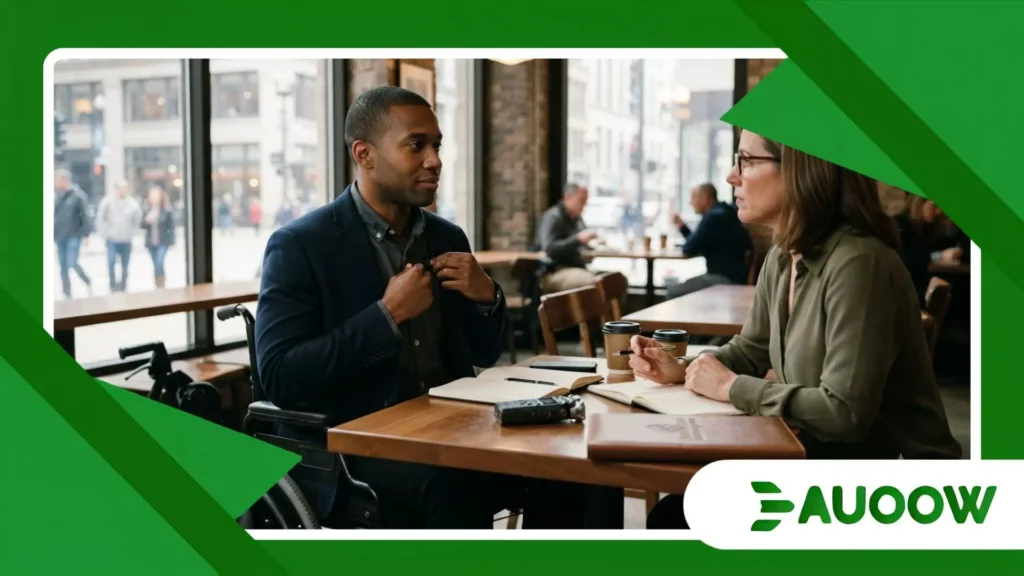
To understand how this dynamic plays out in daily professional settings, it helps to examine two contrasting approaches to inclusion work.
Imagine an organization bringing in a blind consultant to evaluate its remote learning platform.
In the first scenario, the organization asks the consultant to share their childhood struggles with education, detail every frustration they faced in college, and give a motivational speech to employees. The focus remains entirely on emotional resonance.
In the second scenario, the organization hires the same consultant to evaluate their learning management system against Web Content Accessibility Guidelines (WCAG), test screen-reader compatibility, and train the engineering team on accessible UI patterns.
The consultant draws on their lived experience as a screen-reader user, but that experience serves as a qualitative foundation for technical expertise.
The difference lies in who holds agency over the narrative. When lived experience is paired with analysis and applied methodology, it becomes a formidable tool for reform.
The challenge facing professionals today is setting clear parameters that prevent clients from degrading technical consulting into a performance of personal struggle.
Also read: Why the Post-Remote Work Backlash Is Hitting Disabled Workers First
How Can Advocates Build Sustainable Boundaries?
Navigating this terrain requires practical, repeatable boundaries that protect emotional well-being while establishing legitimate commercial value.
Professionals who successfully monetize lived experience without falling into exploitation usually operate with explicit guidelines that separate their private history from their public expertise.
- Frame Experience as Methodology: Lived experience is a unique data source, not an entertainment product. When pitching services, frame your perspective as specialized user research or qualitative testing. Position your insights alongside design principles, legal compliance, or operational efficiency.
- Establish a “No-Trauma” Clause: Clients often ask open-ended questions designed to elicit emotional responses. Setting clear expectations beforehand such as stating that presentations focus exclusively on systemic barriers, workplace design, and policy solutions keeps the conversation professional and focused.
- Price for Expertise, Not Favor: Undervaluing inclusion work perpetuates the idea that disabled voices are cheap sources of inspiration. Charge market rates consistent with management consulting, user-experience research, or legal analysis. High fees signal that your insights are strategic assets rather than decorative additions to a conference program.
- Direct the Narrative Toward Institutional Accountability: Whenever asked about a personal barrier, pivot immediately to the institutional decision that created it. If asked, “How did you feel when you couldn’t enter the building?” answer with: “The more relevant question is why architectural planning continues to treat step-free access as an afterthought rather than a core requirement.”
To monetize lived experience without falling into exploitation is fundamentally about maintaining control over how your life story is used.
By shifting the conversation from personal tragedy to institutional design, disabled professionals transform narrative extraction into genuine, lasting leverage.
Read more: Robotics and Automation: Threat or Opportunity for Disabled Workers?
Conclusion
Building a sustainable career as a disabled advocate, consultant, or content creator requires a conscious departure from outdated models of storytelling.
When organizations buy personal pain without funding structural accessibility, they preserve the very barriers they claim to address.
True inclusion demands that lived experience be respected as a legitimate form of technical and strategic insight, not an emotional performance.
By setting clear professional boundaries, charging equitable rates, and grounding personal knowledge in systemic methodology, disabled professionals can successfully monetize lived experience without falling into exploitation, turning personal perspective into a powerful force for institutional reform.
Frequently Asked Questions
Is it wrong to charge money for sharing my personal story with disability?
Not at all. Your time, perspective, and emotional energy have real value.
The key is ensuring that you control the narrative, receive fair compensation, and aren’t being used as a token to make an organization look good without making actual changes.
How do I know if a client wants my expertise or just my story?
Look at their questions and project scope. If they ask for technical evaluations, policy reviews, or actionable strategies, they value your expertise.
If they only ask for inspirational stories, personal struggles, or emotional anecdotes without any follow-up plan, they are seeking narrative extraction.
What should I do if a client asks an overly personal question during a presentation?
Pivot politely but firmly back to the broader issue. You can acknowledge the question briefly and redirect: “While my individual journey reflects that barrier, the more critical issue for organizations is how systemic policies prevent hundreds of qualified workers from entering the building in the first place.”
How can companies ethically compensate disabled people for their lived experience?
Companies should treat lived experience as specialized qualitative research.
They must pay competitive consultant rates, offer clear contracts, respect personal boundaries, and commit to using the insights gained to implement concrete structural and policy improvements.
