
Why Online Appointment Systems Are Still Failing Many Users
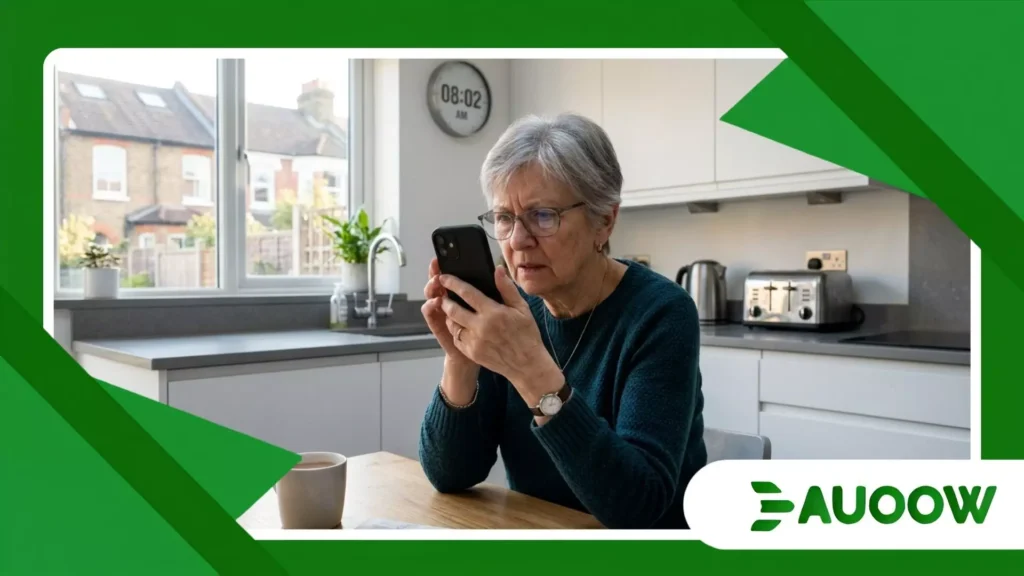
Elena sat in her kitchen in North London, holding her smartphone three inches from her face. It was 8:02 AM, and the digital queue for her local general practice clinic was already moving with a brutal, invisible velocity.
For a person with advanced macular degeneration, navigating a maze of unlabelled form fields, poorly contrasted dropdown menus, and aggressive, fast-expiring CAPTCHA windows isn’t just an inconvenience.
It is a systemic barrier. By the time her screen reader successfully decoded the verification puzzle, the available slots for the day were gone, replaced by a cold, automated notification stating that the portal was now closed.
It is a scene playing out across thousands of screens worldwide daily, proving that online appointment systems are still failing many users who simply require equitable access to basic healthcare and public services.
Behind the polished interfaces of municipal portals, hospital booking systems, and educational enrollment platforms lies a widening chasm between technological convenience and human reality.
We are told that digitizing these pathways democratizes access, reducing long lines and eliminating the need to wait on hold for hours. Yet, when we examine who these platforms actually serve, a different picture emerges.
This editorial explores three critical areas:
- The Interface Barrier: How missing ARIA labels and rigid time limits block assistive technologies.
- The Policy Disconnect: Why passing accessibility laws fails to guarantee functional, real-world access.
- The Path Forward: Shifting from checklist compliance to human-centered digital infrastructure.
Why does modern software continue to shut out vulnerable citizens?
When we observe with more attention, the pattern repeats across almost every sector of our public infrastructure.
A city decides to upgrade its transit booking system for disabled riders, or a university transitions its academic counseling reservations to a third-party application.
The press release invariably promises a seamless experience.
What is rarely discussed in these technological rollouts is that the underlying procurement process heavily prioritizes cost, security protocols, and administrative efficiency over fundamental usability.
The core issue is that many development teams treat accessibility as an afterthought a final compliance audit conducted right before launch, rather than a foundational design principle.
When software is built this way, the resulting code is often fragile. A blind user relying on a refreshable Braille display might find that the calendar widget doesn’t register keyboard commands.
A stroke survivor with fine motor control challenges might discover that the target area to confirm an appointment is too small to accurately press on a mobile device.
Because online appointment systems are still failing many users, these design oversights effectively lock people out of services they are legally entitled to access.
There is a structural detail that consumers and citizens alike often ignore: the heavy reliance on proprietary, third-party software plug-ins.
Public entities rarely build their booking architecture from scratch.
Instead, they buy licenses from private software vendors whose products are built for the average user, leaving disabled communities to cope with interfaces that are technically compliant on paper but practically unusable in daily life.
++ Smart Home Features That Actually Improve Independence
What actually changed after the digital migration?
| Historical Era & System Type | Administrative Goal | The Reality for Users with Disabilities |
| Pre-2010: Telephonic & In-Person Queues | Centralized management via staff interaction. | High wait times, but human operators could adapt to communication barriers in real time. |
| 2010–2020: Early Portal Adoption | Reducing administrative overhead and staffing costs. | Basic HTML forms emerged; lack of mobile optimization and screen-reader compatibility caused widespread fragmentation. |
| Post-2020: Mandatory Digital First | Absolute optimization of public resources via automated routing. | Complex security layers (CAPTCHAs) and rigid session timeouts created severe barriers, meaning online appointment systems are still failing many users who cannot navigate rapid interfaces. |
How did we mistake technical compliance for true digital hospitality?
To understand how we arrived at this point, we have to look at the history of digital rights legislation over the last two decades.
When frameworks like the Web Content Accessibility Guidelines (WCAG) were first integrated into international laws such as Section 508 in the United States or the European Accessibility Act the objective was clear: establish a baseline standard for digital inclusion.
However, a significant gap has opened between the letter of the law and the lived experience of the user. Organizations have learned to treat these legal requirements as a defensive checklist.
A system can technically pass an automated accessibility scan by having alt-text on its images and proper color contrast ratios, while still possessing a user flow so convoluted that an elderly individual or someone experiencing high anxiety cannot successfully complete a booking.
On my reading of this scenario, the issue is not a lack of technical guidelines, but a profound lack of empathy in how those guidelines are implemented.
When a system logs a user out after five minutes of inactivity for security reasons, it ignores the reality of a person using a mouth stick or voice dictation software, for whom typing an insurance number takes three times longer than average.
By failing to account for human variance, these systems penalize the very people who rely on public services the most.
Also read: Why facial recognition accessibility raises daily access concerns
What does this exclusion look like in everyday life?

Imagine a qualified professional, highly skilled in their field but living with a severe tremor due to multiple sclerosis, attempting to schedule a mandatory workplace health assessment through a corporate portal.
The system requires them to select a specific date from a floating grid that disappears the moment the cursor drifts even slightly outside the box.
Every failed attempt forces a page refresh, wiping out all previously entered data.
This isn’t an isolated technical glitch; it is an everyday occurrence that shapes whether someone can maintain employment, access timely healthcare, or secure housing.
When a transit authority moves its specialized door-to-door shuttle booking exclusively to an app that crashes when text size is increased to 200%, the independence of an entire demographic is quietly eroded.
The message sent to these citizens, albeit unintentional, is that their time and autonomy are secondary to administrative convenience.
We must recognize that digital barriers have the exact same societal impact as physical stairs outside a courthouse.
If a wheelchair user cannot enter a building, we recognize it as a failure of basic civil rights.
Yet, because online appointment systems are still failing many users behind closed doors and individual screens, this digital segregation remains largely invisible to the public eye.
Read more: The rise of smart crosswalk accessibility in urban mobility plans
How can we redesign public infrastructure for real-world equity?
The path forward requires an honest re-evaluation of how digital tools are commissioned, designed, and maintained.
True accessibility cannot be achieved by simply running an automated patch tool over poorly written software.
It demands that disabled individuals are included in the user testing groups from the very inception of a project, ensuring that diverse physical and cognitive realities shape the architecture of the system.
Furthermore, procurement policies within public institutions must become more rigorous.
Agencies should refuse to purchase software from vendors who cannot demonstrate that their booking interfaces have been thoroughly tested by individuals with diverse access needs.
We need to move toward a model of universal design, where simplicity and flexibility are valued over unnecessary visual flair or overly rigid security steps that do not offer alternative pathways for verification.
Ultimately, technology should act as an equalizer, not an additional gatekeeper.
The goal must be to build systems that recognize human diversity as a normal state of affairs, creating digital spaces that welcome every citizen with dignity and ease.
Frequently Asked Questions
Why can’t standard screen readers navigate most online booking calendars?
Many online calendars rely on complex JavaScript frameworks that update dynamically without sending a notification to assistive technologies.
If the developers do not explicitly use Accessible Rich Internet Applications (ARIA) live regions, a blind user’s screen reader will remain completely unaware that the available dates have changed on the screen, rendering the booking grid inaccessible.
How do strict security measures like CAPTCHAs impact accessibility?
While security steps prevent automated spam bots, visual puzzles or audio challenges often present insurmountable barriers for individuals with visual, auditory, or cognitive disabilities.
When platforms implement these security features without clear, accessible alternatives, online appointment systems are still failing many users who are fully capable of completing the form but cannot bypass the security gate.
Are organizations legally required to make appointment portals accessible?
In many jurisdictions, yes. Laws such as the Americans with Disabilities Act (ADA), the UK Equality Act, and the European Accessibility Act mandate that public accommodations and government services provide equal access to their digital platforms.
However, enforcement varies, and many systems only improve after facing formal legal complaints or public pressure.
Can automated accessibility overlays fix a broken booking system?
No. Software overlays or plug-ins that promise to instantly fix accessibility issues with a line of code rarely solve deep architectural problems.
They often interfere with the personalized assistive tools that disabled individuals already use on their computers, creating an unpredictable and frustrating user experience rather than providing a real solution.
