
How Accessible Are Modern Bike-Sharing Programs?
The morning rush on a grey Tuesday in central London always carries a familiar, frantic rhythm.
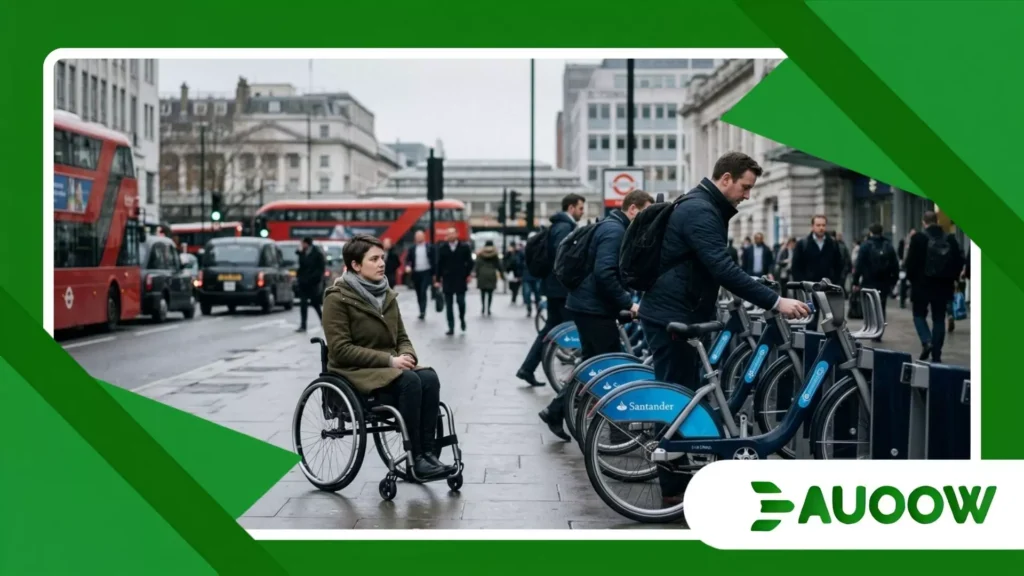
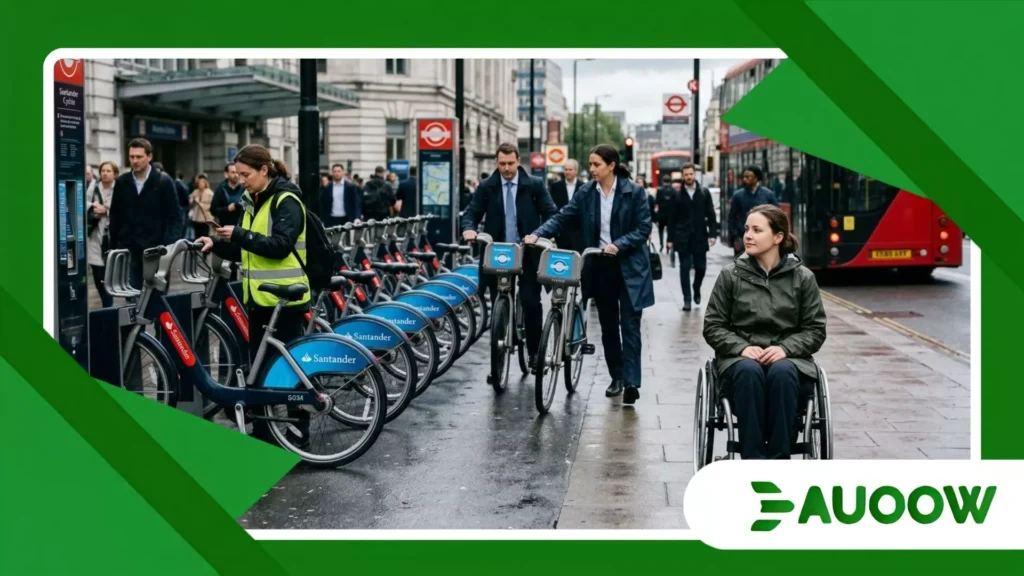
At a bustling docking station near Waterloo, commuters hurry past rows of identical blue bicycles, tapping their phones to release a frame with a sharp, mechanical click.
For most, it is a frictionless transition from pavement to pedal. But standing just a few feet away, Elena watches the scene with a quiet, practiced patience.
As a wheelchair user whose daily transit relies on a combination of accessible buses and manual navigation, the sleek, uniform line of rental cycles represents a world operating on a frequency she cannot tune into.
Modern bike-sharing programs have revolutionized urban transit across global metropolises, promising green commutes, reduced congestion, and spontaneous mobility for all.
Yet, as the urban landscape swaps asphalt space for two-wheeled fleets, a critical question lingers at the intersection of design and civic freedom: who is actually being served when public transport becomes exclusively pedal-powered?
Navigating the urban sidewalk puzzle
The architectural exclusion of standardized fleets
Moving beyond two wheels toward equitable transit
Why Standardized Fleets Leave Many Behind
There is a comfortable illusion in modern city planning that if a service is open to the public, it is inherently public.
Modern bike-sharing programs transformed over the last two decades from novelty docks into backbone infrastructure for cities like New York, Paris, and Montreal.
Yet, the foundational design of these fleets remains stubbornly monolithic.
Two wheels, a high center of gravity, and a standard pedal-and-handlebar configuration assume a very specific physical baseline.
What rarely enters this debate is how physical standardization operates as a form of architectural gatekeeping.
When cities contract private operators to blanket sidewalks with dockless or docked bicycles, the financial and logistical incentives lean heavily toward uniformity.
Mass production lowers maintenance costs, but it also creates an exclusionary barrier for citizens with balance impairments, limb differences, or lower-body paralysis.
When we observe with more attention, the pattern repeats across municipal innovations.
We celebrate the democratization of transit while quietly reinforcing a narrow definition of the commuter’s body.
++ Smart Home Features That Actually Improve Independence
The Quiet Evolution of Municipal Micromobility
Urban mobility did not arrive at this juncture by accident. To understand why contemporary fleets look the way they do, we have to look backward at how transport policy evolved through the late twentieth century.
Decades ago, urban planners fought to reclaim streets from cars by promoting cycling as a practical equalizer.
The bicycle was framed as a low-emission vehicle that required minimal infrastructure compared to rail or bus networks.
However, this bike-first focus frequently overlooked existing accessibility frameworks.
When accessibility laws or regional equivalents mandated ramps, elevators, and audio signals for mass transit, bicycles occupied a legal blind spot.
Because modern bike-sharing programs emerged primarily as tech-driven start-ups rather than traditional public utilities, they often avoided the rigorous public scrutiny applied to municipal buses and trains.
There is a structural detail that often costs cities dearly: transport authorities sometimes treat micromobility as a private amenity rather than a fundamental public right.
This distinction allows operators to prioritize high-turnover corridors in affluent commercial districts while offering token gestures toward inclusive design, such as a handful of pilot electric trikes that disappear into maintenance limbo within months.
Also read: Why facial recognition accessibility raises daily access concerns
Daily Realities: When the App Says “Go” But the Body Cannot
Consider an urban worker with mild cerebral palsy navigating the financial district of Toronto.
The commuter holds a monthly transit pass that includes integrated bike-share access, a perk touted by municipal leaders as a step toward multimodal sustainability.
The physical reality, however, is a daily exercise in frustration. Unlocking a heavy urban bicycle requires fine motor control, smartphone dexterity, and sufficient core stability to merge safely into traffic.
For this worker, and others facing similar barriers, the bike dock can feel like an impassable monument to exclusion disguised as progress.
The barrier is not merely physical; it is digital and operational. Many stations lack tactile paving leading up to the kiosks, making independent navigation challenging for blind or low-vision residents.
When public infrastructure demands a specific biological profile to function, it ceases to be truly public. It risks becoming a private club subsidized by public sidewalk space.
Also read: Why facial recognition accessibility raises daily access concerns
What Actually Changed After This?
| Era | Dominant Mobility Focus | Accessibility Integration | Primary Exclusionary Factor |
| Late 20th Century | Private cycling & car dominance | None (infrastructure was car-centric) | Complete lack of protected lanes |
| 2010s (Early Sharing) | Docked bikes & rapid station rollout | Retrofitted compliance as an afterthought | Smartphone apps & heavy two-wheel frames |
| Present Day (2026) | Dockless e-bikes & multimodal hubs | Pilot adaptive fleets in select cities | High costs, poor spatial distribution |
The shift toward electric-assist models and geofenced parking zones has altered the physical footprint of our streets.
Yet, the core paradox remains: technological complexity has often outpaced human-centric design.
Can Cities Re-Engineer Public Cycling for Everyone?
Careful analysis suggests that piecemeal accommodations will rarely bridge the gap. Adding three adaptive tricycles to a fleet of ten thousand standard bicycles is not inclusion; it is a superficial gesture.
True reform requires treating micromobility with the same regulatory seriousness as heavy rail.
Cities can mandate that any operator wishing to occupy public pavement provide a sliding scale of vehicle types including recumbent bikes, handcycles, and stable three-wheeled chassis available at major hubs.
Furthermore, digital reservation interfaces should comply with stringent screen-reader standards and offer physical, non-smartphone access points for riders with cognitive or digital access barriers.
When modern bike-sharing programs are redesigned from the ground up to accommodate the spectrum of human capability, they stop being exclusive tools for the agile and start living up to the democratic promise of public space.
Frequently Asked Questions
Why are adaptive bikes so rare in public sharing fleets?
Most systems are built around private venture capital models focused on high-volume turnover and low maintenance overhead.
Standard two-wheeled bicycles are typically cheaper to manufacture, dock, and repair than specialized adaptive equipment like handcycles or tricycles, leading operators to deprioritize them.
How do physical docks create barriers for disabled pedestrians?
Poorly placed docking stations often clutter narrow sidewalks, encroaching on the minimum clearance required for wheelchair users, white-cane users, and parents with strollers.
In many cases, the approach to the payment kiosk lacks tactile paving or curb cuts.
Are e-bikes making sharing systems more accessible?
Electric assistance helps riders with lower fatigue thresholds or muscle weakness.
However, e-bikes are often heavier, faster, and harder to maneuver, which can introduce new safety and physical control hazards for older adults or riders with balance conditions.
Can smartphone-only unlock systems violate accessibility standards?
Yes. Requiring a smartphone app with complex visual menus creates a digital exclusion barrier for individuals with visual impairments, fine motor difficulties, or those without digital literacy or high-end mobile devices.
What are cities doing to fix these equity gaps?
Forward-thinking municipalities are beginning to tie operating licenses to mandatory fleet diversity requirements, subsidizing local non-profit adaptive cycling hubs, and requiring real-time data transparency regarding where accessible vehicles are deployed.
