
How myoelectric assistive wearables support daily activities
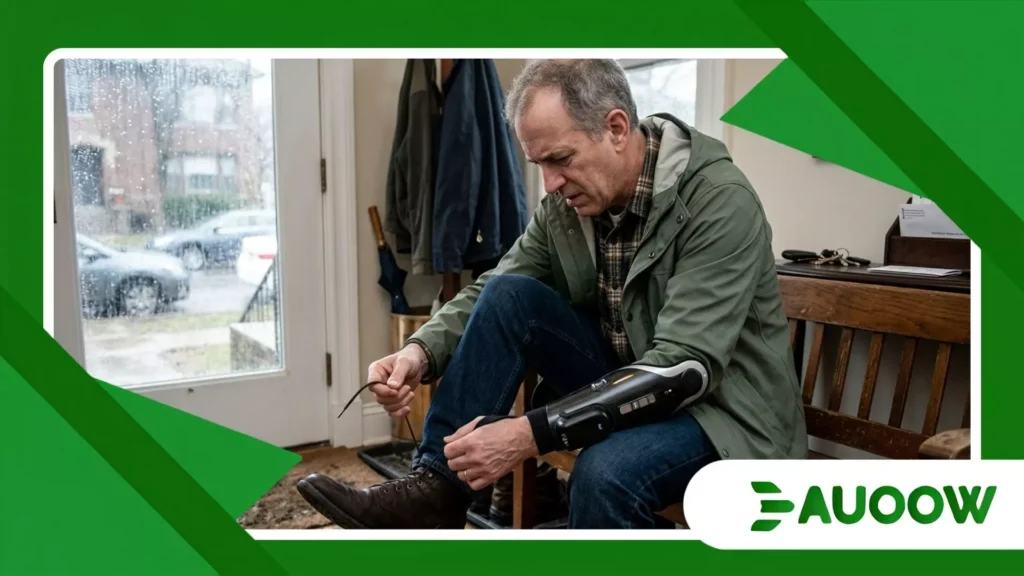
On a rainy Tuesday morning in Chicago, Arthur attempted to tie his shoes a routine action that had turned into a daily battle with his own nervous system.
Three years after a brainstem stroke, his left arm retained sensation but struggled to translate intent into fluid movement.
Then, his occupational therapist fitted a sleek orthotic sleeve along his forearm. This device belongs to a new generation of myoelectric assistive wearables designed to detect minute electrical signals in residual muscle fibers and assist movement in real time.
As Arthur focused on extending his fingers, surface sensors caught the subtle micro-volt spike, a compact motor responded, and his hand opened smoothly around the lace.
Key Explorations in This Article
- Listening to the Body: How reading sub-dermal electrical signals changes non-invasive neurorehabilitation.
- The Bureaucratic Barrier: Why health coverage models struggle to keep pace with dynamic assistive technology.
- Structural Continuity: Connecting decades of military prosthetic research to civilian mobility access.
- Comparative Technology Overview: A detailed look at mechanical, standard electric, and myoelectric options.
- Editorial Perspectives & FAQ: Real answers regarding cost, daily usability, and long-term adaptation.
Why do simple daily routines become invisible battlegrounds for autonomy?
For millions of people living with neuromuscular conditions, brachial plexus injuries, or post-stroke hemiparesis, the primary hurdle is rarely a loss of motivation.
It is a breakdown in communication between the central nervous system and peripheral muscles.
Traditional static braces hold joints rigid, while purely mechanical cable systems often force uncomfortable compensation movements from the torso or shoulder.
Across global healthcare systems, domestic autonomy is often reduced to basic survival tasks.
Insurance frameworks frequently approve equipment that allows someone to eat or transfer from a chair, yet decline tools that enable writing, cooking, or painting.
Physical independence links directly to personal dignity. Needing assistance to turn a doorknob can gradually erode a person’s sense of agency.
When myoelectric assistive wearables enter this space, they do more than provide physical force; they act as a functional bridge, reinforcing motor pathways through continuous biofeedback.
++ The Evolution of Braille Technology in the Digital Age
How do muscle signal sensors translate thought into physical action?
At the core of this technology are surface electromyography (sEMG) sensors placed gently against the skin.
When a person intends to bend an elbow, the brain sends an electrical signal down the spinal cord to the target muscle group.
Even in limbs affected by partial paralysis or muscle atrophy, these electrical pulses often reach the tissue, though they may be too faint to generate noticeable movement on their own.
The sensors continuously sample these subtle micro-volt impulses.
Onboard microprocessors apply algorithms that distinguish intentional muscular signals from involuntary tremors or background noise.
Within milliseconds, internal motors supply proportional support to complete the desired action.
This direct response offers an intuitive user experience. Rather than pressing buttons or manipulating external toggles, the user simply initiates the movement naturally.
Through myoelectric assistive wearables, the technology operates less like a external machine and more like an extension of the person’s body.
Also read: Why Assistive Technology Regulation Still Focuses on Devices, Not Systems
Why does signal clarity remain a challenge in real environments?
While clinical trials demonstrate impressive results, daily environments introduce variable factors.
Sweat, changes in skin temperature, muscle fatigue, and slight shifts in sensor placement throughout the day can affect signal clarity.
Engineers continue refining signal-processing algorithms to manage these changing conditions.
Modern systems adjust to an individual’s shifting baseline in real time, helping ensure that someone cooking in a warm kitchen or spending time outdoors in cold weather receives consistent support.
What historical policy failures keep advanced assistive technology out of reach?
Understanding why sophisticated assistive devices remain out of reach for many requires examining how healthcare policies evolved.
Following World War II, major government investments in rehabilitation accelerated modern prosthetics research.
However, regulatory frameworks established during the mid-20th century were primarily designed around static medical equipment such as crutches, manual wheelchairs, and basic rigid braces.
Coverage criteria frequently label modern orthotics as “experimental” or “not medically necessary.”
Payors evaluate high-tech wearables using metrics built for passive hardware, often overlooking the broader health and social benefits of restored upper-limb movement.
When an individual receives a wearable device that reduces joint strain and restores functional arm movement, their reliance on personal care support often decreases.
They may experience fewer secondary complications, such as joint contractures or overuse injuries in the opposite limb.
Yet, because healthcare funding operates in compartmentalized budgets, short-term equipment costs are frequently prioritized over long-term independence and savings.
Read more: Public Procurement’s Role in Shaping Assistive Tech Markets
How do modern coverage battles unfold for patients?
Consider an IT specialist in his late forties who sustained a brachial plexus injury in an accident, leaving his dominant arm partially paralyzed.
Returning to work requires stabilizing his hand to operate keyboard interfaces and handle files.
His clinical team recommends a custom myoelectric upper-limb orthosis. The insurer initial denies the claim, citing standard orthotic guidelines.
Securing approval requires over a year of appeals, medical evaluations, and functional assessments.
During that period of forced leave, the delay affects both his livelihood and his physical rehabilitation progress.
How does daily life transform when wearable technology works seamlessly?
When assistive devices match human needs, the benefits reach far beyond clinical metrics.
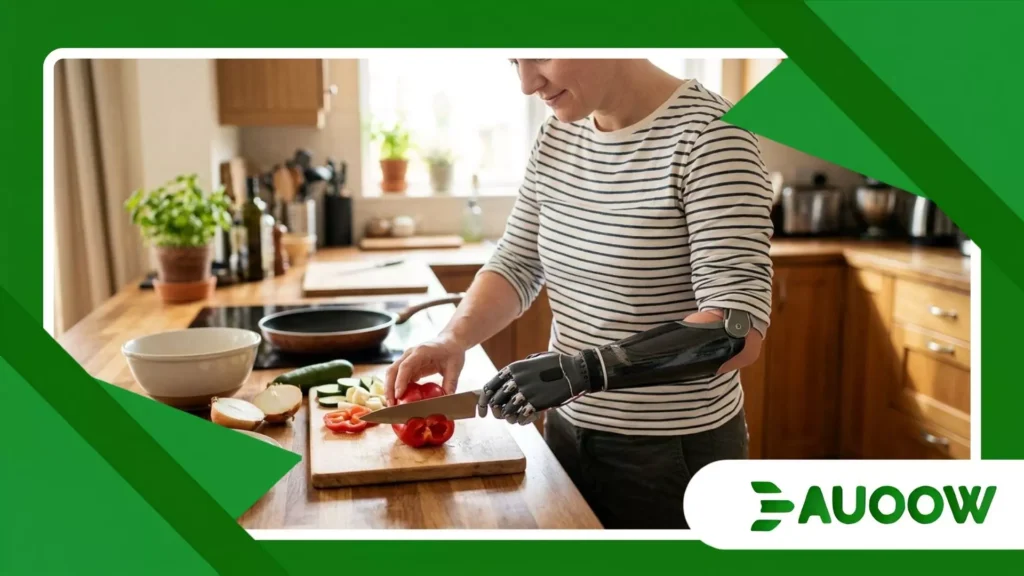
Maria, a former teacher living with progressive muscle weakness, found that preparing simple meals had gradually become exhausting, requiring either careful conservation of energy or complete assistance.
Using an active myoelectric upper-limb orthosis, she can hold cooking utensils, slice ingredients, and reach cabinet shelves with reduced strain.
The device supports her arm weight while amplifying her own muscle signals.
Technology serves a deeper purpose when it restores social roles and personal routines. Maria returned to host family gatherings because the tools adapted to her physical realities.
When myoelectric assistive wearables function smoothly, they yield the stage to the individual’s abilities and goals.
What is the role of neuroplasticity in long-term wear?
An encouraging aspect of active assistance is its influence on neuroplasticity the brain’s ability to reorganize neural connections.
When a person initiates a motor command and receives immediate physical execution, the neural circuit receives positive feedback.
Over time, this closed feedback loop can help reinforce damaged motor pathways.
In neurorehabilitation, regular engagement with responsive devices can assist individuals in retaining or recovering voluntary control, making the wearable both a daily functional aid and a therapeutic tool.
Comparing modern mobility and upper-limb solutions
To better understand where active neuro-assistive technology fits in modern care, it helps to review the distinctions between traditional equipment and emerging wearable options.
| Category / Attribute | Traditional Passive Orthotics | Standard Powered/Electric Devices | Advanced Myoelectric Assistive Wearables |
| Primary Mechanism | Mechanical straps, hinges, and body weight | External joysticks, push buttons, or remote triggers | Surface EMG sensors detecting muscle electrical signals |
| User Control Interface | Purely mechanical; requires manual repositioning | Secondary physical input from another limb/finger | Intuitive muscle intention; operates naturally |
| Adaptability & Learning | Fixed support; no digital processing | Pre-programmed fixed speed and range | Machine-learning algorithms that adjust to fatigue |
| Primary Clinical Goal | Joint stabilization and deformity prevention | Basic mobility or grip without organic effort | Dynamic functional assistance and neural feedback |
| Reimbursement Status | Broadly covered by public and private insurance | Moderately covered with specific medical coding | Frequently disputed; requires extensive documentation |
Reimagining Policy and Access for Universal Human Mobility
Building an inclusive society requires rethinking how assistive technology is evaluated, funded, and integrated into community life.
When advanced mobility devices remain limited to those with private means or the resources to navigate prolonged appeals, the systemic gap between innovation and real-world accessibility widens.
Progressive healthcare policy should evaluate technology based on real-world outcomes rather than initial hardware expenses alone.
Meaningful metrics focus on whether a parent can care for a child, an artisan can return to a trade, or an older adult can live safely in their own home.
Investing in myoelectric assistive wearables is fundamentally an investment in human agency, ensuring that physical variations do not limit an individual’s right to participate fully in daily life.
Editorial FAQ
How do myoelectric wearables differ from traditional prosthetics?
Prosthetics replace a missing limb. Myoelectric wearables such as smart orthoses or exoskeletons—fit over existing limbs affected by weakness, paralysis, or nerve injuries to augment and restore natural movement.
Are myoelectric devices uncomfortable to wear daily?
Modern orthoses feature non-invasive surface sensors designed to sit comfortably against the skin.
While accurate fitting by a qualified orthotist and an initial adaptation period are necessary, proper use should not cause discomfort.
Can individuals with severe movement limitations use myoelectric assistive wearables?
These systems depend on detecting small electrical impulses in active muscle tissue.
If nerve pathways show no measurable electrical activity, alternative assistive modalities such as adaptive switches or brain-computer interfaces may be considered.
What prevents wider availability in public healthcare frameworks?
Upfront manufacturing costs combined with outdated billing classifications create persistent barriers.
Health systems frequently categorize dynamic wearables under traditional static equipment codes, often requiring detailed documentation and appeal processes to justify coverage.
