
Why pressure-relief cushions remain a major assistive tech issue
Before Marcus opens his laptop, checks his calendar, or pours his morning coffee, he spends nearly half an hour calculating how his body will rest for the next twelve hours.
At thirty-four, having navigated life as a wheelchair user following a spinal cord injury over a decade ago, Marcus knows that true autonomy is not measured only in ramp gradients or accessible curb cuts.
It is measured in millimeters of skin integrity. A slight tilt in pelvic alignment, friction pulling across tissue, or an improperly inflated air cell can disrupt a career faster than any physical workplace barrier.
He reaches down, adjusts the posture contour beneath him, and checks for that precise, reassuring give a daily routine that underscores why pressure-relief cushions remain one of the most critical yet frequently misunderstood components of modern assistive health technology.
What Lies Ahead
- The Quiet Physics of Daily Sitting: Unpacking why sitting is far from passive and how micro-movements protect tissue integrity.
- Where Materials Science Meets Human Reality: Why gel, foam, and dynamic air systems frequently struggle under real-world conditions.
- The Policy and Purchasing Trap: How public procurement frameworks prioritize initial costs over long-term health outcomes.
- A Documented Human Struggle: The story of Elena and the systemic administrative fight for essential seating support.
- Systemic Policy Comparison: How international health systems approach wheelchair seating and pressure injury prevention.
- Frequently Asked Questions: Practical insights regarding maintenance, funding, and everyday usability.
Why Is Sitting Still Such an Unsolved Problem?
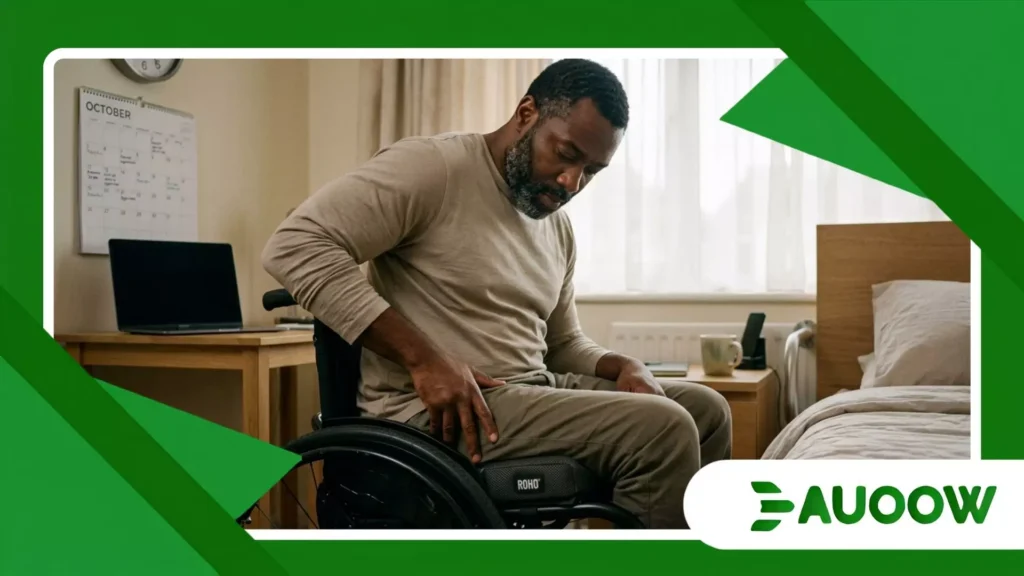
We often visualize sitting as a static state, a passive pause in movement. Yet for anyone using long-term mobility equipment, sitting is a continuous, dynamic interaction with gravity.
When body mass rests on the ischial tuberosities the sit bones the skin and soft tissue beneath are compressed against the seat frame.
Without proper pressure distribution, localized blood flow slows, oxygen delivery to tissue drops, and deep cellular damage can begin in as little as two hours.
What often gets overlooked in product design is the sheer biological vulnerability of human tissue under sustained load.
Engineering teams frequently build sophisticated power wheelchairs equipped with advanced gyroscopic balance systems, while treating the primary interface between the user and the chair as a secondary detail.
A high-performance wheelchair paired with inadequate body contouring leaves the user vulnerable to preventable medical complications.
This disconnect becomes especially clear in equipment funding models.
Public healthcare programs regularly approve substantial budgets for motorized wheelchair bases, yet hesitate to cover specialized pressure-relief cushions that cost a small fraction of the total expense.
It represents a fundamental misinterpretation of biomechanics treating seating as simple upholstery rather than an active medical intervention.
What Changed Silently in Material Science?
For decades, seating design relied primarily on high-density polyurethane foam. It offered an affordable, accessible, and predictable solution.
However, foam degrades when exposed to continuous body heat and moisture, gradually losing its structural resilience within months.
In response, biomedical engineering introduced fluid gels, cellular air matrices, and dynamic dynamic polymer hybrids engineered to spread physical load across a broader surface area.
Laboratory evaluations, however, rarely capture the complexity of daily life. In climate-controlled testing environments, a gel matrix redistributes pressure evenly across a synthetic model.
Out in the real world, temperature changes alter fluid viscosity, perspiration increases skin friction, and everyday transfer maneuvers shift the user’s position off-center.
When a person transfers between a wheelchair, a vehicle, or a bed, sub-dermal tissue encounters lateral shear a tearing force across internal tissue layers.
While many contemporary materials manage downward vertical weight effectively, many still struggle against lateral shear forces.
This gap between controlled clinical testing and daily movement explains why designing effective pressure-relief cushions remains an ongoing challenge for biomedical engineers and clinicians alike.
++ Why Local Governments Play a Critical Role in Accessibility
How Past Policies Shape Today’s Barriers
To understand why so many people struggle to access adequate seating technology today, we must look at how mobility funding guidelines originated in the late twentieth century.
When public health coverage policies were first established, wheelchairs were classified primarily as durable medical equipment designed to move a person from one location to another.
That historical baseline created lasting administrative hurdles. Equipment was evaluated on physical durability and basic movement rather than long-term anatomical health.
The administrative assumption was straightforward: if the chair moved, the user’s mobility needs were met.
The serious consequences of long-term pressure injuries extended hospitalizations, severe infections, long periods of mandatory bed rest, and disrupted employment were categorized as secondary medical issues rather than preventable equipment gaps.
Healthcare administrative systems remain largely detached from clinical realities. Many coverage structures operate on legacy rules that view mobility equipment as a collection of isolated hardware parts rather than an integrated biological support system.
As a result, occupational therapists and seating specialists spend countless hours submitting complex clinical appeals simply to secure standard preventative customization for high-risk users.
Also read: Why facial recognition accessibility raises daily access concerns
The Story of Elena and the Administrative Battle
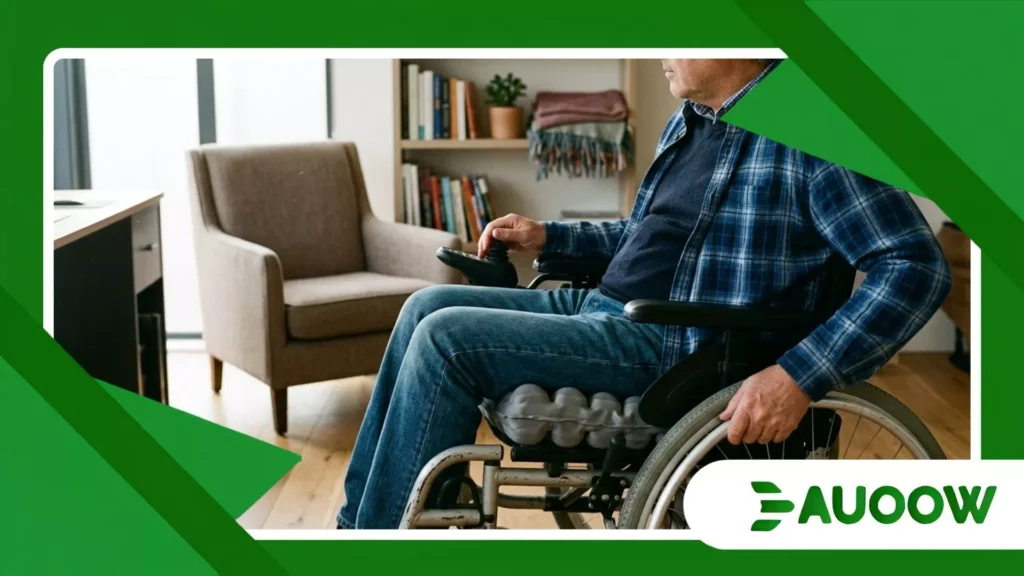
Consider the experience of Elena, a 42-year-old high school teacher in north-west England living with multiple sclerosis.
As her physical fatigue and postural control altered over a three-year period, her standard prescripted foam cushion began causing persistent skin redness a clear clinical sign of potential tissue breakdown.
Her occupational therapist recommended an dynamic air-cell cushion capable of micro-adjustments throughout her school day.
What followed was not a swift equipment update, but eight months of formal administrative appeals.
The regional health trust’s standardized funding directory categorized her existing cushion as functional, requiring detailed clinical evidence of active tissue damage before approving an equipment upgrade.
The administrative process effectively required Elena to sustain an actual, painful medical injury before authorizing the preventative equipment designed to avoid it.
“I had to decide between sitting through morning classes in discomfort or staying in bed to protect my skin,” Elena noted during an assessment of healthcare access delays.
Her experience reflects a systemic pattern where essential preventative technology is treated as an optional upgrade rather than a fundamental requirement for daily participation.
Read more: The rise of smart crosswalk accessibility in urban mobility plans
What Actually Changed Across Health Systems?
Approaches to seating technology vary significantly across international health systems, reflecting distinct perspectives on preventative care and long-term disability support.
| Country / Region | Regulatory Approach | Funding Model for Advanced Seating | Primary Policy Bottleneck |
| United States | Categorized under Medicare Durable Medical Equipment (DME) | Fee-for-service model using specific clinical coverage codes | Complex documentation requirements and high out-of-pocket costs for specialized pressure-relief cushions |
| United Kingdom (NHS) | Centralized provision via local Wheelchair Services teams | State-funded based on regional health budgets and clinical risk profiles | Long wait times and regional variations in equipment availability |
| Germany | Statutory Health Insurance (GKV) medical aids registry | Standardized registry reimbursement following medical prescription | Administrative delays in adding newly developed dynamic material hybrids to approved lists |
| Scandinavian Nations | Municipal assistive technology centers focusing on universal access | Fully funded by public resources as essential equipment for independence and employment | High initial public investment requiring sustained municipal budget allocation |
Re-Engineering Our Priorities
A realistic look at healthcare design shows that pressure management is not a secondary technical detail, nor is it an issue that affects only a small group of individuals.
As global populations age and medical care improves survival outcomes after major physical injuries, the number of people who spend eight to sixteen hours sitting each day continues to expand worldwide.
Building truly inclusive communities requires extending our focus beyond public infrastructure and architectural standards.
Physical ramps, wide doorways, and accessible elevators offer limited benefit if an individual cannot safely leave their home due to inadequate seating support that threatens their skin integrity.
True structural accessibility requires investing in the immediate personal technology that makes daily mobility safe, stable, and sustainable over time.
Moving forward means aligning medical engineering, public reimbursement frameworks, and clinical care around a shared baseline: preventative physical support is a core component of human dignity.
When public policy treats custom seating as an essential medical priority rather than a negotiable add-on, we eliminate a major, unnecessary barrier to personal independence and daily community life.
Supporting bodily integrity through proper seating technology is not an luxury option it is the baseline foundation that allows individuals to work, learn, and engage with the world on their own terms.
Frequently Asked Questions
Why can’t standard memory foam cushions prevent pressure injuries?
Standard consumer memory foam is engineered for temporary comfort rather than sustained medical weight distribution.
Under continuous body heat and load, commercial foam compresses fully, losing its support capacity and trapping heat and moisture against the skin.
Effective medical pressure management relies on engineered density layers, dynamic air matrices, or specialized fluid gels that actively transfer load away from vulnerable bony areas.
How often should a specialized wheelchair cushion be replaced?
Clinical guidelines generally recommend evaluating specialized seating equipment every two to three years.
However, high-use foam components can lose structural integrity sooner, while air and gel systems can experience material wear or pressure changes based on environmental conditions.
Routine check-ups with an occupational therapist or seating specialist ensure the support setup continues to offer proper protection.
Are air-cell cushions better than gel or foam cushions?
No single material meets every individual’s needs. Air-cell designs excel at broad pressure redistribution and reducing overall equipment weight, though they require regular inflation checks and basic maintenance.
Gel models offer strong positioning stability and temperature regulation, but add noticeable weight to the chair.
Hybrid designs combine structured foam bases with air or gel inserts, balancing physical stability, skin protection, and daily functional needs.
Why are high-performance medical cushions so expensive?
Medical pressure management equipment requires specialized material manufacturing, biocompatibility testing, and design engineering to handle continuous load bearing and friction reduction.
Because these products are regulated medical devices subject to strict safety and quality standards, production, testing, and regulatory compliance costs are significantly higher than those of consumer seating products.
