
What an Accessible Day Looks Like in 2026
To understand what an accessible day looks like in 2026, you have to watch the quiet, everyday moments at a busy transit junction on a rainy Tuesday morning.
A commuter using an electric wheelchair approaches a city bus stop; as the bus kneels, a motorized ramp deploys smoothly, triggered by proximity sensors synchronized with her transit app three blocks away.
There is no frantic waving to catch the driver’s eye, no awkward pause while passengers shift, and no manual intervention needed. The transaction feels completely normal.
Yet, as the bus pulls away into morning traffic, a small point of friction emerges: the digital display updating route alterations fails to announce the change audibly for a visually impaired traveler nearby.
A single missing digital connection reminds us that real freedom of movement is still a work in progress.
In This Article
- The Invisible Engine: How public infrastructure moved from physical compliance to digital orchestration.
- The Workplace Reality: Why hybrid labor models created both independence and new digital isolation.
- Urban Friction Points: Examining where modern accessibility policy breaks down in daily execution.
- Structural Comparative Framework: A side-by-side evaluation of policy mandates versus lived realities.
- Frequently Asked Questions: Clear answers to practical questions about contemporary accessibility standards.
Why Do Our Cities Still Struggle With Seamless Motion?
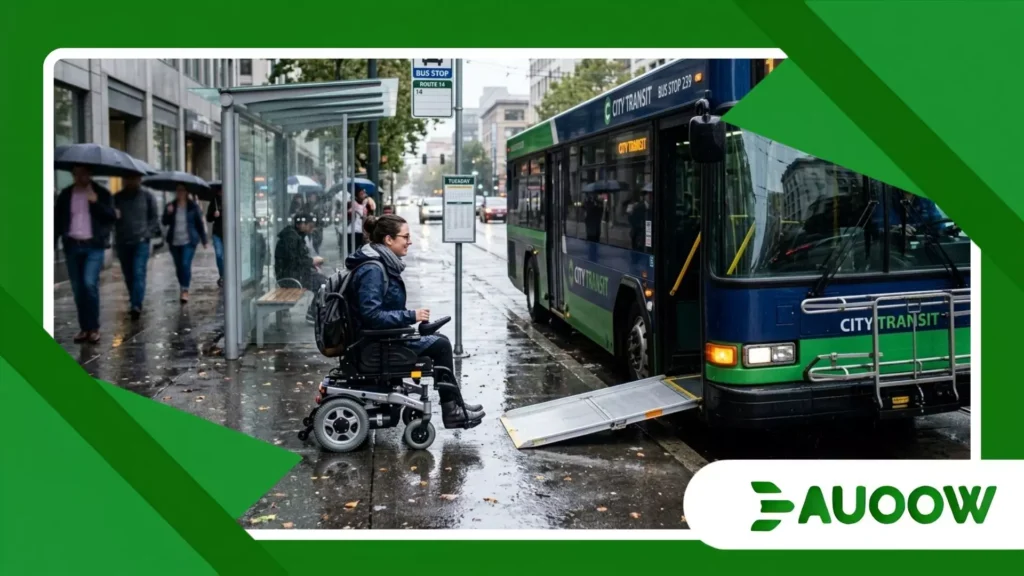
What an accessible day looks like in 2026 depends entirely on whether we treat accessibility as a living network or merely a checklist of building codes.
For decades, urban planners viewed disability primarily through concrete and steel. Cities added curb ramps, installed automatic door openers, and retrofitted historic stations with glass elevators.
These physical changes were vital, hard-won victories driven by disabled advocates over generations.
However, moving through a modern city reveals a truth that took engineers years to appreciate: physical access without reliable digital communication creates new forms of exclusion.
A subway station might feature tactile paving and spacious elevators, but if the operational status of those elevators isn’t shared with passenger navigation apps before someone goes downstairs, the journey breaks down.
Traveling alongside advocates through major cities, you quickly see that journeys are rarely halted by a lack of ramps alone. They are interrupted by broken digital links and unmaintained hardware.
When an elevator stops working without real-time updates, a person using a mobility device can face a two-hour detour.
The barriers in our modern cities aren’t always made of stone; often, they are built from unintegrated software and neglected public maintenance.
++ Why Local Governments Play a Critical Role in Accessibility
What Happens When the Digital Workspace Expands?
To see how what an accessible day looks like in 2026 plays out in daily life, step inside the modern workplace.
Corporate software has changed dramatically in recent years. Screen readers can parse complex graphical spreadsheets, and automated live captioning handles regional accents during video calls with far greater accuracy than before.
Yet, corporate conversations about workplace diversity rarely examine how these tools perform under tight deadlines.
Picture a senior research analyst who uses screen-reading software while working with a newly deployed reporting dashboard.
The vendor promised full accessibility compliance. But during a fast-paced team meeting, an unlabeled data visualization element renders her screen reader silent.
Companies frequently purchase software with built-in accessibility features without training teams to maintain accessible daily habits.
The tool itself passes technical checks, but the day-to-day workflow still presents unnecessary barriers.
“True accessibility in professional environments isn’t measured by software licenses, but by whether an employee can do their job under pressure without relying on emergency workarounds.”
Looking closely at employment conditions across sectors, the pattern continues: physical obstacles at the office door have often been replaced by digital hurdles inside private company networks.
How Are Historic Laws Shaping Modern Public Policy?
The legal foundations underlying today’s systems were written long before ambient computing and predictive algorithms became everyday tools.
In the United States, the Americans with Disabilities Act established a monumental legal principle of equal access. In Europe, the European Accessibility Act unified digital standards across member states.
Past legislation targeted physical spaces and static websites. Today, what an accessible day looks like in 2026 involves interconnected systems from self-service grocery kiosks to local voting portals.
When legacy laws treat these platforms as isolated items rather than connected experiences, people encounter frustrating gaps.
There is also growing concern around automated platforms, where rigid scheduling algorithms can quietly penalize employees who request flexible schedules or adaptive accommodations.
Also read: Why facial recognition accessibility raises daily access concerns
How Does Daily Life Unfold Under Modern Accessibility Standards?
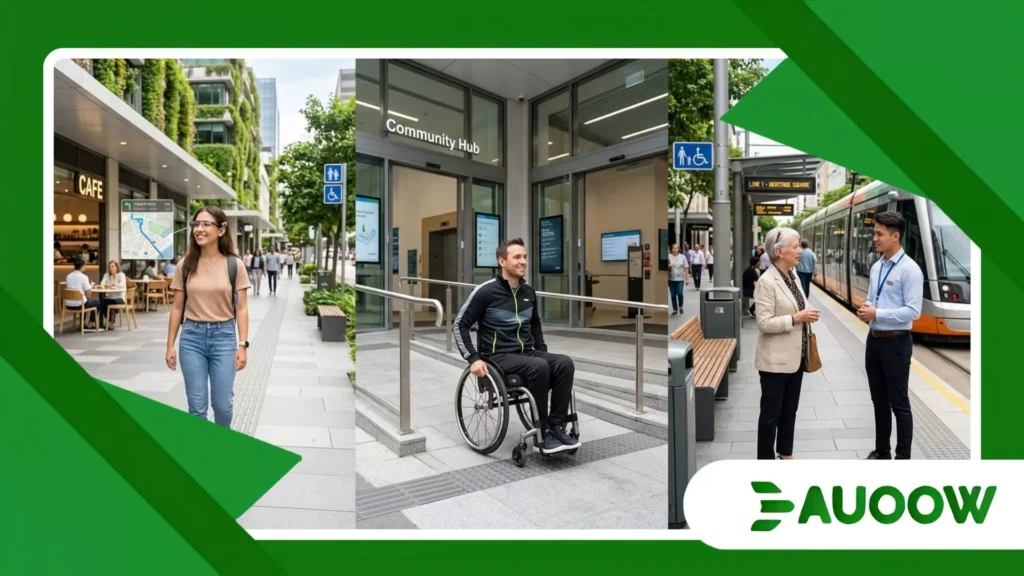
To see how policy impacts real lives, consider two ordinary experiences unfolding in our cities today.
A university student with low vision enters a newly built municipal library.
Under universal design principles, the building uses high-contrast pathways, acoustic dampening to reduce background noise, and digital catalog stations that adjust text sizing when her phone gets close.
She moves through the space independently, finds her books, and gets to work without needing extra assistance. The environment functions smoothly because human variation was considered from the start.
Now consider a qualified accountant with limited hand mobility working for a logistics firm.
The physical office features wide hallways and accessible restrooms, easily meeting local building codes.
However, the company’s internal document system relies on complex mouse gestures that cannot be mapped to alternative input devices.
Despite his skills, his workday is routinely delayed by software friction that has nothing to do with his professional capabilities and everything to do with poor interface design.
Comparing these two situations reveals a simple truth: inclusion fails whenever we forget that user experience must be an unbroken chain.
Read more: The rise of smart crosswalk accessibility in urban mobility plans
Evolution of Accessibility Frameworks Across Eras
To understand how design practices have shifted over time, it helps to examine how public standards have evolved across different areas of life.
| Area of Life | Traditional Approach (Late 20th Century) | Contemporary Standard (Present Day) | Practical Impact on Lived Experience |
| Urban Transit | Manual ramp deployment; fixed auditory announcements. | Proximity-synced automatic ramps; integrated real-time sensory data. | Predictable commuting times and reduced reliance on operator intervention. |
| Higher Education | Physical note-takers; separate physical testing rooms. | Native screen-reader compatibility; real-time multi-modal course materials. | Seamless participation in lectures without delaying feedback. |
| Digital Services | Basic desktop web compliance; manual text resizing. | Cross-platform adaptive interfaces; automated ambient contrast adjustments. | Direct access to public services without third-party assistance. |
| Workplace Tech | Specialized, expensive adaptive hardware add-ons. | Built-in OS accessibility features; native voice-to-text enterprise controls. | Faster onboarding for new employees and lower equipment overhead. |
Rethinking Modern Autonomy: The Policy Shift Ahead
Understanding what an accessible day looks like in 2026 requires moving past basic technical checklists to examine how design, public policy, and everyday dignity intersect.
Significant progress has been made in removing obvious physical barriers. Concrete ramps line most city intersections, and modern operating systems arrive with powerful assistive tools already built in.
Yet, deeper systemic gaps remain. Accessibility is still frequently treated as a secondary feature something added onto a building, website, or corporate policy after primary decisions are already locked in.
When a public transit authority launches a new light-rail line without thoroughly testing its ticketing app with screen readers, or when a healthcare clinic installs check-in kiosks that cannot be adjusted for seated patients, the underlying message is clear: disabled community members were not part of the initial plan.
Creating genuinely inclusive communities requires a basic shift in how we build public infrastructure.
Urban planners, software designers, educators, and legislators must view universal accessibility not as a legal obligation or a burden, but as a foundational requirement for a fair society.
When spaces, tools, and services are designed to accommodate human diversity from the outset, the entire public benefits from greater flexibility, ease of use, and independence.
Moving forward requires ongoing commitment, deliberate public funding, and meaningful collaboration with disabled communities at every stage of design and decision-making.
True autonomy is not achieved through isolated technological fixes, but through an unwavering dedication to designing spaces where everyone can move, work, and live with confidence.
Frequently Asked Questions
What does “universal design” mean in modern urban planning?
Universal design is an architectural approach that creates environments, products, and digital systems usable by all people, to the greatest extent possible, without the need for specialized adaptation or retrofitting.
How do digital accessibility laws affect small businesses?
Most international regulations require public-facing digital services to meet basic accessibility standards, ensuring that websites, online ordering systems, and customer portals can be navigated by users relying on assistive technologies.
Are physical accessibility features becoming obsolete with digital solutions?
No. Digital navigation and smart infrastructure enhance mobility, but physical features like ramps, elevators, wide doorways, and tactile paving remain fundamental to independent movement in public spaces.
What is the most common oversight in workplace accessibility today?
The most frequent issue is purchasing accessible enterprise software while failing to train staff on creating accessible documents, leading to internal workflows that inadvertently exclude employees with disabilities.
