
How Schools Can Better Support Autistic Students Beyond Accommodations
Understanding how schools can better support autistic students begins far away from policy handbooks, administrative meetings, and legal compliance checklists.
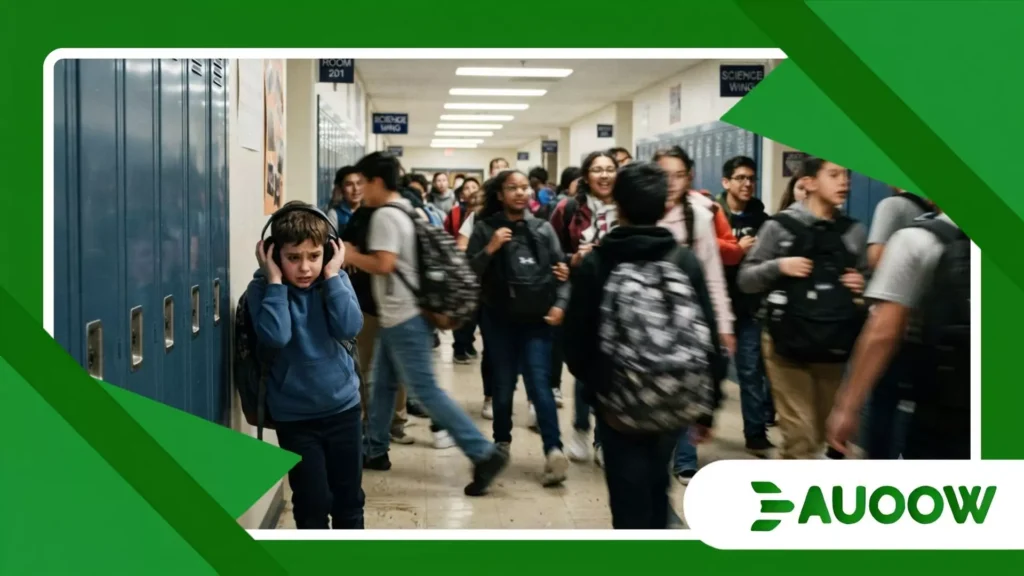
It starts in the chaotic, highly unpredictable environment of a standard school hallway during a five-minute class transition.
For a neurotypical student or staff member, the ringing bell is merely a routine signal to gather books and move to another room.
For an autistic child navigating heightened sensory processing, that same bell acts as an abrasive, physical jolt.
Overhead, standard fluorescent fixtures hum and flicker at subtle frequencies that remain unnoticed by most adults, yet register as excruciating background noise to a sensitive nervous system.
In the middle of this overwhelming sensory corridor stands a ten-year-old student, clutching a pair of noise-canceling headphones.
His legally mandated Individualized Education Program guarantees him extended time on assignments and a separate room for standardized tests.
On paper, every regulatory box is checked, and his educational rights appear fully safeguarded. Yet, as he presses his back flat against a row of cold lockers to shield himself from the rushing crowd, the divide between official legal compliance and actual human belonging becomes glaringly obvious.
Real inclusion demands looking beyond minimal legal adjustments to address the fundamental environments where learning takes place.
What You Will Find in This Analysis
- The Accommodation Trap: Why legal compliance often falls short of genuine inclusion
- Architectural & Environmental Realities: The physical barriers embedded in traditional school design
- Sociological Shifts: Moving from medical models to environmental design
- Practical Solutions: A direct comparison of traditional vs. systemic support
- Frequently Asked Questions: Real-world answers regarding neuroinclusive education
Why Is Legal Compliance Still Falling Short in the Classroom?
For decades, public conversation around neurodiversity in education has gravitated toward legal minimums.
Across North America and broad regions of Europe, landmark legislation mandates reasonable accommodations for students with identified needs.
Schools systematically assign paraprofessionals, extend assignment deadlines, and build quiet spaces to satisfy these legal obligations. When we observe these measures in practice, a concerning structural pattern emerges.
Traditional accommodations routinely treat the autistic student as an exception that must be managed, rather than a natural participant within a shared environment.
An accommodation granted in isolation can inadvertently isolate the very child it aims to assist.
Pulling a student out of a core classroom for sensory breaks, or offering alternate coursework without adapting the social culture of the room, sends an unspoken signal to peers that the student operates outside the normal community dynamic.
Supporting students effectively requires examining the fundamental structures of how classrooms are organized, how knowledge is evaluated, and how physical educational spaces are designed from the ground up.
How Did Past Policies Shape Today’s Educational Barriers?
The limitations of our current special education framework stem directly from its historical roots. The primary models for modern inclusive education were established during the late twentieth century, heavily influenced by physical disability advocacy.
Early policies focused on physical accessibility building wheelchair ramps, widening doorways, and adjusting lab benches so students with mobility impairments could physically enter the building.
When awareness of neurodivergence expanded during the late 1990s and early 2000s, educational systems applied that same physical-access mindset to cognitive and sensory differences.
This historic translation resulted in a system that views autistic traits as individual deficiencies needing localized repairs.
Rather than identifying the standard classroom as sensory-unfriendly, the responsibility is placed on the student to adapt or be modified.
Decisions made decades ago prioritized standardized group management, dense seating arrangements, and uniform behavioral standards.
Modern educators frequently find themselves attempting to practice inclusion inside physical layouts and schedules originally built for strict uniformity.
++ How AI Tutors Are Changing Learning Opportunities for Students with Disabilities
What Does Systemic Support Look Like in Everyday Practice?

Consider a middle school in suburban Oregon that reassessed its institutional design. Rather than managing sensory needs through individual accommodations on a student-by-student basis, the school administration audited the sensory footprint of the entire facility.
They replaced flickering fluorescent lighting with dimmable, natural-spectrum LED fixtures. The high-pitched class transition bells were swapped for gentle chime sequences.
Inside individual classrooms, rows of hard wooden desks were replaced with a variety of seating options, including rocking stools, carpeted floor cushions, and quiet corner nooks.
The broader outcomes exceeded expectations. Autistic students experienced fewer sensory meltdowns and lower daily exhaustion.
At the same time, neurotypical students demonstrated improved focus and lower overall stress levels throughout the school day.
Modifying the physical environment benefited the entire community, proving that universal design serves everyone far better than reactive, localized patches.
| Dimension | Conventional Individual Accommodation | Systemic Neuroinclusive Design |
| Sensory Environment | Issuing noise-canceling headphones during assemblies. | Installing acoustic dampening panels in gyms and hallways; using soft chime transitions. |
| Physical Space | Escorting a student to a nurse’s office during sensory overload. | Integrating quiet, low-stimulation recharge areas into every learning space. |
| Social Communication | Coaching students to mimic typical eye contact and body language. | Educating all students on communication styles and double-empathy concepts. |
| Assessment | Granting extended time on standard paper-based tests. | Offering multi-modal assessments: oral summaries, visual portfolios, or project tasks. |
How Can Educators Rethink Communication and Social Dynamics?
A persistent misconception in school environments is that autistic students lack interest in forming social relationships. In truth, communication barriers in social settings rarely originate from just one side.
Sociological research highlights the double empathy problem the concept that communication breakdowns between autistic and non-autistic individuals stem from mutual differences in processing, experiencing, and expressing thoughts, rather than a singular deficit in one individual.
Also read: Inclusive Education in the Middle East: Emerging Opportunities
Reframing Social Expectations
Traditional social skills interventions often focus on training autistic children to pass as neurotypical.
These programs emphasize forcing sustained eye contact, suppressing harmless self-regulatory movements like stimming, and limiting passionate discussions around deep interests.
Research and lived experience reveal that masking natural behaviors in this manner demands immense mental energy, leading to chronic exhaustion, anxiety, and eventual burnout.
Read more: Africa’s Innovative Approaches to Inclusive Learning
Building Mutual Understanding
Forward-thinking schools shift this dynamic by fostering two-way communication awareness across the whole student body. Educators openly discuss how people process information differently.
When classmates learn that looking away can help someone focus on spoken words, or that hand-flapping expresses joy or emotional regulation, the social environment moves away from judgment and toward authentic community understanding.
What Changes Are Needed in Professional Development?
Most teacher preparation programs devote minimal time to deep neurodiversity education.
Professional development frequently prioritizes legal documentation, administrative compliance, and behavioral management models focused on student obedience rather than internal understanding.
To foster meaningful inclusion, educator training needs to prioritize foundational aspects of human neurological variation:
- Sensory Processing Literacy: Recognizing how light, acoustics, textures, and spatial density directly impact cognitive capacity and emotional regulation.
- Interoception Awareness: Understanding that internal body cues, such as hunger, heart rate, physical discomfort, or stress levels, can be processed differently across individuals.
- Monotropic Learning Profiles: Structuring learning activities that honor deep, highly focused attention patterns rather than forcing rapid, fragmented transitions between topics.
When professional development focuses on these fundamental areas, teachers gain the confidence to create flexible classrooms that naturally accommodate diverse minds.
Exploring these methods highlights how educational settings can adapt effectively while enriching the learning experience for the entire class.
Designing Schools for the Reality of Human Diversity
Building genuinely inclusive schools requires moving past the idea that fairness means treating every student identically.
When educational systems rely entirely on individual accommodations, they place the burden of adaptation on the student, requiring children to adjust to environments that were never designed with their sensory or cognitive needs in mind.
True progress happens when we stop viewing neurodivergent traits as individual failures that require isolated fixes, and start recognizing where our physical spaces, schedules, and social expectations create unnecessary barriers.
By adopting universal design principles, schools build environments that support diverse ways of learning, communicating, and interacting.
Replacing harsh lighting, rethinking rigid social expectations, and diversifying how knowledge is assessed does not diminish educational standards it opens pathways for real engagement.
When institutions focus on designing spaces where every student can navigate the day with dignity, inclusion stops being a legal checklist and becomes a natural part of everyday school life.
Frequently Asked Questions
Does universal design eliminate the need for an IEP?
Individualized Education Programs remain essential legal instruments for securing specific therapeutic support, specialized staffing, and formal protections.
Universal design establishes a supportive baseline environment that reduces daily sensory barriers, allowing IEPs to focus on targeted developmental goals rather than basic daily access.
Isn’t modifying entire environments too expensive for public schools?
High-impact environmental adjustments can be achieved with modest budgets. Replacing jarring bell alarms with gentle tones, providing flexible seating arrangements, allowing fidget tools, and displaying visual schedules require minimal financial layout.
Proactive design cuts long-term costs associated with crisis intervention, behavioral support, and out-of-district placements.
How does this approach benefit non-autistic students?
Reducing background noise, incorporating clear visual schedules, offering flexible seating, and providing varied assessment formats improves attention and lowers stress for all learners.
Principles of universal design enhance educational clarity for diverse learning profiles across the classroom.
How can parents advocate for systemic changes at their child’s school?
Parents can broaden advocacy discussions by introducing universal design principles alongside specific accommodation requests.
Partnering with parent-teacher groups, sharing educational resources on neurodiversity, and recommending school-wide sensory literacy training helps build lasting institutional change for future students.
