
What Makes an Accessibility Law Truly Effective?
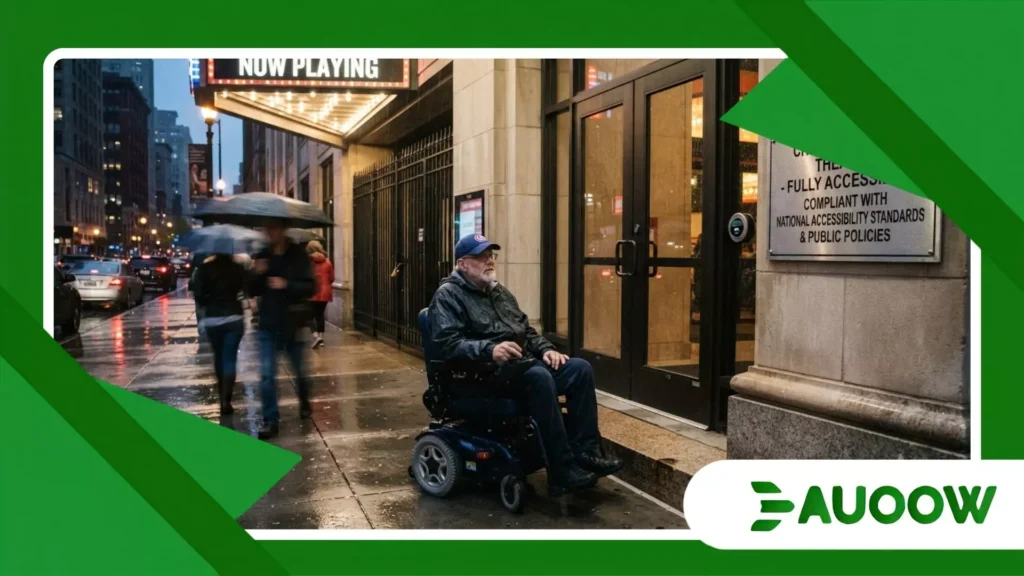
The rainy Tuesday evening in Chicago didn’t stop the crowd from gathering outside the newly renovated public theater.
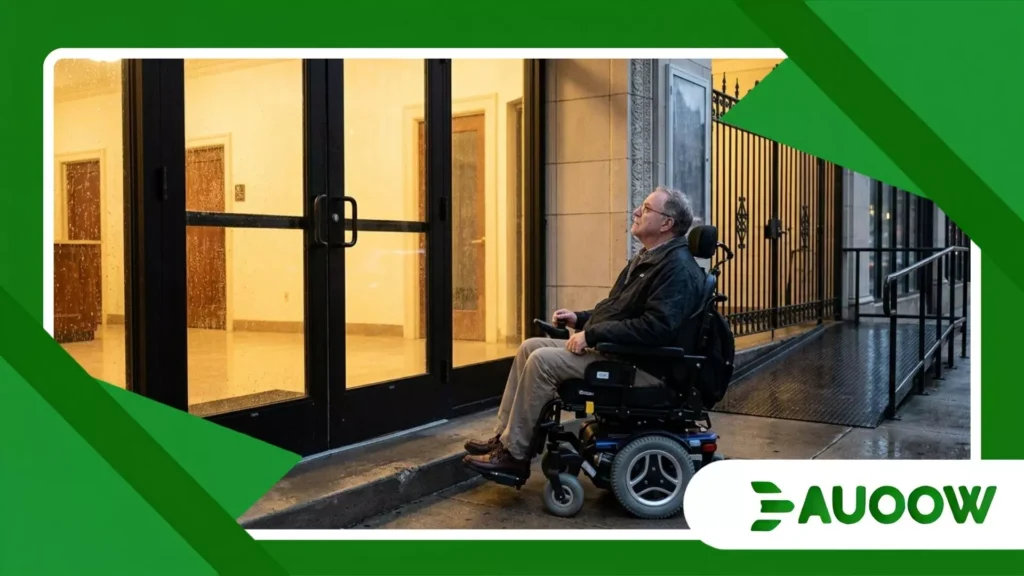
But for Arthur, a retired mechanical engineer who uses a power wheelchair, the obstacle wasn’t the weather it was a single, three-inch step framed by heavy glass double doors.
The building proudly displayed a shiny silver plaque near the entrance claiming full compliance with national standards for Rights and Public Policies.
Yet the automated door opener was switched off from the inside to conserve heat, and the secondary ramp remained locked behind a wrought-iron gate reserved for freight deliveries.
Passersby rushed past under their umbrellas, assuming the architectural grandness equaled modern hospitality, while Arthur waited twenty minutes in the drizzle for a staff member to notice him.
Scenes like this play out every day across global cities: a well-intentioned piece of legislation printed on official registry paper disintegrates the moment it meets the unpredictable reality of daily human life.
Key Perspectives Covered
- The Enforcement Gap: Why strong legal frameworks fail without operational mechanisms.
- Evolution of Protections: Connecting civil rights history to modern implementation.
- The Bureaucratic Illusion: The danger of viewing accessibility as a simple checklist.
- Future-Proofing Legislation: Building dynamic systems for evolving technological landscapes.
Why Do Comprehensive Laws So Often Fail on the Ground?
When evaluating why statutes designed to guarantee equal access fail, conversations usually turn toward budget constraints or historical architectural limitations.
What rarely enters this debate, however, is a fundamental flaw in how governance structures measure compliance.
Most municipal bodies treat accessibility as a one-time hurdle a static inspection conducted before issuing an occupancy permit rather than an ongoing operational responsibility.
The reality of civil protections, particularly when examining Rights and Public Policies, is that statutory language is only as strong as its daily enforcement mechanisms.
A ramp built at the precise statutory angle of incline becomes useless when an employee uses it to store surplus inventory.
A public website that passes an automated code audit during development can turn completely unintelligible to a screen reader the moment a content manager uploads an unformatted digital document.
Traditional civil enforcement relies almost exclusively on a complaint-based model.
This administrative burden forces citizens with disabilities to act as unpaid inspectors and litigators, spending their time, money, and energy documenting violations that institutions should proactively audit.
++ How NDIS reforms Australia could reshape disability rights
How Did Historical Civil Rights Wins Shape Today’s Access Standards?
To understand where current legislative models falter, we have to look back at the civil rights struggles that gave birth to them.
The landmark passage of the Americans with Disabilities Act in 1990, alongside early European statutory frameworks, represented a major shift.
For generations, physical barriers were viewed through a medical or charitable lens as personal challenges that individuals had to navigate on their own.
These pioneering statutes anchored accessibility firmly within the realm of baseline human dignity and national Rights and Public Policies.
They established clear physical dimensions for doorways, mandated curb cuts on public sidewalks, and outlawed blatant employment discrimination.
Across decades, early laws focused heavily on fixed physical interventions concrete, steel, and static signage.
They altered architectural blueprints, but they were ill-equipped for a modern world where civic participation shifted rapidly toward digital interfaces, automated public services, and private contractor networks.
Old legislative frameworks created a critical foundation, yet modern societies still struggle to adapt those static principles to dynamic environments.
Also read: Why disability voting access is a major issue in 2026 elections
Is Compliance Becoming a Tool to Block Real Inclusion?
Walk through many major metro stations today, and you will see the physical manifestation of bureaucratic compliance: tactile paving lines that end abruptly at structural pillars, or glass elevators located in isolated corridors far removed from the main transit flow.
| Dimension | Checklist Compliance | Meaningful Structural Access |
| Design Process | Reactive, minimal standards | Inclusive co-design from start |
| Maintenance & Audits | One-time inspection at opening | Continuous, operational audits |
| Enforcement Burden | Relies on citizen complaints | Proactive regulatory oversight |
| Experience Focus | Basic physical access | Full dignity and equal ease |
Modern institutions often fulfill the strict letter of a regulation while missing its core intent.
Consider a qualified job applicant who uses voice-recognition software trying to navigate a state agency’s hiring platform.
The platform technically satisfies baseline digital standards because images include descriptive text. Yet the system times out after three minutes of inactivity, making it nearly impossible for someone navigating via custom keyboard commands to complete the submission.
On paper, the agency maintained full regulatory compliance under current Rights and Public Policies. In practice, the system disqualified a capable worker before an HR officer ever saw their resume.
This disconnect occurs when legislation treats access as a fixed checklist instead of evaluating the actual user experience.
What Changed After Legislative Updates?
- Physical Infrastructure: Mandatory ramps and wider doors were installed, yet ramps often go unmaintained or end up blocked by operational clutter.
- Digital Services: Basic government portals were made text-readable, but dynamic platforms still feature inaccessible third-party payment systems.
- Public Transit: Buses were fitted with hydraulic lifts, but those lifts frequently drop out of service due to deferred maintenance.
- Higher Education: Physical classrooms were made accessible, yet digital course materials and virtual portals frequently remain uncaptioned.
How Can Legislation Adapt to Changing Technologies?
The rapid expansion of artificial intelligence, automated municipal services, and private digital infrastructure has exposed deep flaws in how statutes are drafted.
Legislative bodies typically operate on multi-year development cycles, crafting highly specific technical language that becomes outdated shortly after enactment.
When public transit authorities transition from human ticket collectors to touch-screen kiosks, a law that specifies physical counter heights does little to ensure a blind traveler can independently purchase a fare card.
Effective laws move away from rigid technical specifications in favor of dynamic performance outcomes.
Instead of mandating precise software specifications, statutes should require functional results: every citizen should be able to complete a transaction with equivalent independence, privacy, and ease.
This approach ensures that as underlying technologies evolve, the core mandate of equal access remains intact, anchored by robust Rights and Public Policies.
Read more: Exporting Accessibility Laws: Do Western Models Actually Work Elsewhere?
What Does Genuine Structural Inclusion Look Like in Practice?
True structural effectiveness requires moving beyond passive legal protections to proactive operational accountability.
It means shifting the financial and administrative burden away from the individual and placing it squarely on institutions.
When a public library, municipal office, or private business fails to maintain accessible infrastructure, the consequences should be immediate, structural, and clear enough to deter future neglect.
Relying exclusively on courts to resolve routine access disputes has clear limits.
Meaningful inclusion occurs when accessibility is integrated directly into procurement contracts, urban planning commissions, and software architecture reviews from day one.
When city planners design a bus rapid transit line with disabled commuters sitting at the design table rather than retrofitting solutions after construction the resulting public space works better for everyone: parents pushing strollers, travelers carrying luggage, and aging citizens navigating the city.
Closing the Gap Between Policy and Lived Experience
Designing effective accessibility legislation is ultimately an exercise in social empathy and administrative discipline.
It requires looking past the ceremonial signing of a bill to examine what happens on a rainy Tuesday night when a citizen simply tries to enter a theater door.
Until legal frameworks hold institutions accountable for the lived experience of every community member, public spaces will continue to fall short of their promise.
Frequently Asked Questions
Why aren’t clear accessibility laws enough to solve real-world barriers?
Clear laws establish necessary standards, but they often lack proactive enforcement.
Without regular operational audits, clear accountability for non-compliance, and simple administrative channels for resolution, organizations frequently prioritize minimal compliance over actual usable access.
How do digital barriers fit into traditional civil rights frameworks?
Modern civil rights frameworks view digital platforms such as job application portals, banking apps, and online government services as public accommodations.
If a digital service is inaccessible to individuals using screen readers or adaptive hardware, it constitutes a structural barrier equal to a locked door or a physical flight of stairs.
Who is responsible for enforcing accessibility standards in public spaces?
Enforcement duties are typically split between local municipal inspectors, regulatory agencies, and national justice departments.
However, because public resources for inspections are often limited, much of the enforcement day-to-day relies on complaints filed by individuals experiencing barriers.
How can accessibility laws remain relevant as new technologies emerge?
Legislation stays relevant by focusing on broad functional outcomes such as independence, privacy, and equal speed of use rather than dictating hyper-specific technical standards.
This enables statutory requirements to adapt automatically when cities deploy new digital kiosks, automated portals, or emerging transport systems.
