
Smart Wheelchairs: The Most Promising Innovations Right Now
The weight of a heavy, manual wheelchair on a gravel path is something most people never have to think about until they are pushing someone they love up a steep, poorly graded curb.
You feel the sudden resistance in your wrists, the slight backward tilt of the chair, and the quiet realization of how aggressively urban architecture still pushes back against human bodies.
For decades, the baseline expectation for mobility equipment was simple endurance: get from point A to point B without breaking down.
But as mechanical joints give way to gyroscopic sensors and edge-computing processors, smart wheelchairs are slowly changing what it means to navigate a world built for the able-bodied majority.
- The shift from pure mechanics to responsive robotics in daily mobility.
- How sensor integration and obstacle detection alter urban navigation.
- The lingering socioeconomic divide in accessing high-end assistive tech.
Why Basic Mobility Was Never Enough
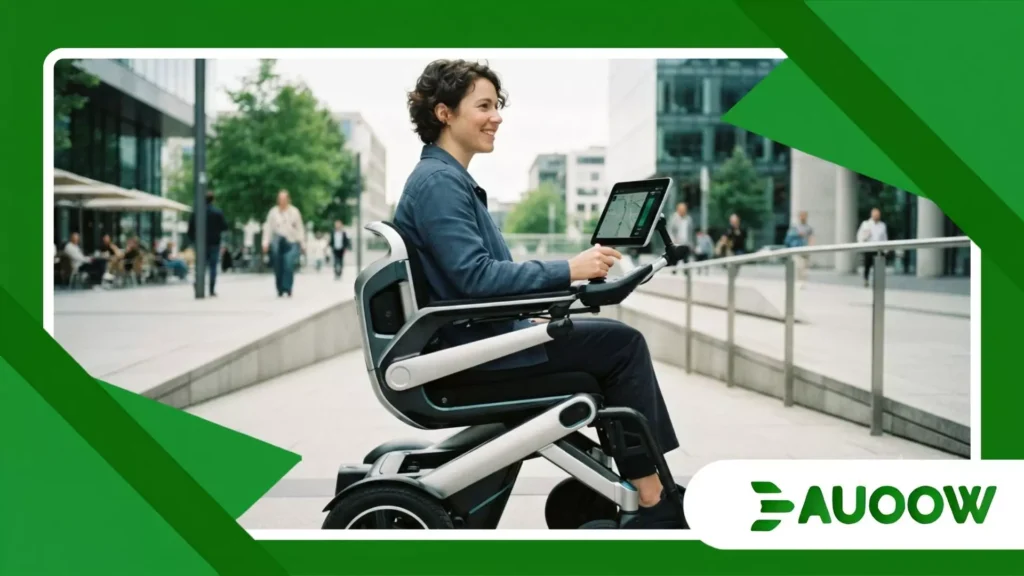
When electrical motors were first strapped to folding frames decades ago, it was hailed as a personal milestone for autonomy.
Suddenly, upper-body strength was no longer the sole ticket to independence. Yet, the core architecture of these devices remained fundamentally reactive.
A joystick translated hand pressure into directional movement, leaving the user entirely responsible for calculating every blind spot, uneven slope, and dynamic pedestrian hazard in real time.
What often gets overlooked in this conversation is that the cognitive load of piloting a conventional wheelchair through a chaotic urban environment is genuinely exhausting.
Imagine navigating a crowded train station during rush hour while managing chronic spasticity or limited neck mobility. Every single inch requires hyper-vigilance.
The Hidden Toll of Constant Vigilance
Society frequently views mobility aids as neutral equalizers, as if handing someone a motorized chair instantly erases the structural friction of the built environment.
That perspective ignores the invisible labor of navigation. Traditional power chairs lack situational awareness.
They do not warn you about a low-hanging branch, automatically adjust traction on icy pavement, or compensate for sudden muscle spasms that jerk the joystick sideways.
“We spent decades engineering machines that move when told, while completely ignoring the mental fatigue of having to command every single micro-correction in a hostile environment.”
When we look at the evolution of urban accessibility legislation from early civil rights mandates in the United States to international design standards the focus has almost exclusively been on macro-infrastructure: ramps, wider doors, and elevator shafts.
Legislators mandated concrete and clear widths, assuming that a flat surface was all a human being needed to thrive.
They rarely accounted for human fatigue, unpredictable weather, or the sheer density of modern public spaces.
++ Smart Glasses for Blind Users: Beyond Navigation
How Sensor Fusion Transformed the Wheelchair Seat
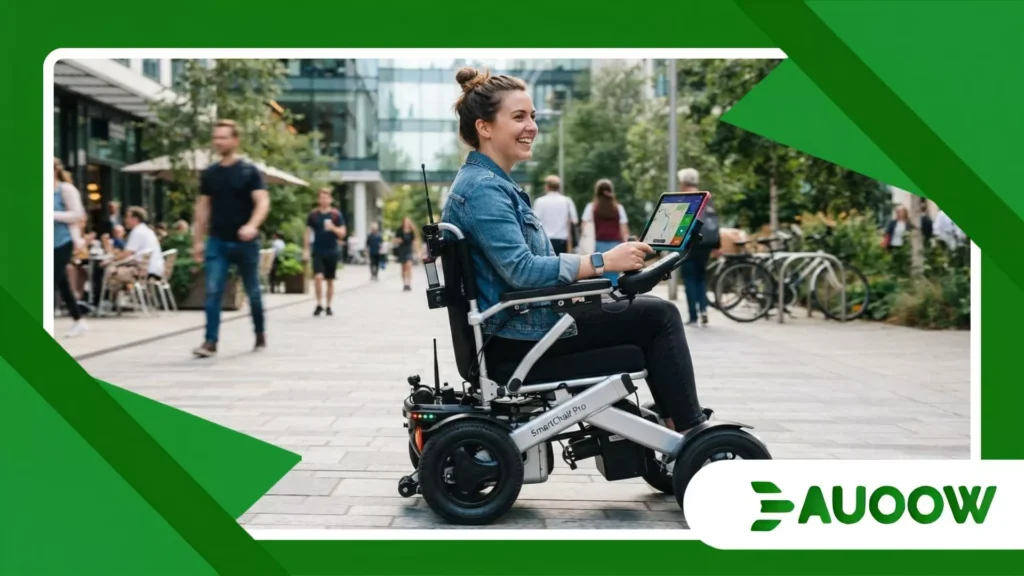
The breakthrough behind smart wheelchairs is not just about adding a bigger battery or a sleeker joystick; it is about giving the chair its own peripheral vision.
Modern iterations integrate lidar, ultrasonic proximity sensors, and computer vision algorithms directly into the frame. These systems do not replace the user.
Instead, they act as an invisible copilot, gently overriding dangerous joystick commands if an obstacle suddenly steps into the path or if a user misjudges the edge of a subway platform.
There is a structural detail that tech enthusiasts often brush past: the fine line between assistance and forced autonomy.
When software decides you are moving too fast toward a wall, is it truly protecting you, or is it subtly limiting your agency?
Engineers have spent years refining this balance. The most successful models use proportional intervention.
Rather than abruptly stopping the chair which can cause whiplash or secondary injuries for users with fragile spinal cords the machine subtly cushions the trajectory, routing around the pedestrian or easing down the grade automatically.
Also read: Why Assistive Technology Regulation Still Focuses on Devices, Not Systems
The Economics of Dignity in the Open Market
Technology alone does not dictate social change; distribution does.
A standard power chair can already cost thousands of dollars, often requiring a grueling bureaucratic battle with private insurers or national healthcare systems just to secure basic coverage.
When you introduce advanced robotics, automated mapping, and machine-learning stability controls, the price point escalates dramatically.
The most grounded analysis suggests that technological innovation risks deepening inequality if access remains tied exclusively to income or restrictive medical approvals.
Read more: Public Procurement’s Role in Shaping Assistive Tech Markets
Who Gets Left Behind by the Next Big Leap?
Consider a graphic designer living with progressive muscular dystrophy who relies on a basic power chair to get to her hybrid office job.
Her local transit authority recently upgraded its bus fleet with smart ramps, but her current chair lacks the telemetry to interface with the vehicle’s secure docking system.
She is left stranded not because public transit failed to modernize, but because her personal equipment occupies a different generation of technology entirely.
When innovations arrive piecemeal, they create a fragmented landscape where high-tech independence can feel like a luxury good rather than a baseline human right.
Insurance codes are often slow to adapt. While consumer electronics update yearly, medical reimbursement categories can take a decade to recognize new engineering standards, leaving life-changing hardware out of reach for working-class families.
What Actually Changed After This?
| Era | Primary Focus | Regulatory Driver | Resulting User Experience |
| Late 20th Century | Mechanical propulsion & basic motors | Early accessibility acts & architectural codes | Basic physical access; high physical and mental fatigue. |
| Early 21st Century | Ergonomic adjustments & joystick customization | Expanded civil rights & digital integration | Better postural support, but zero environmental awareness from the chair. |
| Present Day | Autonomous navigation & sensor fusion | Evolving safety standards & robotics research | Shared control, reduced collision risks, and lowered cognitive load. |
This evolution shows a gradual shift away from brute-force mobility and toward symbiotic engineering.
The machine learns individual habits, anticipates fatigue levels late in the afternoon, and adjusts its sensitivity profiles accordingly, pointing toward a future where hardware adapts to the person, rather than expecting the person to constantly fight the machine.
Frequently Asked Questions
Are smart wheelchairs fully autonomous like self-driving cars?
No, and they typically should not be. These devices rely on a shared-control model where the human operator remains in charge of the destination and intent, while the onboard sensors handle collision avoidance, path smoothing, and stability maintenance.
Why are these advanced mobility devices so expensive?
The cost stems from a combination of specialized sensors, lightweight composite materials, rigorous medical certification processes, and relatively low manufacturing volumes compared to mainstream consumer electronics.
Do insurance policies cover smart features?
Coverage varies widely by jurisdiction and provider.
Many traditional insurers view advanced robotics and sensor arrays as non-essential upgrades unless prescribed specifically for individuals with severe neurological or physical limitations who cannot safely operate standard models.
How do users handle maintenance and software updates?
This remains one of the industry’s significant bottlenecks.
Unlike consumer smartphones that update over-the-air seamlessly, medical mobility equipment often requires certified technicians for diagnostic checks, battery replacements, and firmware calibrations.
Will these technologies eventually replace standard manual chairs?
Unlikely. Different bodies, living environments, and personal preferences require diverse solutions.
Manual chairs offer unmatched portability and upper-body engagement that many users prefer, meaning the ultimate trajectory of design is about expanding personal choices rather than replacing them with a single monolithic standard.
