
The impact of assistive technology rights on public healthcare
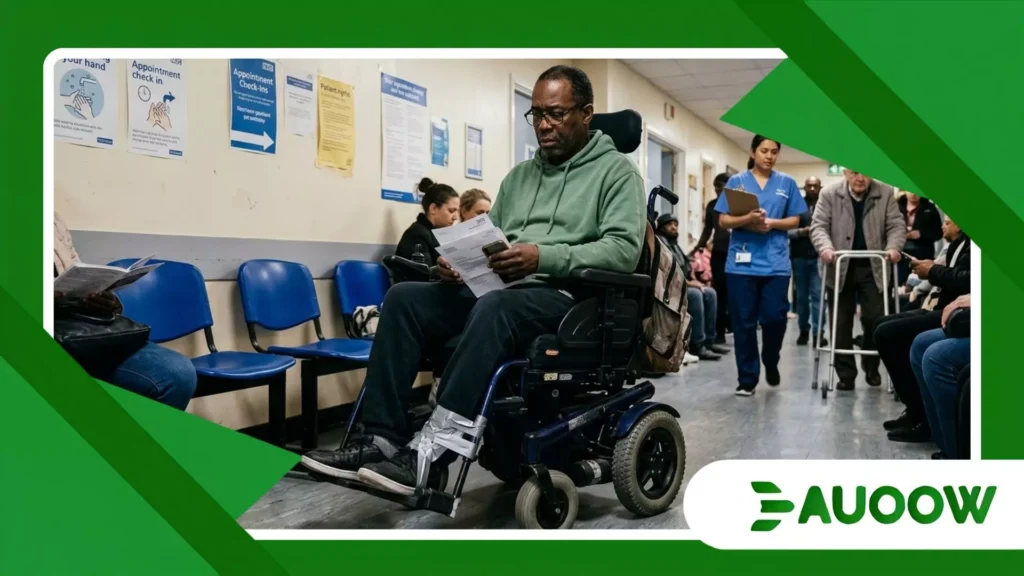
Examining the impact of assistive technology rights on public healthcare requires stepping into a crowded clinical corridor in outer London, where fifty-two-year-old Marcus sits in a motorized wheelchair with a fractured footplate.
He has been waiting six months for an official assessment from his regional health trust just to replace a cracked aluminum bracket that costs less than thirty dollars to manufacture.
Because the specialized chair was provisioned through a rigid state procurement contract, attempting a private repair would void his insurance and jeopardize his eligibility for future maintenance.
As Marcus waits, unable to leave his ground-floor apartment safely without the footrest, his physical mobility deteriorates, eventually triggering secondary cardiovascular issues that require an emergency hospital admission costing the public health system thousands of pounds.
- The Clinical Shift: Moving from medical treatment to functional independence.
- Economic Paradoxes in Procurement: How bureaucratic purchasing models inflate long-term public spending.
- Rights-Based Legislation vs. Healthcare Delivery: Connecting historical civil mandates to modern clinic workflows.
- The Lived Reality of Secondary Complications: A human look at what delayed technology costs families.
- Comparative Policy Overview: Analyzing public health approaches across global frameworks.
- Editorial FAQ: Practical answers regarding rights, coverage, and public health systems.
Why do healthcare systems struggle to view mobility as preventative care?
For generations, public health institutions operated under a strictly curative ethos.
Hospitals were built to diagnose acute illness, perform surgeries, and manage chronic pathology.
Within that traditional framework, a wheelchair, a refreshable Braille display, or a speech-generating device was classified as a supplementary aid an adjunct luxury provided after primary medical intervention concluded.
What rarely enters this debate is how profoundly this historical posture distorts state budgets today.
When public health systems treat assistive tech as a downstream welfare expense rather than an essential preventative health asset, they trigger a cascade of predictable secondary medical crises.
When a person who needs support is denied a timely, customized mobility assessment, the result goes far beyond restricted movement.
It frequently leads to pressure ulcers, joint degeneration, isolation, and severe clinical distress.
The hospital eventually pays for the intensive care unit bed, the reconstructive skin surgery, or the psychiatric intervention.
The financial burden remains inside the public purse; it merely shifts into a vastly more expensive ledger line.
How do bureaucratic procurement models maintain structural barriers?
When we examine the broader impact of assistive technology rights on public healthcare, we quickly discover that the primary bottleneck is almost never a lack of technological innovation.
Engineers have already perfected lightweight carbon-fiber frames, responsive eye-tracking communication software, and affordable digital hearing tools.
Yet a critical structural friction remains routinely overlooked: the machinery of public healthcare purchasing was designed for standardized pharmaceuticals and disposable medical supplies, not for individualized lifelong technology.
State tender systems prioritize volume discounts and rigid vendor contracts above all else.
A regional health authority signs a multi-year deal to supply three basic wheelchair models to an entire population, often ignoring the nuanced ergonomic requirements of spinal cord injuries or progressive neurological conditions.
A person who receives a mismatched device often ends up setting it aside entirely.
Studies across European and North American health systems indicate that up to thirty percent of state-funded assistive devices are abandoned within twelve months of delivery simply because they fail to fit the individual’s home environment or bodily mechanics.
++ The Future of Accessible Public Transportation Policies
What happens when access depends on legal battles rather than clinical routine?
Consider Elena, a forty-year-old software developer in Madrid who developed progressive vision loss.
Elena does not require hospitalization or medication; she requires a screen reader integrated with her regional health authority’s patient portal and job-retraining program.
Under Spain’s public health framework, her request for adaptive digital equipment bounced between social services and primary healthcare for eleven months.
Because neither department held clear fiscal responsibility, Elena was temporarily forced out of the labor market. This pattern repeats across jurisdictions.
The lack of clear operational integration between civil rights legislation and public health mandates transforms straightforward equipment requests into protracted administrative friction.
How do landmark disability laws shape modern health policy?
The legal foundation underpinning assistive technology rights was forged through decades of persistent civil rights advocacy.
The passage of the Rehabilitation Act of 1973 and the Americans with Disabilities Act (ADA) in 1990 in the United States, alongside the UN Convention on the Rights of Persons with Disabilities (CRPD) in 2006, fundamentally reframed accessibility.
These legal milestones established that equal participation in public life is an enforceable legal right, not an act of state benevolence.
Yet, public health systems have moved slowly to absorb the full operational weight of these mandates.
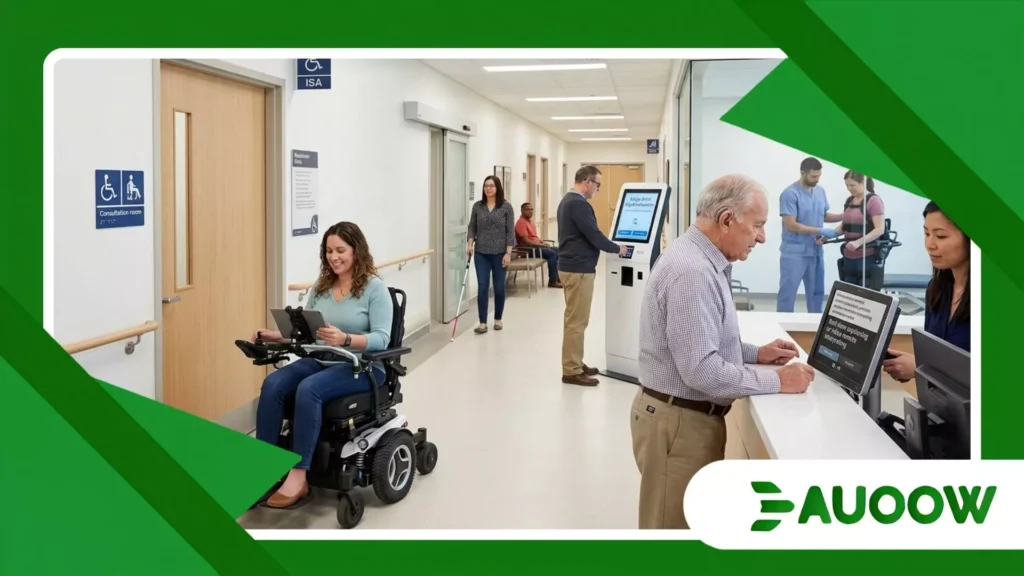
While hospital buildings were gradually retrofitted with physical ramps and wide doorways to comply with basic structural codes, the core delivery of healthcare services from diagnostic imaging tables to prescription labeling remained hard to navigate for decades.
A crucial shift in recognizing the impact of assistive technology rights on public healthcare occurs when health ministries realize that civil rights compliance applies directly to medical equipment delivery networks.
Also read: Why Accessible Digital Identity Systems Matter
Why is the division between health and social care artificial?
In many public systems, a sharp administrative line divides “medical care” from “social support.” If a patient requires an insulin pump, it is processed under the healthcare budget.
If that same person requires a specialized device to hold and inject that pump independently due to motor tremors, the item is often shuffled over to social services.
This division remains one of the most counterproductive legacies of twentieth-century administrative design.
It treats human health as a collection of isolated organs rather than an integrated lived experience.
When a public system unifies these budgets, the financial and human benefits become clear.
Providing a ten-dollar adaptive eating utensil or a five-hundred-dollar customized transfer board supports an elderly or disabled person in living safely at home, significantly reducing emergency room visits and unnecessary institutional stays.
Read more: The Growing Push for Accessible Government Websites
What happens when socio-economic gaps dictate assistive access?
In countries without robust single-payer healthcare, disparities in assistive technology access can be stark.
Families with private insurance or personal wealth can acquire lightweight power chairs, smart prosthetics, and advanced speech software directly.
For lower-income citizens relying entirely on underfunded safety nets, choices are frequently limited to heavy, ill-fitting manual chairs or years on administrative waiting lists.
This dynamic creates a self-perpetuating cycle of economic disenfranchisement.
Without appropriate assistive tools, individuals face unnecessary barriers to education and employment, which in turn limits their capacity to obtain necessary technology independently.
When public healthcare systems guarantee high-quality assistive devices as a basic health right, they help interrupt this cycle.
A well-designed public system functions as an economic equalizer, supporting individuals in maintaining autonomy and participating fully in their communities.
Policy Frameworks and Public Health Outcomes
To understand how varying legislative structures shape daily healthcare delivery, it is helpful to examine how different public models manage assistive technology rights.
| Policy Framework / Country | Legal Basis for Access | Procurement Mechanism | Primary Fiscal Impact |
| United States (Medicare/Medicaid) | “Durable Medical Equipment” (DME) definition | Fee-for-service via private vendors | High administrative overhead; frequent coverage denials |
| United Kingdom (NHS Trusts) | National Health Service Act & Equality Act | Regional bulk purchasing tenders | Lower unit costs; significant delays in custom fittings |
| Germany (Statutory Health Insurance) | Social Code Book V (GKV-Spitzenverband) | Approved medical catalog (Hilfsmittelverzeichnis) | High standardization; strong rights-based appeal system |
| Scandinavia (e.g., Sweden) | Health and Medical Services Act | County council centralized provision | Strong preventative outcomes; high tax-funded investment |
Rebuilding Systems Around Lived Autonomy
Reforming public healthcare to uphold assistive technology rights is less about insurmountable financial costs and more about structural reorganization.
Systems must transition from reactive equipment distribution to proactive, rights-centered care.
A thoughtful evaluation of the impact of assistive technology rights on public healthcare reveals that investing in functional accessibility yields practical returns across the board reducing preventable hospital stays, easing family caregiver strain, and fostering broader social participation.
Until health administrators stop viewing wheelchairs, hearing aids, and communication software as secondary accommodations and begin treating them as core healthcare instruments, public resources will continue to be absorbed by avoidable health crises.
Genuine systemic efficiency starts when we design healthcare around the actual continuity of human lives.
Editorial FAQ
How does rights-based access to assistive technology reduce overall public health spending?
When public healthcare systems provide timely, customized assistive technology, they help prevent severe secondary medical issues such as pressure injuries, falls, joint wear, and acute psychological distress.
Preventing a single emergency hospitalization or surgical procedure routinely saves more resources than the cost of supplying appropriate equipment in the first place.
What is the difference between medical equipment and assistive technology in public policy?
Medical equipment generally refers to devices operated by healthcare professionals to diagnose, treat, or monitor clinical conditions (such as IV pumps or imaging scanners).
Assistive technology refers to tools used directly by individuals to maintain or enhance functional independence in daily life (such as wheelchairs, hearing instruments, or screen readers).
Public health systems often fund medical equipment readily while subjecting assistive technology to more restrictive welfare rules.
Can citizens legally challenge public health denials of assistive technology?
In many jurisdictions with rights-based legislation including European Union member states aligning with the UN CRPD, or the United States under the ADA and Medicaid frameworks denials can be formally appealed.
Individuals have grounds to challenge decisions when a denial restricts essential health access, personal mobility, or legally guaranteed community participation.
Why are custom-fitted assistive devices better for public budgets than generic bulk models?
Generic bulk devices frequently fail to meet the specific physical, sensory, or environmental needs of the user.
This mismatch leads to high device abandonment rates and can cause physical injury over time due to improper support.
Custom-fitted devices support long-term daily usability, helping preserve individual independence and reducing secondary medical expenses.
