
How NDIS reforms Australia could reshape disability rights
The rain in Melbourne doesn’t care about the friction of a wheelchair tire on a slick ramp, but the silence of the city hall lobby surely does.
I remember watching a young man spend nearly ten minutes navigating a series of heavy, non-automated doors just to submit a piece of paperwork that would technically entitle him to support support that was meant to make his life easier, yet seemed to require an exhausting amount of physical labor just to access.
It is in these quiet, unglamorous moments of friction that we find the true pulse of the NDIS reforms Australia is currently navigating, a transition that touches the lives of hundreds of thousands of people who are less concerned with bureaucratic efficiency and more concerned with whether they will still be able to live in their own homes by the end of the year.
The following exploration examines the structural shifts in how the Australian government approaches disability funding, the tension between fiscal sustainability and individual agency, and the very real human consequences of these legislative pivots.
Summary
- The Invisible Architecture of Policy: Assessing the transition from empowerment to budget management.
- Is Efficiency Really the Goal? Questioning the shift toward paternalistic oversight.
- The Human Cost of Legislative Calibration: The burden of proving disability in a changing framework.
- Why We Should Be Concerned About “Sustainability”: The conflict between fixed policy and the fluid reality of human needs.
- Where Does the Power Actually Reside? Re-evaluating the move toward centralized control.
- What Actually Changed After This? Practical impacts on the daily lives of participants.
- Rethinking the Social Contract: Viewing disability support as essential infrastructure.
The Invisible Architecture of Policy

When we talk about the National Disability Insurance Scheme, we often get lost in the weeds of budget forecasts and administrative overhead.
What remains obscured is the historical promise of the scheme. It was built on the radical idea that disability support should be an investment in a person’s potential rather than a charity-based welfare payment.
For years, this model allowed individuals to craft lives that were not defined by their diagnosis but by their aspirations. However, the sheer growth of the program has forced a reckoning.
NDIS reforms Australia are not happening in a vacuum; they are a response to a fiscal trajectory that the federal government deems unsustainable.
But when we treat a life-support system like a line item in a quarterly balance sheet, we risk losing the humanity that necessitated the program in the first place.
This shift represents more than just a budgetary adjustment; it signals a fundamental change in how the nation views its obligation to disabled citizens.
++ Disabled People in Politics: Structural Barriers Beyond Discrimination
Is Efficiency Really the Goal?
There is a technical argument for tightening the criteria for eligibility.
Proponents of the recent changes point toward a more rigorous vetting process, ensuring that funds are directed toward those with the most significant permanent impairments.
On the surface, this sounds like a prudent use of taxpayer money.
Yet, when I speak with advocates and families who have been navigating this system for the better part of a decade, the consensus is rarely about money it is about trust.
The current NDIS reforms Australia seem to be shifting the burden of proof onto the person with a disability.
It is as if the system is tired of believing that disabled citizens know what they need to thrive.
We are seeing a move away from self-determined support toward a more prescriptive, paternalistic model where the state decides the “reasonable and necessary” limits of a life.
By narrowing the scope of what is considered “essential,” the government is slowly eroding the autonomy that the scheme was originally designed to champion.
The Human Cost of Legislative Calibration
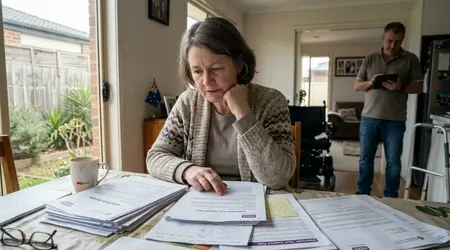
Consider a parent in a suburban neighborhood trying to secure a support worker for their child with autism.
Under the previous iterations of the scheme, there was a degree of flexibility that allowed for creative solutions community integration, extracurricular activities, and peer support. Under the stricter frameworks, that flexibility is evaporating.
We are effectively asking families to prove their “disability status” over and over again. This constant re-evaluation is a form of structural friction.
It demands that a person emphasize their failures and limitations just to maintain a baseline of support, rather than being encouraged to highlight their successes and progress.
The psychological toll of this process cannot be overstated; it forces individuals to live in a state of constant justification.
| Feature | Pre-Reform Approach | Current Reform Focus |
| Funding Model | Individualized & Flexible | Capped & Prescription-Based |
| Eligibility | Broadly “Functional” | Stricter “Medical” Criteria |
| Primary Goal | Social Participation | Fiscal Sustainability |
| Review Process | Trust-Based Outcomes | Evidence-Driven Audits |
Why We Should Be Concerned About “Sustainability”
“Sustainability” has become the buzzword of the decade. But sustainability for whom?
If a policy makes the budget look healthy but leaves a young adult in a remote community without access to the technology they need to communicate, it has failed. The NDIS reforms Australia are attempting to draw a line in the sand.
What rarely enters the public discourse is the reality that disability is not static. It fluctuates. A person’s needs change depending on the environment, the technology available, and their own life stage.
By attempting to codify disability into neat, unchanging boxes for the sake of long-term planning, we are ignoring the lived, messy reality of human biology and social existence.
When policy ignores the fluidity of disability, it inadvertently creates new barriers for those it was meant to assist.
Also read: Disability Rights in Africa: Emerging Leaders in Inclusion
Where Does the Power Actually Reside?
The centralization of power moving decision-making away from the individual and toward the agency is a quiet, dangerous shift.
It implies that the state is the ultimate arbiter of a person’s worthiness for support.
If we look at the history of disability rights, progress has always come from the edges: from activists who demanded the right to sit at the table, not just be discussed at it.
When we empower an agency to define the limits of a human life, we are effectively rolling back decades of progress made by people who fought to move from institutions to independent living.
The risk here is that we create a system that is perfectly balanced on paper but hollow in practice, where the individual’s voice is silenced by the weight of administrative demand.
Read more: Accessibility Policies in India: Progress and Pitfalls
What Actually Changed After This?
- Increased Documentation: Families report a notable increase in the time spent gathering medical evidence for plan reviews, diverting energy from daily living to administrative compliance.
- Reduced Self-Management: New restrictions on what constitutes “funded support” have made it harder for participants to hire their own independent support workers, limiting choice.
- Centralized Oversight: The government has introduced more robust auditing mechanisms to catch “fraud,” but these measures have inadvertently created anxiety for many legitimate, low-risk cases.
- Focus on Mainstream Services: There is a heavy, almost forced, reliance on schools and hospitals to pick up the slack where NDIS funding has been pruned despite those systems already being at capacity.
Rethinking the Social Contract
Is it possible to have a sustainable system that doesn’t strip away autonomy? Absolutely. But it would require a different kind of bravery.
It would require the government to view disability support as public infrastructure no different from roads, internet, or public transport.
When we invest in a road, we don’t ask the driver to justify the “necessity” of their commute every six months.
We build it because the society functions better when people can move freely. Why do we treat the basic tools of survival for disabled citizens with such profound suspicion?
The current path is one of caution. It is a path that prioritizes the stability of the institution over the stability of the person.
I suspect that in five years, we will look back at this moment as a missed opportunity to truly integrate the disability community into the fabric of national life, rather than keeping them as a managed, regulated cohort.
True progress will only come when we recognize that a society’s strength is measured by the support it provides to its most vulnerable, not by the efficiency with which it calculates the cost of that care.
Frequently Asked Questions
Does this mean the program is being cut entirely?
No, the program remains the primary vehicle for disability support in the country.
However, the application of the funding is becoming much more rigid, making it harder for new participants to enter and for existing ones to maintain the same level of flexible support.
Why is there so much focus on “fraud” in the news lately?
It is a political tool. By highlighting instances of misuse, the government gains public support for tighter controls.
While fraud is a concern in any large system, the current intensity of the focus often overshadows the genuine struggle of the majority of participants who are merely trying to access basic care.
What happens to children who rely on these services?
This is a sensitive area. The reforms are placing significant pressure on parents to prove that their children’s needs cannot be met by the standard education system, which creates a competitive, adversarial environment between families and the government.
Can participants still appeal a decision?
Yes, the appeals process exists, but it is slow and requires a level of legal or advocacy literacy that many families simply do not have the time or energy to navigate.
It is a system that often favors those who have the resources to fight for their rights.
Is there any positive outcome from these changes?
For the system itself, a more standardized approach might reduce some administrative chaos in the long run.
But for the individual, the benefits are harder to see, as the trade-off is almost always a loss of personal agency and a higher hurdle for accessing support.
